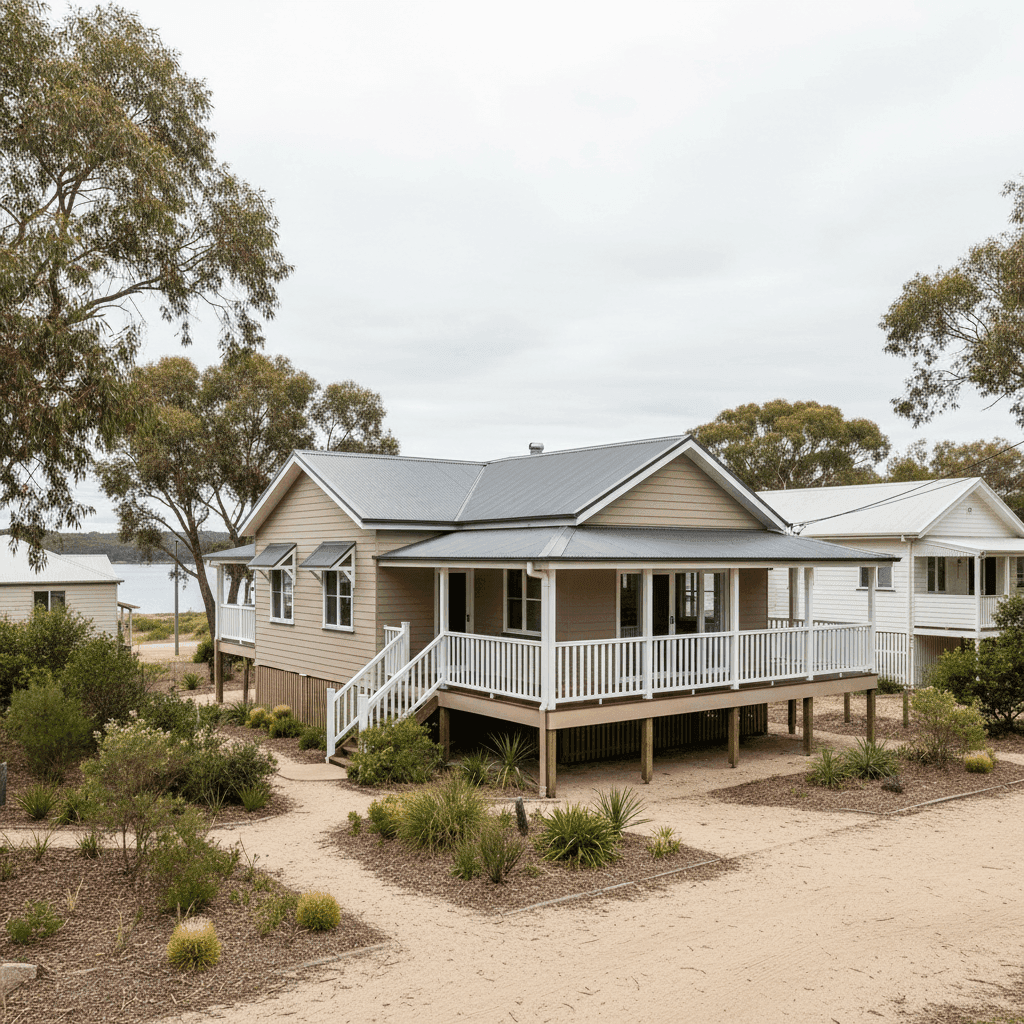
Lake Tabourie is a quiet coastal village on the NSW South Coast, sitting within the Shoalhaven local government area roughly halfway between Ulladulla and Batemans Bay. It's the kind of place that draws people seeking a relaxed beachside lifestyle — but like many coastal communities, insuring a home here comes with its own set of considerations. This article breaks down a real home insurance quote for a three-bedroom, two-bathroom free standing home in Lake Tabourie (postcode 2539), and puts it in context against local, state, and national benchmarks.
---
Is This Quote Fair?
The annual premium for this property came in at $2,473 per year (or $247/month), covering both building and contents with a building sum insured of $500,000 and contents valued at $50,000. The building excess is set at $3,000, with a lower $500 excess on contents.
Our price rating for this quote is CHEAP — below average for the area. That's genuinely good news for the homeowner. Based on suburb-level data for Lake Tabourie, the average premium in this postcode sits at $4,891 per year, and the median is even higher at $5,220. That means this quote is roughly 49% below the suburb average and well beneath the 25th percentile of $3,593 — placing it among the most competitively priced policies seen in this area.
To put it plainly: if you're paying around $2,473 annually for home and contents cover in Lake Tabourie, you're doing better than the vast majority of your neighbours.
It's worth noting that the higher building excess of $3,000 does play a role here — insurers typically reward policyholders who accept a higher excess with a lower premium. This is a reasonable trade-off for many homeowners who can comfortably cover smaller claims out of pocket.
---
How Lake Tabourie Compares
Understanding where Lake Tabourie sits within the broader insurance landscape helps put this quote in perspective.
| Benchmark | Premium |
|---|---|
| This Quote | $2,473/yr |
| Lake Tabourie Suburb Average | $4,891/yr |
| Lake Tabourie Suburb Median | $5,220/yr |
| Lake Tabourie 25th Percentile | $3,593/yr |
| Shoalhaven LGA Average | $11,272/yr |
| NSW State Average | $9,528/yr |
| NSW State Median | $3,770/yr |
| National Average | $5,347/yr |
| National Median | $2,764/yr |
A few things stand out here. The NSW state average of $9,528 is remarkably high — driven in large part by flood-prone and bushfire-affected regions across the state. The Shoalhaven LGA average of $11,272 is even more striking, likely reflecting significant flood and fire risk exposure across the broader council area. Lake Tabourie's suburb-level figures are considerably lower than both, suggesting that this specific locality carries a more manageable risk profile than much of its surrounding region.
Compared to national benchmarks, this quote also holds up well. The national average sits at $5,347, and the national median at $2,764 — meaning this quote is right around the national median, despite being for a coastal property in a state known for elevated premiums.
Note: Suburb-level data is based on a sample of 20 quotes, so averages should be interpreted as indicative rather than definitive.
---
Property Features That Affect Your Premium
Several characteristics of this property are worth examining in the context of insurance pricing.
Hardiplank/Hardiflex external walls are a positive from an insurer's perspective. This fibre cement cladding is non-combustible, resistant to rot, and holds up well against the coastal humidity common in areas like Lake Tabourie. It's generally viewed more favourably than weatherboard or timber cladding.
Steel/Colorbond roofing is another tick in the right column. Colorbond is durable, fire-resistant, and low-maintenance — qualities that reduce the likelihood of weather-related claims. It's one of the most insurer-friendly roofing materials available in Australia.
Stump foundations (the home is elevated by less than one metre) introduce a small degree of complexity. Elevated homes can be more vulnerable to underfloor wind damage in storm events, though at under one metre the exposure is relatively modest. This type of construction is common in coastal NSW and insurers are well-acquainted with it.
Timber and laminate flooring combined with above average fittings means the cost to repair or replace internal finishes is higher than a standard fit-out. This is likely a contributing factor to the $500,000 building sum insured — and it's important that this figure accurately reflects the full cost of rebuilding, not just the market value of the property.
Construction year of 1985 places the home in an era before modern building codes introduced stricter requirements around things like tie-downs and bracing. Older homes can sometimes attract slightly higher premiums, though this appears to have been offset by the other favourable characteristics of this property.
The absence of a pool, solar panels, and ducted climate control keeps the risk profile relatively straightforward — fewer high-value assets and systems to insure.
---
Tips for Homeowners in Lake Tabourie
1. Review your building sum insured regularly Construction costs have risen sharply across Australia in recent years. A $500,000 sum insured may be appropriate today, but it's worth revisiting annually to ensure it reflects current rebuild costs — not the purchase price or market value of the land. Underinsurance is one of the most common and costly mistakes homeowners make.
2. Understand your excess trade-off The $3,000 building excess on this policy is on the higher end. While it contributes to a lower annual premium, make sure you're comfortable covering that amount out of pocket if you need to make a claim. If your financial buffer is limited, it may be worth comparing policies with a lower excess — even if the annual cost is slightly higher.
3. Consider your flood and bushfire exposure Lake Tabourie sits in a coastal area that, while relatively benign compared to much of Shoalhaven, can still be affected by severe weather events. Check whether your policy explicitly includes flood cover (it's not always standard) and confirm the bushfire provisions. The Lake Tabourie suburb stats page can help you understand the risk profile of your specific area.
4. Don't set and forget Insurance markets shift, and the fact that this quote is currently below average doesn't mean it will stay that way at renewal. Shopping around at least every two years — or after any significant life or property change — is one of the simplest ways to avoid paying more than you need to.
---
Compare Your Home Insurance at CoverClub
Whether you're already insured or shopping for the first time, it pays to know where your premium sits relative to the market. CoverClub makes it easy to compare home and contents insurance quotes across Australia's leading insurers — in minutes, without the hassle. Get a quote today and find out if you're getting a fair deal on your Lake Tabourie home.