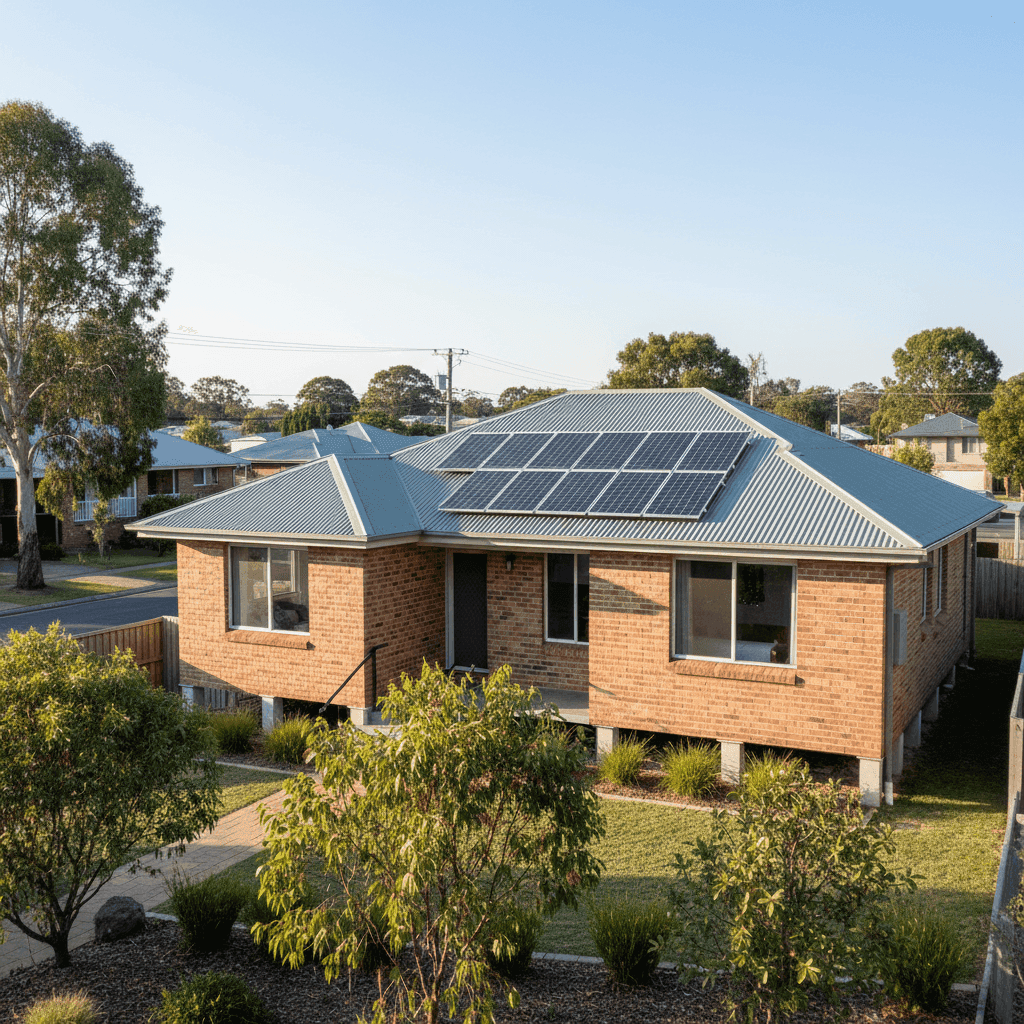
If you own a free standing home in Lakewood, NSW 2443, you're likely curious about what a fair home insurance premium looks like — and whether you're paying too much or getting a genuine bargain. This article breaks down a real home and contents insurance quote for a four-bedroom property in the area, comparing it against local, state, and national benchmarks to give you a clear picture of where it sits.
---
Is This Quote Fair?
The annual premium for this quote comes in at $1,403 per year (or roughly $137 per month), covering both building and contents for a sum insured of $403,000 on the building and $50,000 on contents.
Our price rating for this quote is CHEAP — below average — and the data backs that up strongly. When you look at what other homeowners in Lakewood are paying, this premium is remarkably competitive. The suburb average sits at $3,767 per year, meaning this quote is approximately 63% below the local average. Even compared to the cheapest quarter of quotes in the suburb (the 25th percentile at $2,353/yr), this premium is still significantly lower.
For a property of this size and construction type, a sub-$1,500 annual premium represents genuine value — particularly when building cover is set at over $400,000. The building excess of $3,000 and contents excess of $1,000 are on the higher side, which does contribute to keeping the premium down, but even accounting for that, this is a strong result for the homeowner.
---
How Lakewood Compares
To put this quote in proper context, it helps to look at the broader insurance landscape. You can explore the full breakdown on the Lakewood suburb stats page.
| Benchmark | Premium |
|---|---|
| This quote | $1,403/yr |
| Lakewood suburb average | $3,767/yr |
| Lakewood suburb median | $3,906/yr |
| Lakewood 25th percentile | $2,353/yr |
| Lakewood 75th percentile | $4,621/yr |
| NSW state average | $9,528/yr |
| NSW state median | $3,770/yr |
| Mid-Coast LGA average | $5,840/yr |
| National average | $5,347/yr |
| National median | $2,764/yr |
(Suburb data based on a sample of 19 quotes in the area.)
A few things stand out here. First, the NSW state average of $9,528/yr is heavily skewed by high-risk postcodes — flood zones, cyclone corridors, and bushfire-prone areas — which push the mean well above the median of $3,770/yr. Lakewood's suburb average of $3,767/yr aligns closely with the state median, suggesting the area carries a moderate but not extreme risk profile.
Against the national average of $5,347/yr, this quote comes in at just 26 cents in the dollar — an extraordinary result. Even the national median of $2,764/yr is nearly double this premium. For homeowners in the Mid-Coast LGA, where the average sits at $5,840/yr, this quote is a standout.
---
Property Features That Affect Your Premium
Several characteristics of this property play a meaningful role in determining the premium. Here's how each factor stacks up:
Brick Veneer Walls Brick veneer is one of the more insurer-friendly external wall materials. It offers solid fire resistance and structural durability compared to timber weatherboard or fibre cement, which typically attract higher premiums. This construction type is a positive factor for this quote.
Steel / Colorbond Roof A Colorbond steel roof is highly regarded by insurers — it's durable, fire-resistant, and handles the Australian climate well. Unlike terracotta or concrete tiles, Colorbond is less prone to storm damage from hail and wind, which can translate to lower premiums in areas with moderate weather exposure.
Stump Foundation The property sits on stumps and is elevated by less than one metre. While elevated homes can sometimes attract additional scrutiny around flood risk or structural complexity, a sub-one-metre elevation is generally treated as low risk. Stump foundations are common across coastal NSW and are well understood by insurers.
Solar Panels This property has solar panels installed. Most standard home insurance policies cover solar panels as part of the building sum insured, but it's worth confirming this is explicitly included in your policy wording. Panels add replacement value to the building, so ensuring your sum insured accurately reflects their cost is important.
1995 Construction Built in 1995, this home is around 30 years old — old enough to have some wear but not so aged as to trigger significant underwriting concerns. Homes from this era generally have well-understood construction methods, making them straightforward to price.
130 sqm Building Size At 130 square metres, this is a moderately sized four-bedroom home. The building sum insured of $403,000 equates to roughly $3,100 per square metre, which is a reasonable rebuild cost estimate for a brick veneer home in regional NSW when factoring in labour, materials, and site costs.
Standard Fittings Standard-quality fittings keep the replacement cost of the home predictable. High-end or custom fittings (stone benchtops, designer fixtures, imported tiles) can push rebuild costs — and therefore premiums — higher. Standard fittings are a neutral-to-positive factor here.
---
Tips for Homeowners in Lakewood
1. Review your sum insured regularly Building costs in regional NSW have risen significantly over the past few years. If your sum insured hasn't been reviewed since the policy was first set up, there's a real risk of being underinsured. Use a building cost calculator or speak with a quantity surveyor to validate your $403,000 figure annually.
2. Confirm solar panel coverage With solar panels on the roof, double-check your policy schedule to ensure they're explicitly covered under the building section. Some policies include them automatically; others require a specific endorsement. Given the cost of a quality solar system, this is worth a quick call to your insurer.
3. Understand your excess before you claim This policy carries a $3,000 building excess and a $1,000 contents excess. These are higher than the industry standard, which is part of why the premium is so competitive. Make sure you're comfortable covering that gap out of pocket in the event of a claim — if not, ask your insurer about the cost of reducing the excess.
4. Compare quotes at renewal time Even with a below-average premium today, the insurance market shifts every year. Insurers reprice based on claims data, reinsurance costs, and local risk assessments. Comparing quotes at each renewal — rather than simply auto-renewing — is one of the simplest ways to stay ahead of unnecessary price increases.
---
Compare Your Home Insurance at CoverClub
Whether you're a Lakewood local or researching insurance across the Mid-Coast region, CoverClub makes it easy to see how your current premium stacks up. Our free comparison tool lets you get a quote in minutes and benchmark it against real data from homeowners in your suburb, LGA, and state. Don't pay more than you need to — start comparing today.