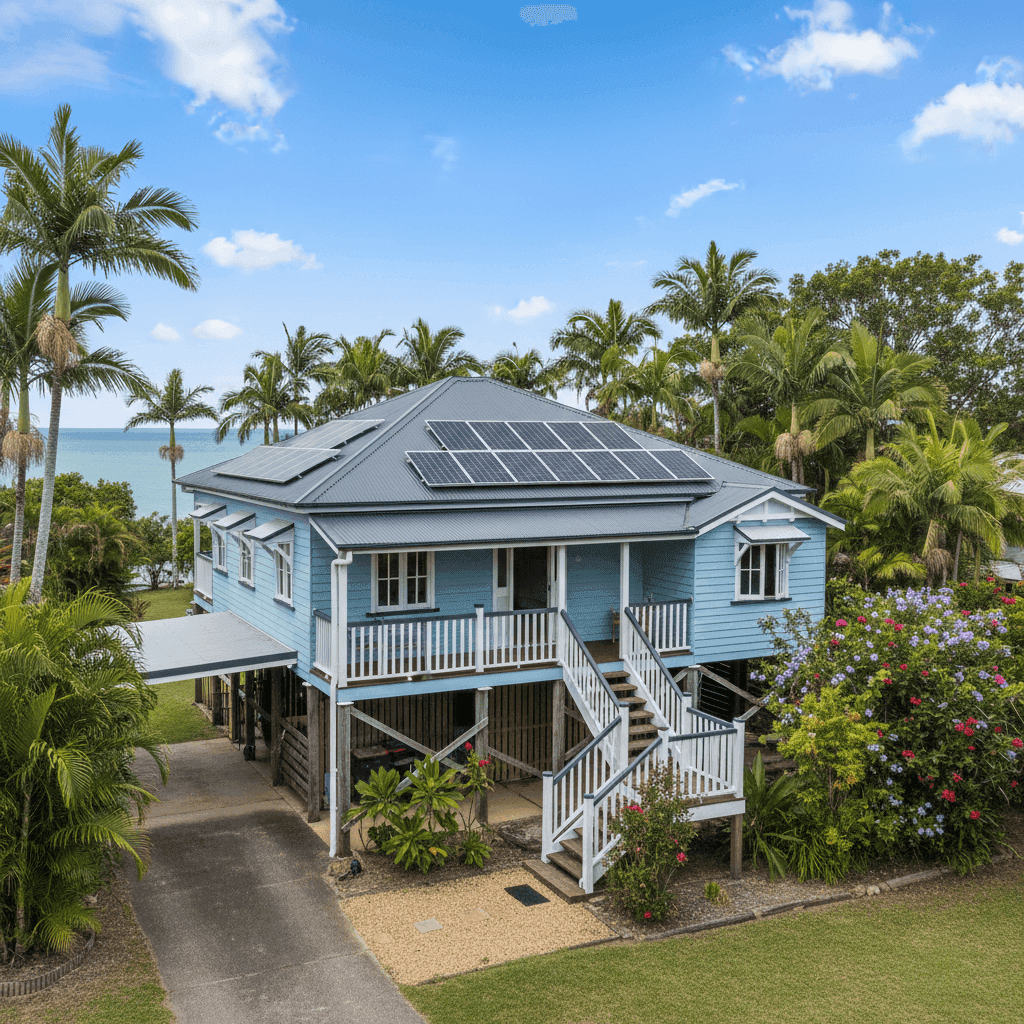
Lamb Island is a quiet, off-grid community nestled in Moreton Bay, southeast Queensland — accessible only by ferry and beloved for its relaxed, island lifestyle. For homeowners on this unique slice of paradise, insuring a free standing home comes with its own set of considerations, from the age of the dwelling to the elevated construction style common across the island. This article breaks down a recent home and contents insurance quote for a 2-bedroom, 1-bathroom free standing home in Lamb Island (QLD 4184), and explores how it stacks up against local, state, and national benchmarks.
---
Is This Quote Fair?
The annual premium on this quote comes in at $2,652 per year (or $254/month), covering both building (sum insured: $343,000) and contents ($50,000), with a $500 excess on each. Our pricing model rates this as CHEAP — below average for the area.
To put that in context, the suburb average for Lamb Island sits at $3,248/year, with a median of $2,990/year. This quote comes in well under both figures — roughly 18% below the suburb average and 11% below the median. It even sits just below the 25th percentile ($2,690/yr), meaning it's among the more competitive quotes recorded for this postcode.
For homeowners who've been paying closer to the suburb average, there's a real opportunity to save here. A difference of nearly $600 per year adds up to over $3,000 across five years — not insignificant for island residents who already manage the added costs of ferry commuting and remote living.
---
How Lamb Island Compares
Lamb Island sits within the Redland LGA, which covers the Southern Moreton Bay Islands as well as the mainland Redlands Coast. The LGA average premium is $3,312/year — again, noticeably higher than this quote.
When you zoom out further, the picture becomes even more striking:
| Benchmark | Annual Premium |
|---|---|
| This Quote | $2,652 |
| Lamb Island Suburb Average | $3,248 |
| Lamb Island Suburb Median | $2,990 |
| Redland LGA Average | $3,312 |
| QLD State Average | $4,547 |
| QLD State Median | $3,931 |
| National Average | $2,965 |
| National Median | $2,716 |
Queensland is one of the most expensive states in Australia for home insurance, largely driven by the elevated risk of severe weather events — cyclones, floods, and storms — particularly in coastal and island communities. The QLD state average of $4,547/year is a sobering figure, sitting more than 53% above the national average of $2,965/year.
This quote, at $2,652/year, actually comes in below the national average — a strong result for a Queensland island property. It's worth noting that the suburb sample size is relatively small (10 quotes), so the local averages may shift as more data is collected, but the trend is clear: this is a competitively priced policy.
---
Property Features That Affect Your Premium
Several characteristics of this property are worth understanding in the context of insurance pricing:
Elevated Construction
The home is elevated by at least 1 metre — a feature that's both common and strategically important on Lamb Island. Elevated homes (often referred to as Queenslander-style) are generally viewed more favourably by insurers when it comes to flood and storm surge risk, as water is less likely to inundate the living areas. This can contribute to a lower premium compared to slab-on-ground homes in flood-prone areas.
Weatherboard Timber Walls
External walls constructed from weatherboard timber are typical of older Queensland homes, and this property — built in 1984 — is no exception. Timber-framed homes can carry slightly higher rebuild costs due to the materials and labour involved, which is reflected in the building sum insured of $343,000. Insurers also consider the fire and weather resistance of the material, so maintaining the condition of weatherboard cladding is important for both safety and insurability.
Steel / Colorbond Roof
A Colorbond steel roof is a popular choice in Queensland for good reason — it's durable, lightweight, and performs well in high-wind conditions. From an insurance perspective, a well-maintained metal roof is generally considered lower risk than older tile or fibrous cement roofing, and may contribute to a more competitive premium.
Solar Panels
With solar panels installed, it's important to confirm that your policy explicitly covers these — both as part of the building sum insured and for any damage caused by weather events. Solar panels on island properties can be particularly exposed to storm and salt-air corrosion, so reviewing the fine print on this is worthwhile.
Age of the Property
Built in 1984, this home is now over 40 years old. Older properties can attract higher premiums due to the increased likelihood of wear-related claims — particularly for plumbing, electrical systems, and roofing. However, a well-maintained 1984 home with a modern Colorbond roof and elevated slab foundation can still achieve very competitive pricing, as evidenced here.
No Pool, No Ducted Climate Control
The absence of a swimming pool and ducted air conditioning simplifies the risk profile slightly — both are items that can increase either building value or liability exposure.
---
Tips for Homeowners in Lamb Island
1. Review your building sum insured regularly Construction costs have risen significantly across Australia in recent years, and island properties can carry additional rebuild expenses due to access and logistics. Make sure your $343,000 sum insured reflects current replacement costs — not just the market value of the home. Underinsurance is a common and costly mistake.
2. Check your solar panel coverage explicitly Don't assume solar panels are automatically covered under your building policy. Ask your insurer whether panels are included in the building sum insured, whether accidental damage is covered, and whether there are any exclusions related to salt-air deterioration — relevant for any Moreton Bay island property.
3. Maintain your weatherboard cladding Timber weatherboard requires regular painting and inspection to prevent moisture ingress, rot, and pest damage. Insurers may refuse claims or apply exclusions if damage is found to result from poor maintenance rather than a sudden insured event. A well-kept exterior also helps with annual renewals.
4. Compare quotes at renewal — don't auto-renew blindly As this quote demonstrates, premiums vary significantly across providers. Given that the suburb average is nearly $600/year more than this quote, shopping around at renewal time can yield real savings. Use a comparison tool like CoverClub to benchmark your renewal offer against the market before accepting it.
---
Ready to Compare Your Own Quote?
Whether you're a Lamb Island local or exploring coverage options for a property on the Southern Moreton Bay Islands, CoverClub makes it easy to see how your premium compares to suburb, LGA, state, and national averages. Get a quote and compare today — it only takes a few minutes and could save you hundreds.