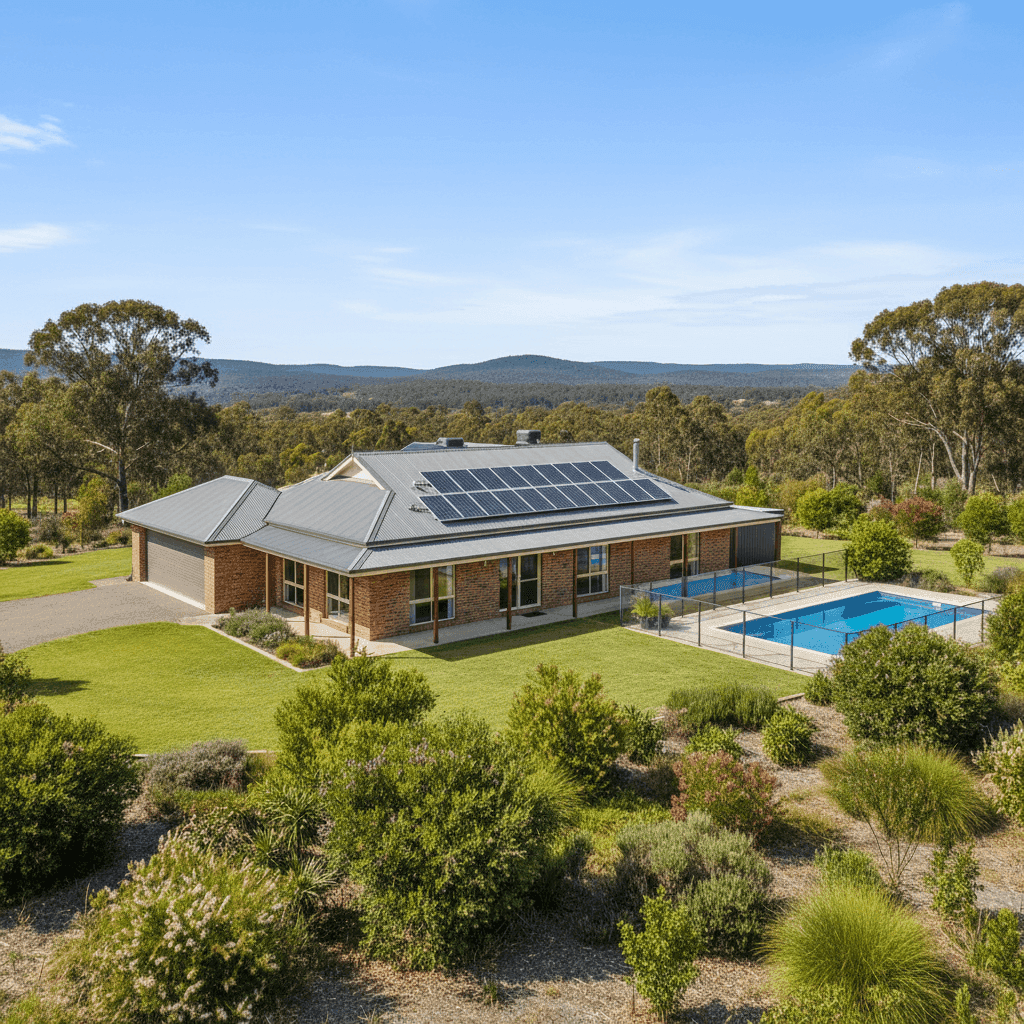
Lambs Valley is a quiet rural locality nestled in the Hunter Valley region of New South Wales, sitting within the Maitland Local Government Area. It's the kind of place where properties tend to be generous in size and character — and this particular quote covers a four-bedroom, two-bathroom free standing home built in 1987, with a building sum insured of $581,000 for building-only cover. If you're a homeowner in the area wondering whether your own premium is reasonable, this analysis is for you.
---
Is This Quote Fair?
The short answer: yes — this quote looks quite competitive.
At $3,002 per year (or approximately $281 per month), this premium has been rated CHEAP — meaning it sits below the average for comparable properties. That's a meaningful result, particularly given the property's size (244 sqm), its pool, solar panels, and a sum insured nudging close to $600,000.
A building excess of $2,000 is on the higher end of the standard range, which is one factor that helps keep the annual premium lower. Essentially, the policyholder is absorbing more out-of-pocket risk in the event of a claim, in exchange for reduced ongoing costs. For homeowners who are financially comfortable taking on that initial outlay, this is often a smart trade-off.
Overall, this quote represents good value relative to what the broader market is charging for similar properties across NSW and nationally.
---
How Lambs Valley Compares
While there isn't enough localised data to produce a suburb-specific average for Lambs Valley just yet, we can draw useful comparisons from the Lambs Valley suburb stats page as more data becomes available. In the meantime, the regional and state-level figures tell an informative story.
| Benchmark | Annual Premium |
|---|---|
| This quote | $3,002 |
| LGA (Maitland) average | $4,142 |
| NSW state average | $3,801 |
| NSW state median | $3,410 |
| National average | $2,965 |
| National median | $2,716 |
A few things stand out here. The Maitland LGA average of $4,142 is notably high — sitting well above both the NSW state average and the national average. This suggests that properties in the broader Maitland region attract elevated premiums, likely due to a combination of flood risk, storm exposure, and the mix of older housing stock in the area.
Against that backdrop, this quote at $3,002 is $1,140 below the LGA average — a saving of roughly 28%. It also comes in $799 below the NSW state average, which is a meaningful difference on an annual basis.
Interestingly, this quote sits slightly above the national average ($2,965) and national median ($2,716). That's not unusual for NSW, where property values and risk profiles tend to push premiums higher than the national norm. The fact that this quote is competitive within NSW while being only modestly above national benchmarks is a positive sign.
---
Property Features That Affect Your Premium
Several characteristics of this property influence where the premium lands — some favourably, some less so.
Double brick construction is generally viewed positively by insurers. It's a durable, fire-resistant material that holds up well in extreme weather and is less susceptible to structural damage than timber-framed alternatives. This likely contributes to a more favourable premium outcome.
Steel/Colorbond roofing is another tick in the right column. Colorbond is lightweight, corrosion-resistant, and performs well in high-wind events. It's a popular choice across regional NSW and is well-regarded by underwriters.
Slab foundation is standard for homes of this era and provides a stable base with fewer maintenance concerns than older pier-and-beam systems.
The swimming pool adds a layer of liability and replacement cost to the policy. Pools increase the overall sum insured and can nudge premiums upward, so it's worth ensuring the pool and associated equipment are correctly captured in your building valuation.
Solar panels are increasingly common on Australian homes, but they do add complexity to building cover. Panels are typically covered as a fixture of the home under building insurance, but it's worth confirming with your insurer that the system — including inverters and mounting hardware — is explicitly included in your policy.
The 1987 construction year places this home in a period of solid but ageing building stock. Properties of this vintage may have older wiring, plumbing, or roofing components that haven't been updated, which can be a risk factor for some insurers. If any major systems have been renovated or upgraded, it's worth noting this when obtaining quotes, as it can positively influence your premium.
---
Tips for Homeowners in Lambs Valley
1. Review your sum insured regularly. With a building sum insured of $581,000 for a 244 sqm home, it's important to ensure this figure reflects current rebuilding costs — not just market value. Construction costs have risen significantly in recent years, and being underinsured at claim time can leave you seriously out of pocket. Use a building cost calculator or speak with a quantity surveyor to validate your figure annually.
2. Understand your flood and storm exposure. The Maitland LGA has well-documented flood risk in certain pockets, and the region is also prone to severe storm events. Even if Lambs Valley itself is not in a high-risk flood zone, it's worth checking your policy's flood definition carefully — some policies distinguish between riverine flooding and storm-water inundation, with different levels of cover applying to each.
3. Consider your excess strategically. This policy carries a $2,000 building excess. If you have the financial buffer to absorb that cost in the event of a claim, maintaining a higher excess in exchange for a lower premium is a sensible strategy. However, if a $2,000 outlay would be a stretch, it may be worth comparing quotes with a lower excess to find the right balance.
4. Don't overlook your solar panels and pool. Both features add real value to your property and should be accurately reflected in your sum insured. Check that your policy explicitly covers solar panel systems (including storm and hail damage) and that pool infrastructure — fencing, pumps, and filtration equipment — is included in your building cover.
---
Compare Quotes for Your Home
Whether you're reviewing an existing policy or shopping around for the first time, it pays to see what the market is offering. CoverClub makes it easy to compare home insurance quotes from a range of Australian insurers — all in one place. Get a quote today and find out whether your current premium is as competitive as it should be.