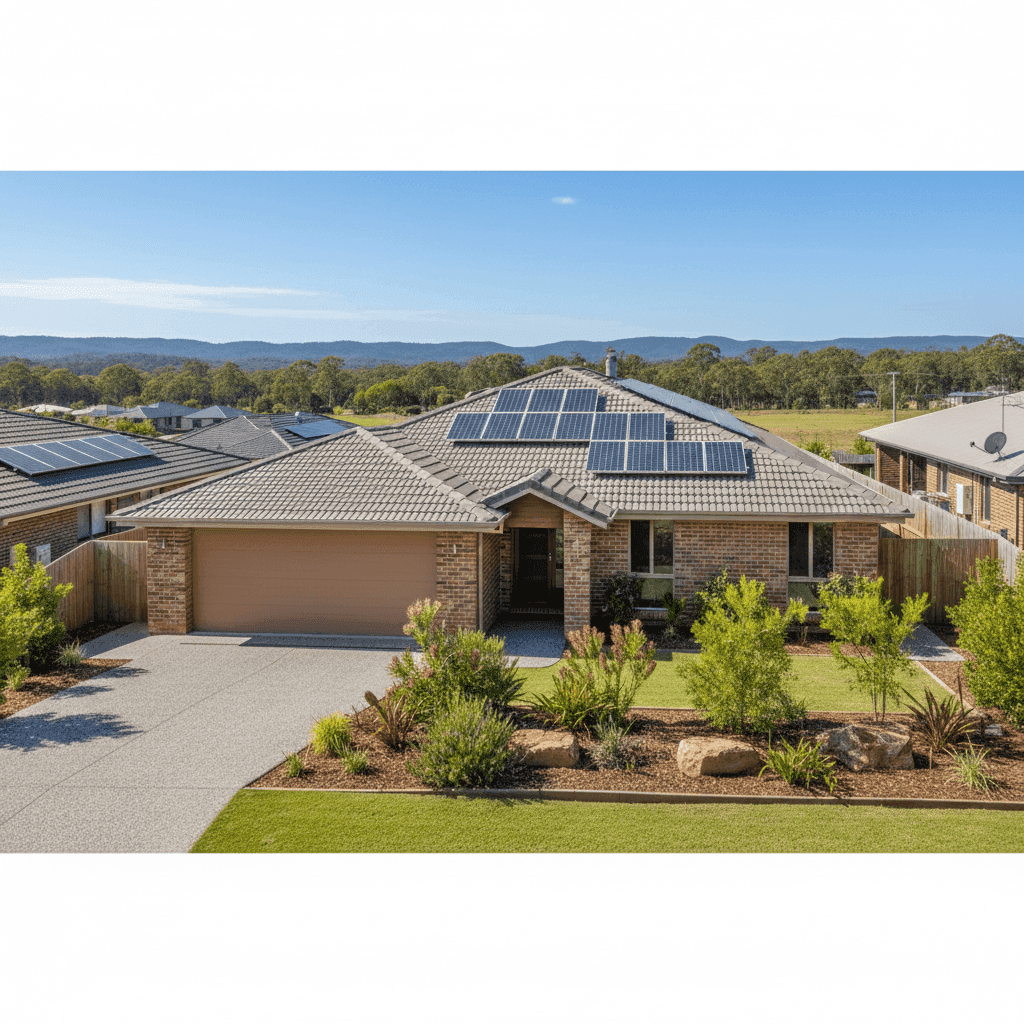
Landsborough is a well-established suburb nestled in the Sunshine Coast hinterland, offering residents a relaxed lifestyle with easy access to the coast and the Glass House Mountains. It's a popular choice for families seeking larger homes on generous blocks — and a five-bedroom free standing home here is a solid investment worth protecting properly. But when a home and contents insurance quote comes in at $7,059 per year, it's worth asking: is that actually reasonable?
This article breaks down a recent quote for a five-bedroom, two-bathroom brick veneer home in Landsborough (postcode 4550), comparing it against local, state, and national benchmarks to help you understand what's driving the cost — and what you can do about it.
---
Is This Quote Fair?
The short answer: this quote is rated Expensive — above average for the area.
At $7,059 annually (or $670 per month), this premium sits well above the suburb average of $3,922 per year and nearly double the suburb median of $3,569. Even compared to the 75th percentile of quotes in Landsborough — meaning 75% of comparable properties pay less — this premium of $7,059 exceeds that benchmark of $4,378 by a significant margin.
That said, context matters. This policy covers a $864,000 building sum insured and $227,000 in contents, which together represent over $1 million in total coverage. Higher insured values naturally push premiums upward, and a larger, well-appointed home will cost more to rebuild or replace than a modest one.
Still, the gap between this quote and the suburb median is substantial enough to suggest there may be room to shop around. A difference of over $3,000 per year is meaningful — and that's exactly why comparing quotes is so important.
---
How Landsborough Compares
To put this quote in perspective, here's how Landsborough stacks up against broader benchmarks, based on data from CoverClub's national insurance statistics:
| Benchmark | Average Premium | Median Premium |
|---|---|---|
| Landsborough (4550) | $3,922/yr | $3,569/yr |
| Sunshine Coast LGA | $7,249/yr | — |
| Queensland | $9,129/yr | $3,903/yr |
| National | $5,347/yr | $2,764/yr |
A few things stand out here. Queensland's average premium of $9,129 is among the highest in the country — but the median of $3,903 tells a very different story. This gap between average and median is a hallmark of Queensland's insurance market, where a relatively small number of high-risk or high-value properties drag the average upward significantly.
Landsborough itself sits in a relatively favourable position within Queensland's insurance landscape. It's not a cyclone-risk zone, it's not coastal, and it doesn't face the same flood exposure as many other parts of the Sunshine Coast region. According to data from CoverClub's Landsborough suburb stats, the local sample of 63 quotes shows a fairly tight spread, with the 25th percentile at $2,956 and the 75th at $4,378 — a range that suggests most homeowners in the area are paying quite reasonable premiums.
The quote in question, at $7,059, sits above even the Sunshine Coast LGA average of $7,249 — though it's within a comparable range when accounting for the high sum insured.
---
Property Features That Affect Your Premium
Several characteristics of this property influence its insurance cost, both positively and negatively.
Brick veneer construction is generally viewed favourably by insurers. It's durable, fire-resistant, and less susceptible to storm damage than timber-framed homes. Combined with a concrete tile roof — another robust material — the structural profile of this home is solid. These features typically support more competitive premiums compared to homes with Colorbond or older roofing materials.
Slab foundation is standard for Queensland homes built in this era and doesn't introduce any particular risk factors. Similarly, tile flooring is practical and low-maintenance, with no significant bearing on premium calculations.
The home was built in 2007, placing it in a relatively modern cohort. Homes built after major building code updates tend to be better insulated, better braced, and generally more resilient — all of which insurers take into account.
Solar panels are worth noting. While they add value to the property and are increasingly common across Queensland, they do introduce a modest additional risk factor for insurers — panels can be damaged in storms, and their replacement cost needs to be factored into the building sum insured. Homeowners should confirm that their policy explicitly covers solar panel damage.
Ducted climate control is another feature that adds replacement value to the home. Ducted systems are expensive to install and repair, and ensuring the building sum insured accurately reflects this is important to avoid being underinsured.
At 214 square metres, this is a generously sized home. Combined with five bedrooms and a high building sum insured of $864,000, the overall replacement cost profile is substantial — and that's the primary driver of the premium.
---
Tips for Homeowners in Landsborough
1. Review your sum insured carefully The building sum insured of $864,000 is the single biggest lever on your premium. Use a quantity surveyor or an online rebuild cost calculator to confirm this figure is accurate — not too high (which wastes money) and not too low (which leaves you underinsured). Many homeowners overestimate rebuild costs by conflating market value with rebuild cost.
2. Compare multiple quotes With a premium this far above the suburb median, shopping around is essential. Insurers price risk differently, and the same property can attract wildly different premiums across providers. Use CoverClub to compare quotes and see what other insurers are offering for your specific property profile.
3. Confirm solar panel coverage If your policy doesn't explicitly list solar panels as a covered item, you may find yourself out of pocket after a hail or storm event. Ask your insurer directly — and check whether the panels are covered under the building or as a separate listed item.
4. Consider your excess Both the building and contents excess on this policy sit at $1,000. Opting for a higher voluntary excess (say, $2,000 or $2,500) can meaningfully reduce your annual premium. If you have a strong claims history and financial capacity to absorb a higher upfront cost in the event of a claim, this can be a smart trade-off.
---
Compare Your Home Insurance Today
Whether you're renewing an existing policy or shopping for the first time, it pays to know where you stand. CoverClub makes it easy to see how your premium compares to others in your suburb and across Queensland — and to get quotes from multiple insurers in one place.
Get a home insurance quote for your Landsborough property today and find out if you're paying more than you need to.