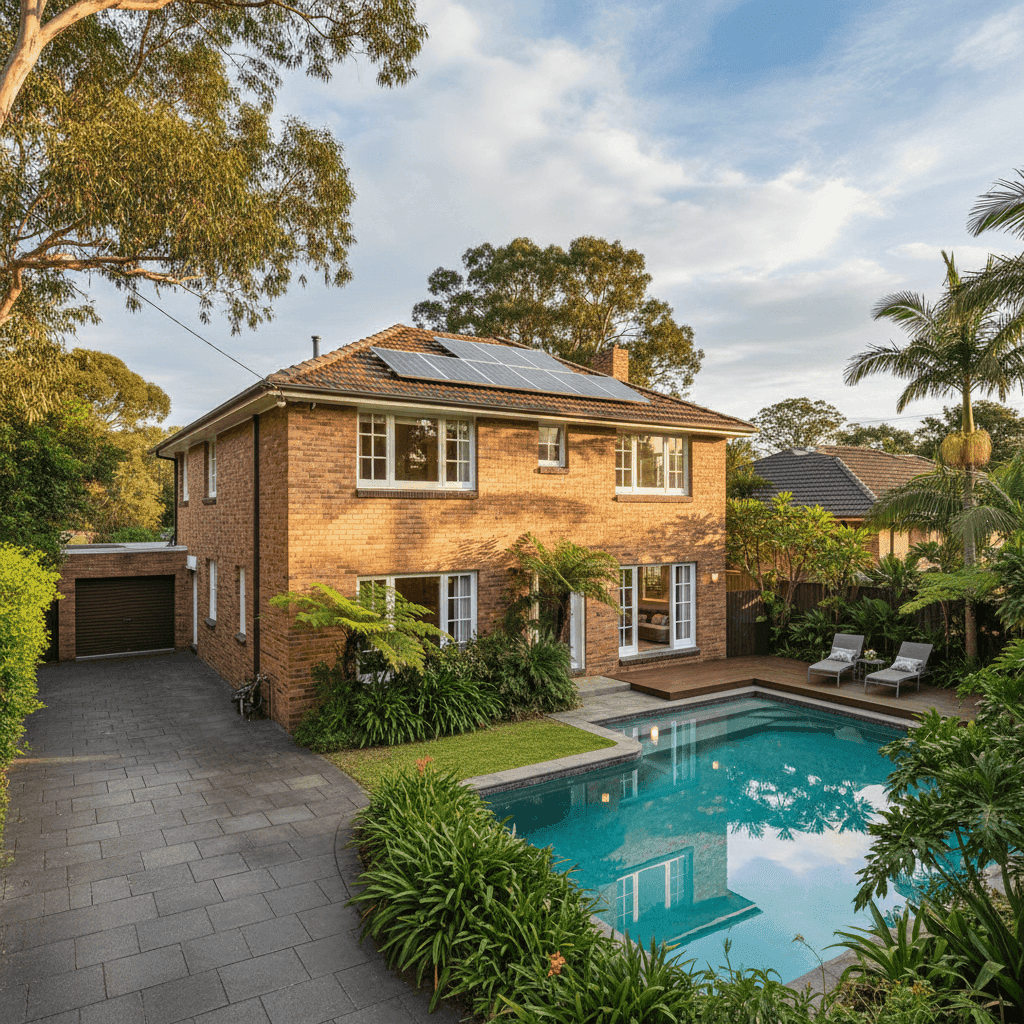
If you own a free standing home in Lane Cove West, NSW 2066, you're sitting in one of Sydney's most desirable lower north shore suburbs — and your home insurance premium should reflect that. This article breaks down a real home and contents insurance quote for a five-bedroom, three-bathroom property in the area, comparing it against local, state, and national benchmarks so you can judge whether you're getting a fair deal.
---
Is This Quote Fair?
The annual premium for this property comes in at $2,613 per year (or $250 per month), covering both building (sum insured: $1,019,000) and contents ($125,000), each with a $5,000 excess.
Our price rating for this quote? Cheap — below average. That's a strong result for a home of this size and specification.
To put it in perspective:
- The NSW state average premium is $9,528/yr — this quote is roughly 73% cheaper than that figure.
- The NSW state median sits at $3,770/yr — still $1,157 more expensive than this quote.
- The national average is $5,347/yr, and the national median is $2,764/yr — again, both higher than what's been quoted here.
- The Willoughby LGA average (which covers Lane Cove West) is $3,277/yr — this quote undercuts that by over $660.
By every meaningful benchmark, this is a competitively priced policy. For a home with a building sum insured exceeding $1 million, securing cover below the national median is a genuinely strong outcome.
That said, it's worth noting that state averages in NSW are heavily skewed upward by high-risk properties — particularly those in flood-prone or bushfire-affected areas. The median is often the more reliable comparison point, and even against that figure, this quote holds up well.
---
How Lane Cove West Compares
Lane Cove West sits within the Willoughby LGA, a predominantly residential area known for its leafy streets, established homes, and proximity to the Lane Cove National Park. You can explore detailed premium data for the suburb at CoverClub's Lane Cove West stats page.
While no suburb-level comparison data is currently available for postcode 2066, the Willoughby LGA average of $3,277/yr gives us a useful local anchor. Homeowners across the LGA are paying meaningfully more on average than the quote analysed here.
For broader context, NSW home insurance statistics show that premiums across the state vary enormously — from under $1,500 in low-risk metro suburbs to well over $10,000 in areas affected by flooding or extreme weather. Lane Cove West, being a relatively low-risk suburban pocket, generally benefits from more moderate pricing. Comparing against national home insurance data reinforces that this quote is sitting in a favourable position.
---
Property Features That Affect Your Premium
Several characteristics of this property are worth unpacking, as they each play a role in how insurers assess risk and calculate premiums.
Double Brick Construction
Built in 1956, this home features double brick external walls — a construction type that insurers generally view favourably. Double brick offers excellent structural integrity, superior fire resistance, and strong durability compared to timber-framed or clad alternatives. Older double brick homes do come with some caveats (ageing mortar, potential for subsidence), but on balance, this construction type tends to attract competitive premiums.
Tiled Roof
A tiled roof is another positive signal for insurers. Tiles are durable, fire-resistant, and widely understood by assessors. They're less prone to storm damage than corrugated iron in many scenarios, though they can crack under hail. Regular maintenance is important to keep coverage conditions met.
Slab Foundation
The concrete slab foundation is a stable base for a home of this age. While slab homes can be vulnerable to subsidence in reactive clay soils, Lane Cove West's geology is generally stable, reducing this as a risk factor.
Pool, Solar Panels & Ducted Climate Control
The presence of a swimming pool, solar panels, and ducted climate control all contribute to the overall contents and building sum insured. Pools increase liability exposure slightly, while solar panels add replacement cost to the building sum. Ducted systems are expensive to repair or replace, so ensuring your building sum insured accurately reflects these features — as it appears to here at $1,019,000 — is critical to avoiding underinsurance.
Above-Average Fittings
With above-average fittings quality, the cost to rebuild or repair this home is higher than a standard spec property of the same size. At 235 sqm, this is a substantial home, and the building sum insured of just over $1 million appears appropriate given the quality of finishes involved.
No Cyclone Risk
Lane Cove West is not in a cyclone risk area, which removes one of the more significant premium loading factors that affect properties in northern Queensland and parts of WA. This contributes to the more moderate pricing seen here.
---
Tips for Homeowners in Lane Cove West
1. Review Your Building Sum Insured Annually
With construction costs rising across Sydney, the cost to rebuild a 235 sqm double brick home with above-average fittings, a pool, and solar panels can shift significantly year on year. Make sure your sum insured keeps pace — underinsurance is one of the most common and costly mistakes homeowners make at claim time.
2. Check What Your Policy Says About the Pool
Swimming pools can be a grey area in home insurance. Some policies cover pool infrastructure (fencing, pumps, filtration systems) under the building section; others exclude certain components. Read your Product Disclosure Statement carefully and ask your insurer directly if you're unsure.
3. Document Your Contents Thoroughly
With $125,000 in contents cover, it's worth maintaining an up-to-date home inventory — photos, receipts, and serial numbers where possible. This makes the claims process significantly smoother and helps ensure you're not underinsured on the contents side either.
4. Consider Your Excess Strategy
Both the building and contents excess on this policy are set at $5,000. A higher excess typically reduces your premium, but it also means more out-of-pocket expense at claim time. For a home of this value, a $5,000 excess is reasonable — but make sure it's an amount you could comfortably cover if needed.
---
Compare Quotes and See If You Can Do Better
Even a quote rated "cheap" deserves a second look — insurance markets shift, and a better deal may be available. Whether you're renewing soon or just curious about what's out there, CoverClub makes it easy to compare home and contents insurance quotes for your specific property in Lane Cove West. Enter your address, tell us about your home, and see how the market stacks up for you.