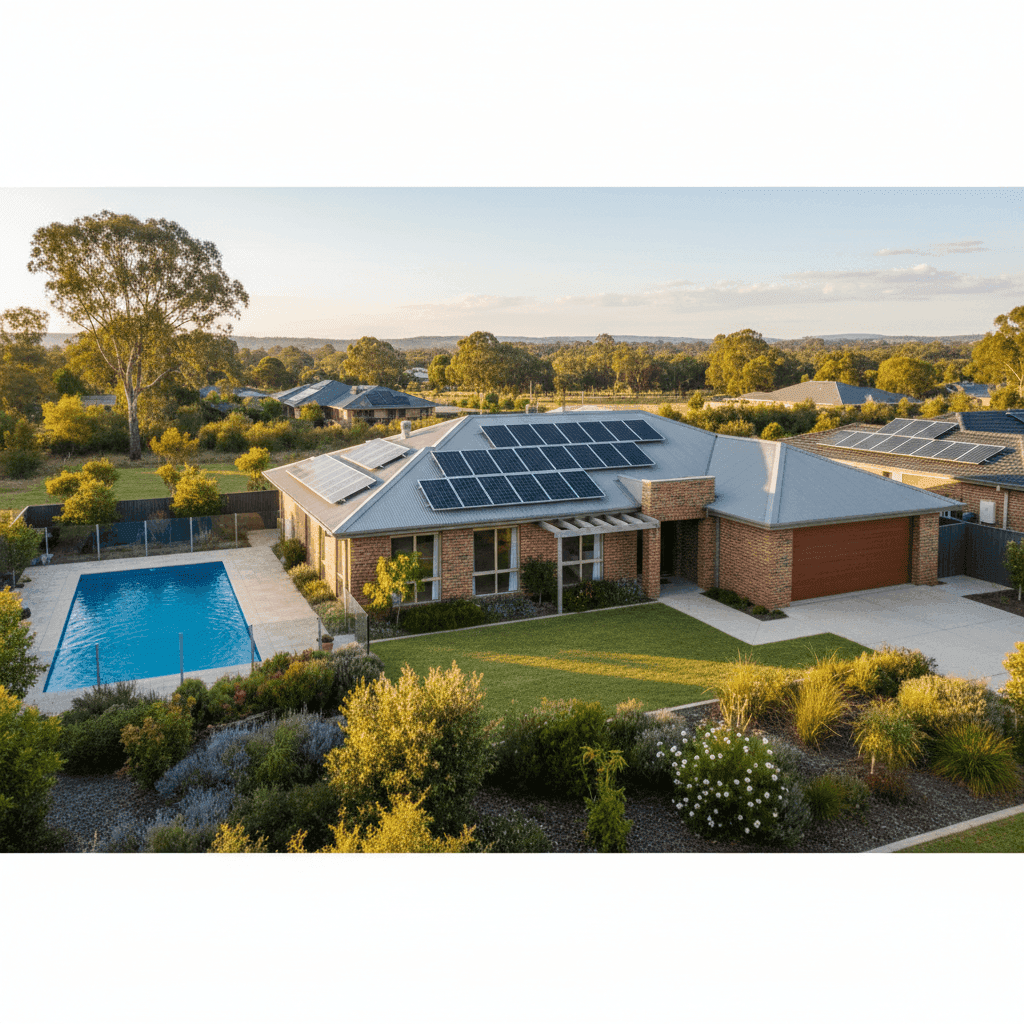
Langwarrin South is a leafy, semi-rural suburb on the southern fringe of Melbourne's Frankston local government area — a popular choice for families seeking space, privacy, and a relaxed lifestyle without straying too far from city amenities. Properties here tend to be generous in size, and that's reflected in this real-world quote we're breaking down today: a four-bedroom, two-bathroom free-standing home built in 1977, sitting on a slab foundation with brick veneer walls and a Colorbond steel roof. The policy covers both building and contents, with a building sum insured of $900,000 and $50,000 in contents cover.
So, is the quoted premium of $3,251 per year (or $312/month) a good deal? Let's dig into the numbers.
---
Is This Quote Fair?
Our pricing analysis rates this quote as Fair — Around Average, which means you're not being overcharged, but there's likely room to find a better deal if you shop around.
The annual premium of $3,251 sits modestly above the Victorian state average of $3,000/yr and the state median of $2,718/yr, but it remains well below the national average of $5,347/yr. When you factor in the relatively high building sum insured ($900,000) and the inclusion of features like a pool, solar panels, and ducted climate control — all of which add to replacement cost and risk exposure — this premium is arguably reasonable for what's being covered.
That said, "fair" doesn't mean "the best available." A "Fair" rating is a prompt to compare, not a reason to settle. Insurers price risk differently, and the same property can attract premiums that vary by hundreds of dollars depending on which provider you approach.
---
How Langwarrin South Compares
Here's how this quote stacks up against broader benchmarks:
| Benchmark | Annual Premium |
|---|---|
| This Quote | $3,251 |
| LGA (Frankston) Average | $3,283 |
| VIC State Average | $3,000 |
| VIC State Median | $2,718 |
| National Average | $5,347 |
| National Median | $2,764 |
Interestingly, this quote is almost exactly in line with the Frankston LGA average of $3,283/yr — just $32 below it. This suggests the insurer has priced the property consistently with local market norms, which is a good sign that the quote is based on accurate risk assessment rather than a blanket pricing approach.
Compared to the national average, this property is sitting roughly $2,100 below what Australians pay on average — a meaningful difference that reflects Victoria's comparatively lower catastrophe risk profile versus states like Queensland or Western Australia, where cyclone and flood exposure can dramatically inflate premiums.
---
Property Features That Affect Your Premium
Several characteristics of this property directly influence how insurers calculate the premium. Understanding them helps you see where your money is going — and where you might have leverage.
Brick Veneer Walls & Colorbond Roof
Brick veneer is a widely used construction type in Australian suburbs and is generally viewed favourably by insurers. It offers solid fire resistance and durability. Combined with a steel Colorbond roof — which is lightweight, corrosion-resistant, and performs well in high-wind conditions — this home presents a relatively low structural risk profile. Both materials are cost-effective to repair, which can help keep premiums in check.
Built in 1977
Homes from this era can attract slightly higher premiums due to ageing building services (plumbing, wiring, and roofing materials may be approaching end-of-life). Insurers may factor in the increased likelihood of escape-of-water claims or electrical issues in older homes. Keeping up with maintenance and having documented upgrades can work in your favour at renewal time.
Swimming Pool
A pool adds to the replacement cost of the property and introduces a liability consideration. Most insurers include pool structures under the building sum insured, so it's important to ensure your $900,000 cover is sufficient to rebuild both the home and the pool if needed.
Solar Panels
Solar panels are increasingly common on Australian homes, but they do add complexity to insurance. Panels on the roof are typically covered under building insurance, but it's worth confirming with your insurer that your system — including inverters and mounting hardware — is explicitly included in your policy wording.
Ducted Climate Control
Ducted systems are expensive to replace. A full ducted heating and cooling system can cost $10,000–$25,000 or more to reinstate, so it's worth verifying this is captured in your building sum insured rather than being an afterthought.
Slab Foundation & Tile Flooring
A concrete slab foundation is standard for homes of this era and generally considered low-risk by insurers. Tiled flooring is durable and less susceptible to water damage than timber, which can be a minor positive factor in the overall risk assessment.
---
Tips for Homeowners in Langwarrin South
1. Review Your Building Sum Insured Annually
At $900,000, this policy carries a substantial building sum insured — which is appropriate for a 244 sqm home with a pool and premium fixtures. However, construction costs in Victoria have risen sharply in recent years. Use an independent building cost calculator each year to ensure your sum insured keeps pace with actual rebuild costs. Being underinsured can be financially devastating in the event of a total loss.
2. Increase Your Excess to Lower Your Premium
The building excess on this policy is $2,000 and the contents excess is $1,000. If you have emergency savings and can comfortably absorb a higher out-of-pocket cost in a claim, ask your insurer what premium reduction you'd receive by raising the excess. In many cases, moving from a $1,000 to a $2,500 excess can reduce your annual premium by 10–15%.
3. Bundle and Loyalty-Check Your Policy
Home and contents policies are often discounted when bundled together with the same insurer — which this policy already does. However, loyalty doesn't always pay in insurance. Insurers frequently offer better rates to new customers than to existing ones. Set a calendar reminder 6–8 weeks before your renewal date to compare quotes on CoverClub and check whether a switch makes financial sense.
4. Document Your Contents Thoroughly
With $50,000 in contents cover, it's worth taking the time to create a home contents inventory — a room-by-room record of your belongings with photos and approximate values. This makes the claims process significantly smoother and helps you verify whether $50,000 is truly adequate. Many households underestimate their contents value, particularly when factoring in electronics, appliances, furniture, clothing, and outdoor equipment.
---
Compare Your Options with CoverClub
Whether you're renewing an existing policy or shopping for the first time, CoverClub makes it easy to see how your premium stacks up and find better value cover. Get a home insurance quote today and compare options tailored to your property in Langwarrin South. You can also explore suburb-level insurance data for Langwarrin South and state-wide trends across Victoria to make a more informed decision at renewal time.