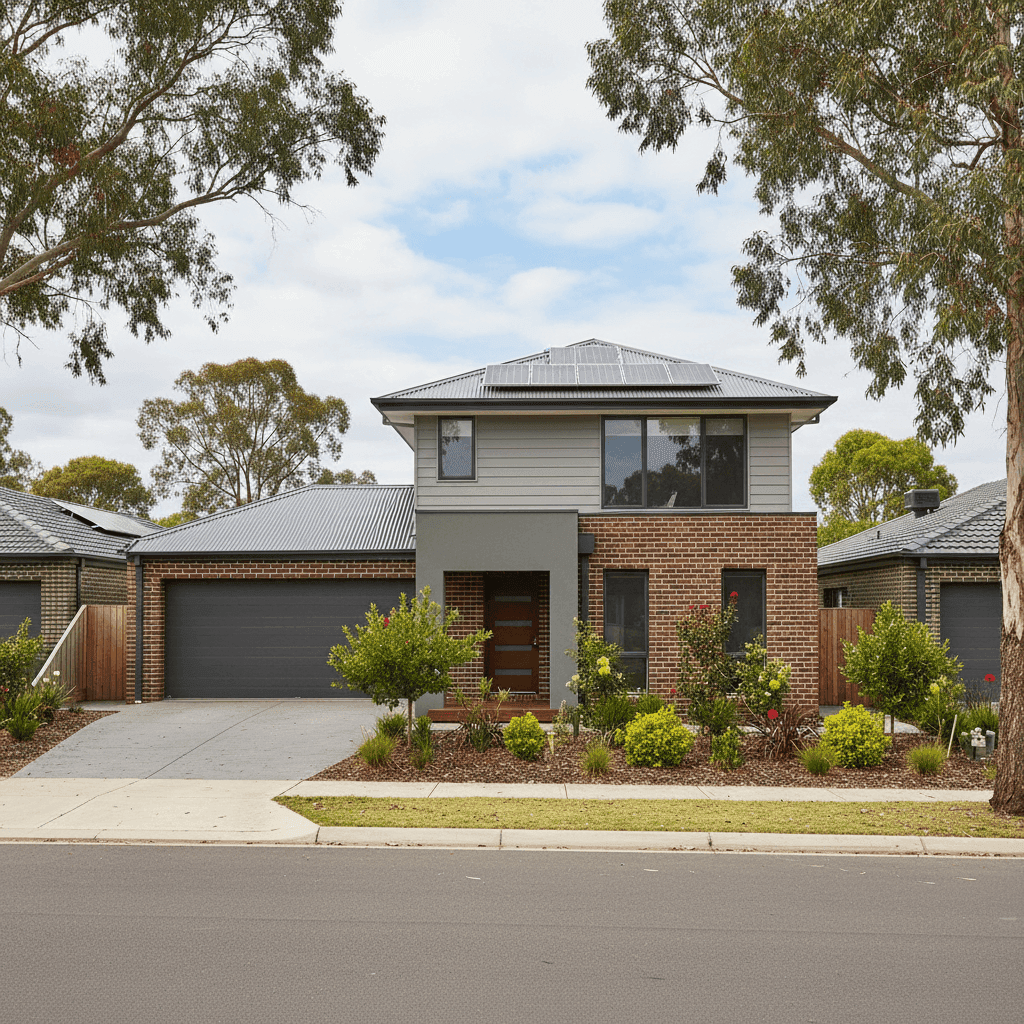
If you own a free standing home in Langwarrin, VIC 3910, you're probably wondering whether you're paying a fair price for home and contents insurance — or quietly overpaying without realising it. This article breaks down a real insurance quote for a three-bedroom, double brick home in the suburb, and benchmarks it against what other Langwarrin homeowners, Victorians, and Australians across the country are typically paying. Whether you're shopping around for the first time or reviewing your renewal, the numbers here should give you a solid reference point.
---
Is This Quote Fair?
The quote in question sits at $1,396 per year (or roughly $135 per month) for combined home and contents cover, with a building sum insured of $503,000 and contents valued at $120,000. The building excess is $2,000 and the contents excess is $1,000.
Our price rating for this quote? Cheap — below average. That's a genuinely positive result for the homeowner.
To put it in context: the 25th percentile of quotes in Langwarrin sits at $1,490 per year, meaning this premium actually comes in below the cheapest quarter of comparable local quotes. In other words, fewer than one in four Langwarrin homeowners are paying this little for equivalent cover. That's a strong outcome by any measure.
The suburb average is $2,583/yr and the median is $2,233/yr — so this quote represents a saving of roughly $837 compared to the median and over $1,187 compared to the average. At the higher end of the local market, some homeowners are paying upwards of $3,491/yr (the 75th percentile), which makes this quote look even more competitive.
---
How Langwarrin Compares
Zooming out to a broader picture, Langwarrin actually sits in a relatively affordable part of the Victorian insurance landscape. Here's how the numbers stack up:
| Benchmark | Average Premium | Median Premium |
|---|---|---|
| Langwarrin (3910) | $2,583/yr | $2,233/yr |
| LGA (Frankston) | $1,940/yr | — |
| Victoria | $2,921/yr | $2,694/yr |
| National | $2,965/yr | $2,716/yr |
A few things stand out here. First, the Frankston LGA average of $1,940/yr is notably lower than the broader Victorian average — suggesting that properties in this part of Melbourne's south-east peninsula tend to attract more competitive premiums than many other parts of the state. Langwarrin's own suburb average of $2,583/yr sits above the LGA figure, but still below the Victorian and national averages.
For a deeper look at how Langwarrin compares with nearby suburbs, visit the Langwarrin suburb insurance stats page. You can also explore Victoria-wide insurance data or check out the national home insurance benchmarks for a broader perspective.
---
Property Features That Affect Your Premium
Not all homes are priced the same, and insurers weigh up a range of property characteristics when calculating your premium. Here's how the features of this particular home likely influence its pricing:
Double Brick Construction Double brick is generally viewed favourably by insurers. It's a robust, fire-resistant material that holds up well structurally, which can contribute to lower rebuild risk assessments. Homes built with double brick often attract more competitive premiums compared to those with timber or lightweight cladding.
Steel / Colorbond Roof A Colorbond roof is another tick in the box. Steel roofing is durable, low-maintenance, and performs well in both fire-prone and storm-prone conditions. Insurers tend to rate it positively compared to older materials like terracotta tiles, which can crack or dislodge more easily.
Slab Foundation Concrete slab foundations are standard across much of Victoria and are generally considered stable. They don't carry the same risk profile as older pier-and-beam foundations, which can be more susceptible to movement, moisture, and pest damage.
Construction Year: 1979 A home built in 1979 is now over 45 years old. While the double brick construction adds longevity, older homes can attract slightly higher premiums due to the age of plumbing, electrical wiring, and other systems that may need updating. It's worth ensuring your building sum insured reflects current rebuild costs, including any upgrades made over the decades.
Solar Panels The property includes solar panels, which are an increasingly common feature but one that insurers handle differently. Some policies cover solar panels as part of the building; others treat them as a separate item or exclude them entirely. It's worth confirming with your insurer exactly how your solar system is covered — particularly for storm damage or accidental breakage.
Standard Fittings, Carpet Flooring, No Pool Standard fittings keep rebuild costs predictable, which generally works in your favour at premium time. Carpet throughout (rather than hardwood or polished concrete) is straightforward to value and replace. The absence of a pool also removes a source of liability and maintenance risk that can push premiums up.
---
Tips for Homeowners in Langwarrin
1. Check your solar panel coverage explicitly Don't assume your solar panels are automatically covered under your building policy. Ask your insurer to confirm whether the panels, inverter, and mounting hardware are included — and under what circumstances a claim would be paid. Some policies require panels to be professionally installed and listed separately.
2. Review your building sum insured regularly With a construction year of 1979, your home may have had renovations, extensions, or upgrades over the years. The cost to rebuild a home today — including labour, materials, and compliance with current building codes — can be significantly higher than many homeowners expect. Use a building cost calculator or speak to a quantity surveyor to make sure your $503,000 sum insured is still adequate.
3. Consider your excess levels carefully This policy carries a $2,000 building excess and a $1,000 contents excess. Higher excesses typically mean lower premiums, but it's important to make sure you could comfortably cover those amounts out of pocket in the event of a claim. If $2,000 would be a stretch, it may be worth comparing quotes with a lower excess — even if the annual premium is slightly higher.
4. Don't set and forget at renewal Insurance premiums can shift significantly from year to year, and loyalty doesn't always pay. If your renewal notice arrives and the premium has jumped, take 15 minutes to compare alternatives. The gap between the cheapest and most expensive quotes in Langwarrin spans more than $2,000 per year — which is a meaningful amount to leave on the table.
---
Ready to Compare Home Insurance in Langwarrin?
Whether this quote looks like a great deal or a useful benchmark, the best way to know you're getting value is to compare. CoverClub makes it easy to see multiple quotes side by side for your specific property. Get a home insurance quote now and find out where your current premium really sits in the market.