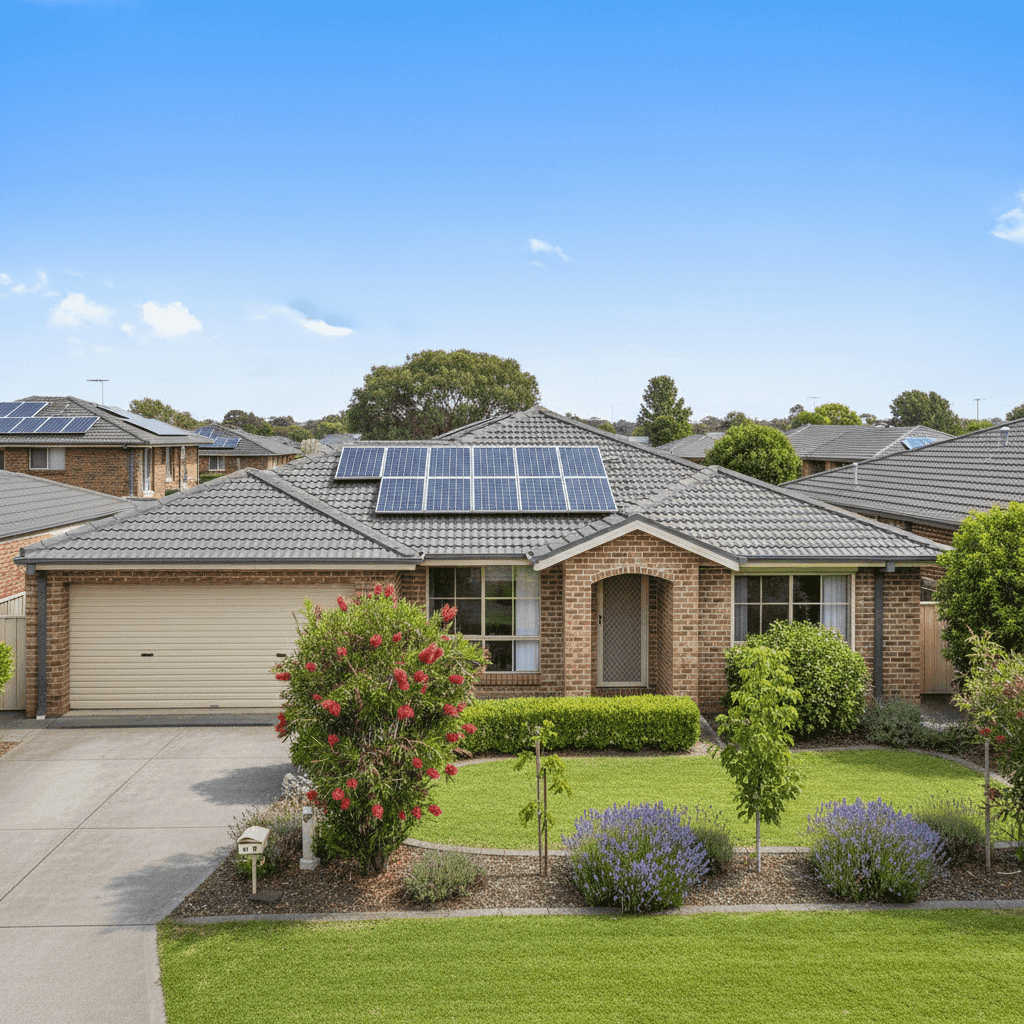
If you own a free standing home in Lara, VIC 3212, you've probably wondered whether you're paying a fair price for home insurance — or whether there's a better deal out there. This article breaks down a real home and contents insurance quote for a 3-bedroom, 2-bathroom brick veneer home in Lara, compares it against local, state, and national benchmarks, and offers practical tips to help you make a more informed decision.
---
Is This Quote Fair?
The quote in question comes in at $1,401 per year (or $134/month) for combined home and contents cover, with a $500,000 building sum insured and $50,000 in contents cover. Both the building and contents excess are set at $1,000.
Our pricing analysis rates this quote as FAIR — Around Average.
That's a reasonable outcome. Based on 122 quotes collected for Lara (postcode 3212), the suburb average sits at $1,455/year and the median at $1,343/year. At $1,401, this quote lands neatly between those two figures — slightly below the average but a touch above the median. In practical terms, roughly half of Lara homeowners are paying less, and half are paying more.
The suburb's interquartile range (25th to 75th percentile) runs from $1,007 to $1,765 per year, which tells us there's meaningful variation in what people pay locally. This quote falls comfortably within that middle band, suggesting it's neither a standout bargain nor an overpriced outlier.
---
How Lara Compares to the Rest of Victoria and Australia
One of the most striking things about this quote is just how favourably Lara stacks up against broader benchmarks.
| Benchmark | Average Premium |
|---|---|
| Lara (suburb) | $1,455/yr |
| Greater Geelong (LGA) | $1,754/yr |
| Victoria (state) | $3,000/yr |
| Australia (national) | $5,347/yr |
Compared to the Victorian state average of $3,000/year, this quote is less than half the price — a significant saving. Even against the state median of $2,718, Lara homeowners are clearly benefiting from a lower-risk profile.
Zooming out further, the national average premium sits at $5,347/year, with a national median of $2,764. The higher national average is largely driven by premiums in cyclone-prone regions of Queensland and Western Australia, where rebuilding costs and weather risks are substantially elevated. Lara's position well below these figures reflects its comparatively benign risk environment.
Even within the Greater Geelong LGA, where the average is $1,754/year, Lara comes in notably cheaper — suggesting the suburb itself carries lower assessed risk than some neighbouring areas in the region.
---
Property Features That Affect Your Premium
Several characteristics of this property play a meaningful role in determining its insurance cost.
Brick veneer construction is generally viewed favourably by insurers. It offers solid fire resistance and structural durability, which can translate to lower premiums compared to weatherboard or lightweight cladding. Combined with a tiled roof, this home presents a profile that insurers typically consider lower risk for both fire and storm damage.
The 1982 construction year is worth noting. Homes built in this era are well past the early settling period and have a known track record, but they're also old enough that ageing infrastructure — plumbing, wiring, and roofing — can occasionally attract scrutiny. Some insurers may factor this into their pricing, particularly for building cover.
The slab foundation is standard for homes of this age and region, and generally doesn't attract a premium loading. Similarly, tile flooring is considered durable and low-maintenance from an insurer's perspective.
The presence of solar panels is increasingly common across Australian suburbs, and most insurers now include solar systems in building cover as standard — though it's always worth confirming this with your insurer. Ducted climate control adds to the overall value of the home's fixtures and fittings, which is reflected in the building sum insured.
With standard fittings quality and a building size of 139 sqm, the $500,000 sum insured appears reasonable for a home of this type in the Lara area, accounting for full rebuild costs including labour, materials, and site clearance.
---
Tips for Homeowners in Lara
1. Review your sum insured regularly Building costs have risen sharply across Australia in recent years. A sum insured that was accurate two or three years ago may now fall short of what it would actually cost to rebuild your home. Use a building cost calculator or speak with a local builder to sense-check your figure annually.
2. Check what's included for your solar panels If you have solar panels — as this property does — confirm with your insurer whether they're covered under the building policy, at what value, and whether accidental damage is included. Coverage terms vary between providers, and gaps can be costly.
3. Consider whether your excess level is right for you Both the building and contents excess on this policy are set at $1,000. Opting for a higher excess can reduce your annual premium, which may make sense if you have a solid emergency fund and rarely make small claims. Conversely, a lower excess offers more protection if an unexpected event occurs.
4. Shop around at renewal time Even if your current premium feels fair, the insurance market changes constantly. New providers enter the market, and pricing algorithms are updated regularly. Running a comparison at renewal — even if you ultimately stay with your current insurer — ensures you're not quietly drifting into an overpriced policy.
---
Compare Home Insurance Quotes in Lara
Whether you're reviewing an existing policy or shopping for cover on a new property, it pays to see what's available across multiple insurers. At CoverClub, we make it easy to compare home and contents quotes side by side, tailored to your specific property and location. Get a quote today and find out if you could be paying less for the same level of cover — or getting better cover for what you're already paying.
For more localised data on insurance costs in your area, visit our Lara suburb stats page or explore Victoria-wide insurance trends.