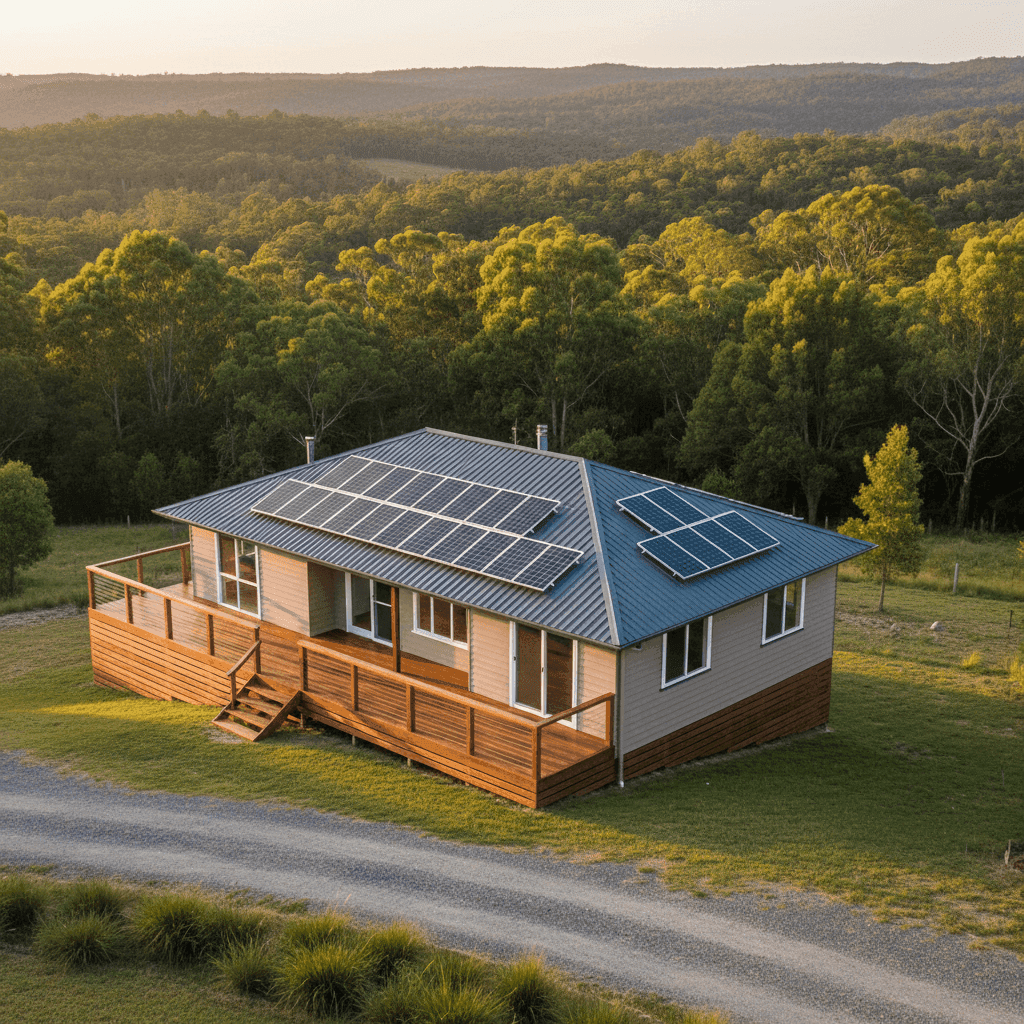
Nestled in the hinterland of northern New South Wales, Larnook (postcode 2480) is a quiet rural locality that offers a relaxed lifestyle away from the coastal bustle. But living in a regional area doesn't mean you can escape the complexities of home insurance — in fact, location, construction type, and local risk factors can all push premiums in unexpected directions. This article breaks down a real home and contents insurance quote for a five-bedroom free-standing home in Larnook, examines how it stacks up against local and national benchmarks, and offers practical guidance for homeowners in the area.
---
Is This Quote Fair?
The quote in question sits at $3,515 per year (or $330 per month) for combined home and contents cover, with a building sum insured of $445,000 and contents valued at $50,000. Both the building and contents excess are set at $1,000.
Based on our pricing data, this quote is rated CHEAP — below average for the Larnook area. That's genuinely good news for the homeowner. With a suburb average of $5,593 per year and a suburb median of $5,716 per year, this premium comes in roughly 37% below the local average — a meaningful saving of over $2,000 annually.
To put it another way, most homes in the 2480 postcode are being quoted somewhere between $4,487 (25th percentile) and $6,523 (75th percentile) per year. This quote falls well below the lower end of that range, suggesting the insurer has assessed the risk favourably — likely a reflection of the property's specific characteristics and the homeowner's coverage choices.
---
How Larnook Compares
Understanding where your premium sits relative to broader benchmarks helps you gauge whether you're getting a competitive deal. Here's how Larnook stacks up:
| Benchmark | Annual Premium |
|---|---|
| This Quote | $3,515 |
| Larnook Suburb Average | $5,593 |
| Larnook Suburb Median | $5,716 |
| NSW State Average | $9,528 |
| NSW State Median | $3,770 |
| National Average | $5,347 |
| National Median | $2,764 |
| Ballina LGA Average | $23,241 |
A few things stand out here. First, the NSW state average of $9,528 is extraordinarily high — this is heavily influenced by coastal and flood-prone areas across the state, particularly in regions like the Northern Rivers where cyclone risk, flooding, and storm damage push premiums sky-high for many properties. The state median of $3,770 is a more representative figure for typical NSW homeowners, and this quote sits just slightly above it.
The Ballina LGA average of $23,241 is a stark reminder of how dramatically risk can vary within a single local government area. Coastal and low-lying parts of the Ballina LGA face significant flood and storm exposure, which inflates the LGA-wide average considerably. Larnook, being an inland hinterland community at higher elevation, is largely shielded from these coastal risk factors — and that's reflected in the more modest premiums seen locally.
Compared to the national average of $5,347, this quote is also below par, though the national median of $2,764 shows that cheaper properties in lower-risk areas across Australia can attract quite modest premiums.
You can explore more local data on the Larnook suburb insurance stats page, or compare against NSW state-wide averages and national benchmarks.
---
Property Features That Affect Your Premium
Every home is different, and insurers weigh up a range of property characteristics when calculating your premium. Here's how the features of this particular home are likely influencing the quote:
Weatherboard timber walls are one of the more significant factors. Timber-framed, weatherboard homes are generally considered higher risk than brick veneer or double-brick construction because they are more susceptible to fire damage and can be costlier to repair or rebuild. This can push premiums upward compared to masonry homes of similar size.
Steel/Colorbond roofing is viewed favourably by most insurers. It's durable, low-maintenance, and performs well in storms compared to older tile or fibrous cement roofing. This likely has a moderating effect on the premium.
Stump foundations are common in older Queensland and northern NSW homes, and while they allow for good ventilation and are well-suited to sloped terrain, they can introduce some risk around subfloor access and structural movement. Insurers may factor this in, though it's rarely a major premium driver on its own.
Timber and laminate flooring is standard for the region and doesn't typically attract a loading, though it can be more expensive to replace than concrete slab if water damage occurs.
Solar panels are present on this property. While solar adds value to a home, it also adds replacement cost in the event of a claim — particularly during hail or storm events. It's worth confirming with your insurer that solar panels are explicitly covered under your policy, as some policies treat them as an optional add-on.
Standard fittings quality and a 135 sqm building size for a five-bedroom home suggests a practical, no-frills layout. This keeps the rebuild cost estimate reasonable, which is likely contributing to the competitive premium.
The absence of a pool and ducted climate control also removes two common sources of additional risk and replacement cost from the equation.
---
Tips for Homeowners in Larnook
1. Review your sum insured regularly Building costs have risen sharply across regional NSW in recent years. A $445,000 sum insured on a 135 sqm weatherboard home may be adequate today, but it's worth getting a professional rebuild cost estimate every couple of years to ensure you're not underinsured. Underinsurance is one of the most common — and costly — mistakes homeowners make.
2. Confirm solar panel coverage As mentioned above, solar panels are not always automatically included in standard home insurance policies. Check your Product Disclosure Statement (PDS) carefully to ensure your system is covered for damage from storms, hail, and fire — and that the coverage limit is sufficient to replace the full system.
3. Understand your flood and bushfire exposure While Larnook is less exposed to coastal flooding than many parts of the Northern Rivers, the surrounding hinterland can be affected by both bushfire and heavy rainfall events. Check whether your policy includes flood cover (not just storm damage), and review the bushfire risk rating for your specific property. Some insurers exclude or limit cover in higher-risk zones.
4. Compare quotes before renewal This quote is already well below the local average, but that doesn't mean you should set and forget. Insurance markets shift, and a quote that's competitive today may not be the best option at renewal. Use a comparison tool to check the market each year — it only takes a few minutes and could save you hundreds.
---
Ready to Compare?
Whether you're a first-time buyer or a long-term Larnook local, it pays to know what the market looks like before you commit to a policy. CoverClub makes it easy to compare home and contents insurance quotes from a range of Australian insurers in one place. Get a quote today and see how much you could save.