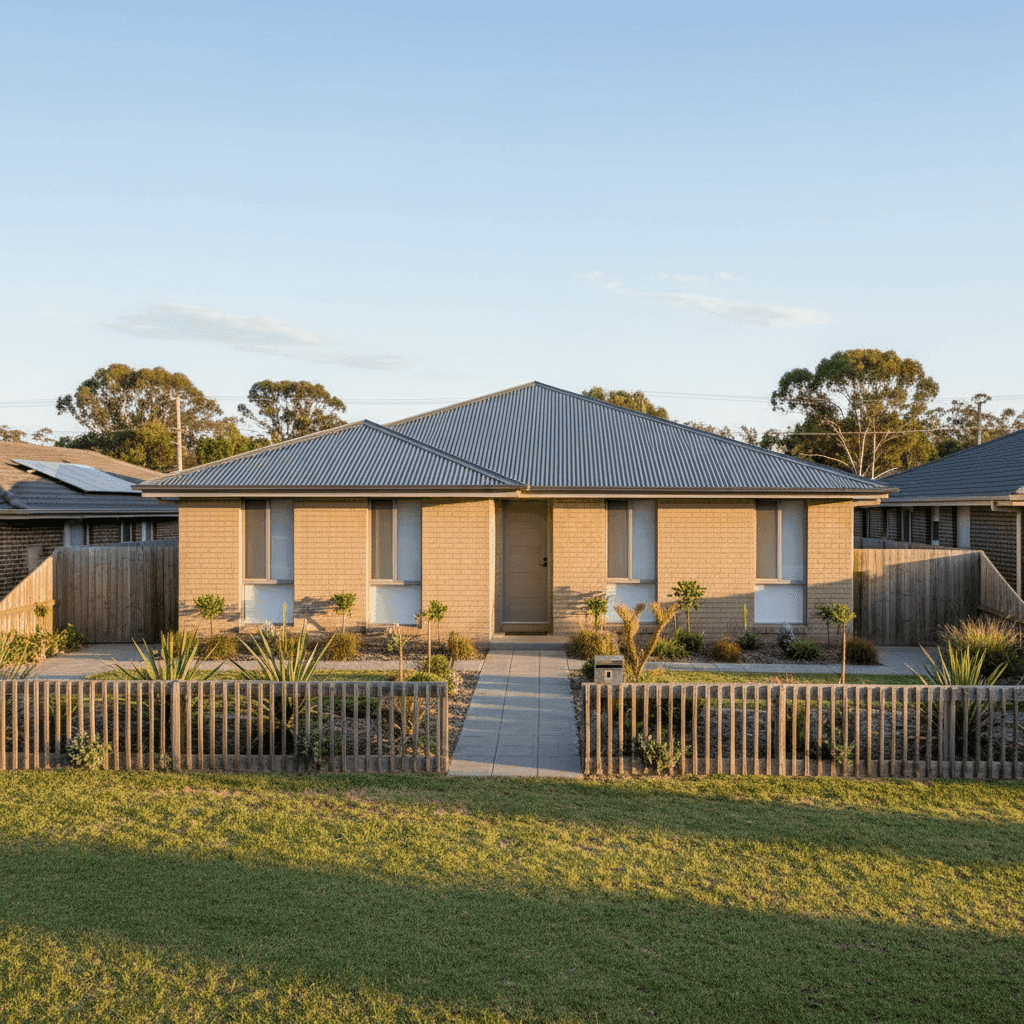
If you own a free standing home in Laurieton, NSW 2443, you've probably noticed that home insurance isn't cheap. Nestled on the Mid-Coast of New South Wales, Laurieton is a picturesque coastal town — but its geography and local risk profile mean insurers price policies here with careful consideration. This article breaks down a real home and contents insurance quote for a three-bedroom property in the area, puts the premium in context, and offers practical guidance for local homeowners looking to get better value.
---
Is This Quote Fair?
The quote in question comes in at $4,373 per year (or $419/month) for combined home and contents cover, with a building sum insured of $671,000 and contents valued at $115,000. Both the building and contents excess are set at $2,000.
Our price rating for this quote is Expensive (Above Average) — and the data backs that up.
When compared against other quotes in the Laurieton area, the suburb average sits at $2,684/year and the median at just $2,457/year. That means this quote is running roughly 63% above the suburb average and nearly 78% above the local median — a significant gap worth investigating.
To be fair, the sum insured here is substantial. A $671,000 building replacement value is on the higher end for the area, and combined with $115,000 in contents cover, the total insured value is pushing $786,000. Higher coverage naturally attracts higher premiums. Still, even accounting for that, the premium sits well above what many comparable properties in the suburb are paying.
---
How Laurieton Compares
Understanding where Laurieton sits in the broader insurance landscape helps put this quote in perspective.
| Benchmark | Average Premium | Median Premium |
|---|---|---|
| Laurieton (2443) | $2,684/yr | $2,457/yr |
| Mid-Coast LGA | $5,840/yr | — |
| NSW | $9,528/yr | $3,770/yr |
| National | $5,347/yr | $2,764/yr |
A few things stand out here. The NSW state average of $9,528/year is notably high — heavily skewed by flood-prone and high-risk postcodes across the state. The median of $3,770/year is a more useful comparison point, and this quote sits above that too.
Looking at national figures, the average of $5,347/year and median of $2,764/year suggest Laurieton is broadly in line with, or slightly below, what many Australians are paying — but the suburb-level data tells a more nuanced story. Locally, the 25th percentile sits at $1,733/year and the 75th at $3,533/year, meaning this quote lands above the 75th percentile for the suburb. In plain terms: most Laurieton homeowners with quotes in our dataset are paying less.
The Mid-Coast LGA average of $5,840/year does provide some context — there are clearly properties in the broader region attracting much higher premiums, likely due to flood zones, bushfire exposure, or elevated replacement costs. Relative to the LGA, this quote is actually below average, which suggests the property's specific risk profile is working in the homeowner's favour to some degree.
---
Property Features That Affect Your Premium
Several characteristics of this property influence how insurers price the risk:
Double Brick Construction Double brick walls are generally viewed favourably by insurers. They offer strong structural integrity, good fire resistance, and durability against storm damage. This construction type typically attracts lower premiums compared to weatherboard or fibre cement alternatives — a genuine advantage for this property.
Steel/Colorbond Roof A Colorbond steel roof is considered a low-maintenance, durable option that holds up well in coastal and semi-rural environments. Insurers tend to rate these roofs positively, particularly when compared to older tile roofs that may be more susceptible to storm damage or moss/lichen deterioration.
Slab Foundation Concrete slab foundations are common in NSW and generally considered a stable, low-risk base. Unlike stumped or suspended timber floors, slabs don't carry the same risks of termite damage or subfloor moisture issues — a minor positive in the insurer's eyes.
Timber/Laminate Flooring Flooring type can affect contents and building claims, particularly for water damage scenarios. Timber and laminate floors can be costly to replace if damaged by leaks or flooding, which may contribute marginally to premium pricing.
1980 Construction Year Homes built in the 1980s sit in a middle ground for insurers. They're old enough to potentially have ageing plumbing or wiring, but generally predate the era of the most problematic building materials (like asbestos-heavy construction of the 1960s–70s). Insurers may apply modest loadings for homes of this age, particularly around electrical and plumbing infrastructure.
Above Average Fittings Quality Above average fittings — think quality kitchen appliances, stone benchtops, premium fixtures — increase the cost to rebuild or repair, and this is reflected in the building sum insured. It's a legitimate driver of a higher premium and likely a key reason the $671,000 building value is set where it is.
---
Tips for Homeowners in Laurieton
1. Review your sum insured carefully The building sum insured of $671,000 is the single biggest lever on your premium. Make sure this figure reflects the actual cost to rebuild your home — not its market value. Overcovering can mean unnecessarily high premiums; undercovering leaves you exposed. Use a reputable building cost calculator or speak to a quantity surveyor to validate the figure.
2. Shop around — the market varies widely With 18 quotes in our Laurieton dataset ranging from $1,733 at the 25th percentile to $3,533 at the 75th, there is real variation in what insurers will charge for similar properties. The same home can attract very different premiums depending on the insurer's risk model. Comparing multiple quotes is one of the most effective ways to reduce your cost.
3. Consider your excess level Both the building and contents excess are set at $2,000 in this quote. Opting for a higher excess — say $2,500 or $3,000 — can reduce your annual premium meaningfully. Just make sure you're comfortable covering that amount out of pocket in the event of a claim.
4. Bundle strategically, but verify the savings Many insurers offer discounts for combining home and contents policies. This quote already bundles both, which is a sensible approach. However, it's worth checking whether splitting the policies across two competitive insurers might actually yield a lower combined cost — sometimes the bundling discount isn't as generous as it appears.
---
Compare Your Options with CoverClub
Whether you're renewing your existing policy or shopping for cover for the first time, comparing quotes is the smartest move you can make. CoverClub makes it easy to see how your premium stacks up against real data from your suburb and across Australia. Get a home insurance quote today and find out if you're paying a fair price — or if there's a better deal waiting for you.