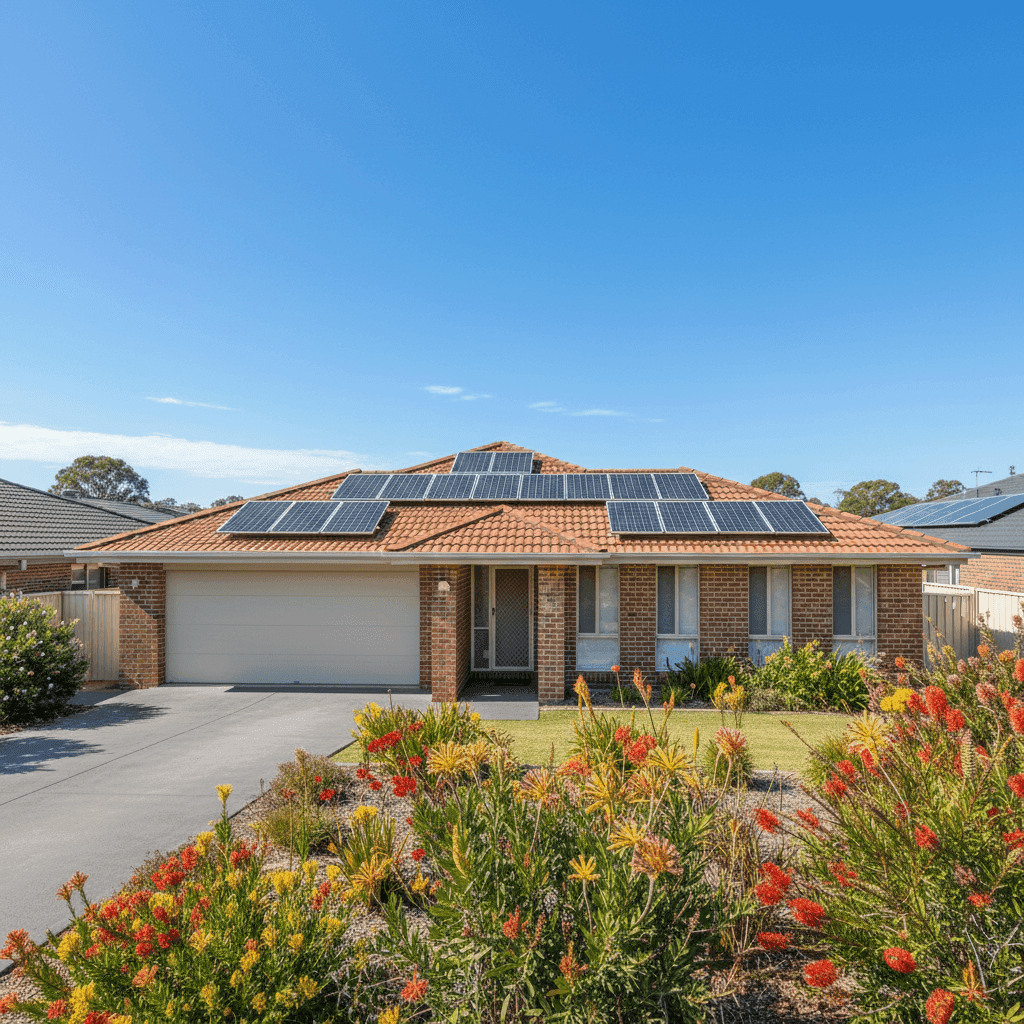
Lawnton is a quiet, established suburb in the Moreton Bay region of South East Queensland — and like much of the state, home insurance premiums here can vary dramatically depending on your property's characteristics and the insurer you choose. This article breaks down a recent home and contents insurance quote for a three-bedroom, free-standing home in Lawnton (postcode 4501), and puts the numbers into context against local, state, and national benchmarks.
---
Is This Quote Fair?
The short answer: yes — and then some. This quote came in at $895 per year (or roughly $83 per month) for combined home and contents cover, with a building sum insured of $500,000 and contents valued at $70,000. Our pricing analysis rates this as CHEAP — Below Average, meaning it sits well below what most Lawnton homeowners are paying for comparable cover.
To put that in perspective, the suburb average premium in Lawnton is $4,915 per year, and the median sits at $2,813 per year. Even the 25th percentile — meaning the cheapest quarter of quotes collected — comes in at $1,256 per year. This quote at $895 undercuts even that threshold, placing it among the most competitively priced policies seen in the area.
That's a significant saving. Compared to the suburb average, this homeowner is paying over $4,000 less per year for their cover. Over five years, that's potentially more than $20,000 in savings — money that stays in the homeowner's pocket rather than going to an insurer.
Of course, price isn't everything. It's important to ensure the policy provides adequate cover, appropriate excesses, and the right inclusions for your situation. The building excess on this policy is $2,000 and the contents excess is $600 — both reasonable figures that reflect a standard policy structure.
---
How Lawnton Compares
Lawnton sits within the Moreton Bay LGA, and insurance premiums in this part of Queensland can be influenced by a range of local risk factors including storm activity, flooding history, and proximity to waterways. Here's how this quote stacks up against the broader market:
| Benchmark | Premium |
|---|---|
| This quote | $895/yr |
| Lawnton suburb average | $4,915/yr |
| Lawnton suburb median | $2,813/yr |
| Lawnton 25th percentile | $1,256/yr |
| Moreton Bay LGA average | $3,145/yr |
| QLD state average | $4,547/yr |
| QLD state median | $3,931/yr |
| National average | $2,965/yr |
| National median | $2,716/yr |
What's immediately striking is how far above the national average Queensland premiums sit — the state average of $4,547 per year is more than 53% higher than the national average of $2,965. This reflects the elevated risk profile of Queensland properties, which are frequently exposed to severe weather events including hailstorms, heavy rainfall, and cyclones in northern parts of the state.
Even within Moreton Bay — which averages $3,145 per year — this quote is remarkably affordable. You can explore more detailed data for the area at our Lawnton suburb stats page, or compare across the state on our Queensland insurance stats page. For a broader picture, our national home insurance stats provide useful context across all states and territories.
---
Property Features That Affect Your Premium
Several characteristics of this particular property likely contribute to its favourable premium. Understanding these factors can help any homeowner make sense of their own quote.
Brick Veneer Construction
Brick veneer external walls are generally well-regarded by insurers. While not as robust as full double-brick construction, brick veneer offers solid fire resistance and durability compared to weatherboard or fibrous cement cladding. This typically translates to a lower risk profile — and a lower premium.
Tiled Roof
Terracotta or concrete roof tiles are among the more insurer-friendly roofing materials in Australia. They're durable, fire-resistant, and long-lasting when properly maintained. A tiled roof on a 1994-built home should still be in reasonable condition, which reduces the likelihood of weather-related claims.
Slab Foundation
A concrete slab foundation is standard for homes of this era in Queensland and is generally considered low-risk by insurers. It eliminates the concerns associated with subfloor spaces (such as termite access or moisture damage) that can affect older homes on stumps or piers.
Solar Panels
This property has solar panels installed, which is worth noting from an insurance perspective. Solar panels add value to a property and should ideally be listed as part of the insured building or as a separate item within the policy. It's worth confirming with the insurer that the panels are covered for damage from storms, hail, or fire.
No Pool, No Cyclone Risk Zone
The absence of a swimming pool removes a common source of liability and maintenance-related claims. Additionally, Lawnton falls outside designated cyclone risk areas, which meaningfully reduces the premium compared to properties in North Queensland. This is a significant factor in why this quote is so much lower than the Queensland state average.
Standard Fittings and Moderate Size
At 130 sqm with standard-quality fittings, this home doesn't attract the premium loadings associated with high-end fixtures, large floor plans, or luxury finishes. The rebuild cost of $500,000 is a reasonable sum insured for a property of this size and specification in the current construction market.
---
Tips for Homeowners in Lawnton
Whether you're reviewing your existing policy or shopping for a new one, here are four practical steps to help you get the best value on home insurance in Lawnton.
- Compare quotes annually. The insurance market shifts constantly, and loyalty doesn't always pay. Premiums can vary by thousands of dollars between providers for essentially the same cover. Use a comparison tool like CoverClub to benchmark your renewal quote before you accept it.
- Review your sum insured regularly. Building costs in South East Queensland have risen sharply in recent years. Make sure your building sum insured reflects current construction costs — underinsurance is a common and costly mistake that only becomes apparent at claim time.
- Check your solar panel coverage. If you have solar panels (as this property does), confirm explicitly with your insurer that they're covered under your building policy and for what events. Some policies have exclusions or sub-limits that may leave you exposed.
- Understand your excess options. A higher excess generally means a lower premium. If you're a low-risk homeowner who rarely makes claims, opting for a higher building excess (such as the $2,000 on this policy) can be a smart way to reduce your annual cost — just make sure you can comfortably cover the excess if you do need to claim.
---
Find Out What You Should Be Paying
Seeing how dramatically this Lawnton quote undercuts the suburb and state averages is a reminder that the right policy at the right price is out there — but you have to look for it. If you haven't compared your home insurance recently, now is a great time to start. Visit CoverClub to get a quote tailored to your property and see how your current premium stacks up against the market.