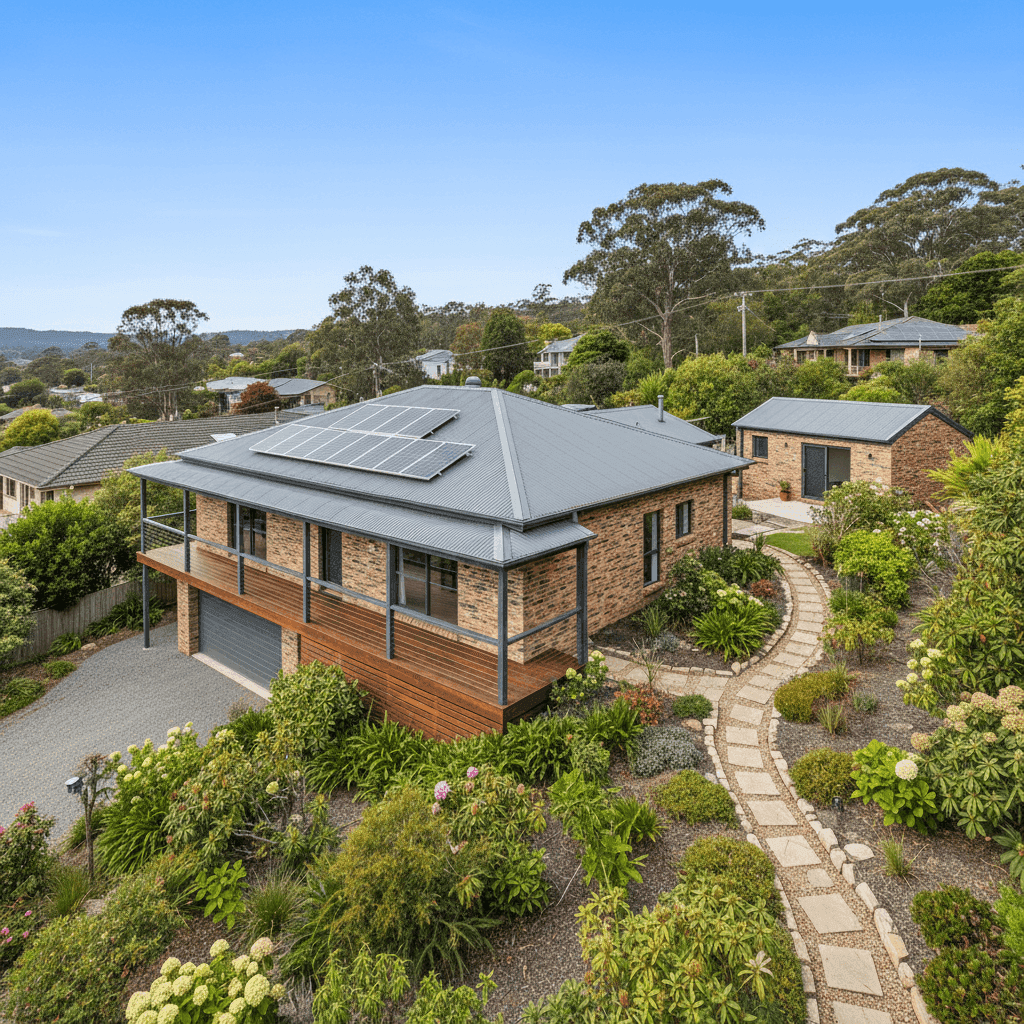
Leura is one of the Blue Mountains' most beloved villages — known for its heritage gardens, cool-climate charm, and a strong sense of community. It's also an area where home insurance can carry a notable price tag. This article breaks down a real home and contents insurance quote for a five-bedroom free-standing home in Leura (postcode 2780), comparing it against suburb, state, and national benchmarks to help you understand what's driving the cost — and what you can do about it.
---
Is This Quote Fair?
The annual premium for this property came in at $5,266 per year (or $505/month), covering a building sum insured of $1,288,000 and $100,000 in contents. Our analysis rates this quote as Expensive (Above Average).
To put that in context: the average home insurance premium across Leura sits at around $2,508 per year, with a median of $2,276. This quote is more than double the suburb median — a significant gap that warrants a closer look.
That said, "expensive" doesn't automatically mean "wrong." Several property-specific factors can legitimately push a premium well above the local average, and this property has a number of characteristics that insurers view as higher risk or higher replacement cost. The key question isn't just whether the price is high, but whether it's justified — and whether you could get a better deal elsewhere for the same level of cover.
---
How Leura Compares
Here's how this quote stacks up across different benchmarks:
| Benchmark | Premium |
|---|---|
| This Quote | $5,266/yr |
| Leura (suburb average) | $2,508/yr |
| Leura (suburb median) | $2,276/yr |
| Blue Mountains LGA average | $4,220/yr |
| NSW average | $9,528/yr |
| NSW median | $3,770/yr |
| National average | $5,347/yr |
| National median | $2,764/yr |
A few things stand out here. While the quote looks steep against Leura's suburb average, it's actually sitting just below the national average of $5,347 — suggesting that for a property of this size and value, the pricing isn't entirely out of step with what Australians pay broadly. It also sits above the NSW median of $3,770, but well below the NSW average of $9,528, which is heavily skewed by high-value properties in Sydney and coastal areas.
The Blue Mountains LGA average of $4,220 provides perhaps the most relevant local comparison — and this quote exceeds even that figure by over $1,000. That gap is worth exploring further.
It's worth noting that Leura's suburb sample includes just 16 quotes, so the local averages may not fully capture the range of property types in the area. You can explore the national insurance statistics for broader context.
---
Property Features That Affect Your Premium
Several characteristics of this property are likely contributing to the above-average premium:
Large home with a high sum insured At 315 sqm with five bedrooms and three bathrooms, this is a substantial home. The building sum insured of $1,288,000 reflects the true cost of rebuilding a property of this size — and insurers price premiums proportionally to that replacement value. Larger sums insured simply cost more to cover.
Pole/stump foundation Homes built on poles or stumps — common in elevated or sloped terrain like much of the Blue Mountains — can be more expensive to insure. Pole foundations introduce additional exposure to underfloor damage, pest ingress, and structural movement, all of which factor into underwriting assessments.
Timber and laminate flooring Timber floors, while beautiful, are more susceptible to water damage and can be costly to repair or replace. This is reflected in how insurers assess the contents and internal finishes of a home.
Granny flat on the property The presence of a granny flat adds to the insurable value of the property and increases the insurer's exposure. Whether the flat is used for family, rented out, or sits vacant, it represents additional structure and liability that pushes the premium upward.
Construction era (1980) Homes built in the 1980s may have older electrical wiring, plumbing, and roofing infrastructure that doesn't meet current building standards. Insurers often apply a loading to older properties due to the increased likelihood of claims related to ageing systems.
Solar panels Solar panels are generally a positive addition to a home, but they do add replacement cost to the building sum insured and can complicate roof-related claims. Most insurers include them under building cover, which is reflected here.
Brick veneer with Colorbond roof This is a fairly standard and well-regarded construction type in Australia. Brick veneer walls are durable and fire-resistant, and Colorbond roofing is widely considered low-maintenance and resilient. These features likely moderate the premium rather than inflate it.
---
Tips for Homeowners in Leura
1. Shop around — seriously The gap between this quote and the suburb median suggests there may be meaningful savings available with a different insurer. Premiums for the same property can vary by thousands of dollars depending on the provider. Use a comparison tool like CoverClub to get multiple quotes side by side.
2. Review your sum insured carefully A $1,288,000 building sum insured is substantial. Make sure this figure is based on a current building cost estimate — not the market value of the property, which includes land. Overinsuring can cost you unnecessarily, while underinsuring leaves you exposed. Consider using a rebuild cost calculator or getting a professional assessment.
3. Ask about your excess options This policy carries a $2,000 building excess and $1,000 contents excess. Opting for a higher voluntary excess is one of the most straightforward ways to reduce your annual premium. If you're unlikely to make small claims, a higher excess can deliver meaningful savings over time.
4. Disclose the granny flat accurately Ensure your insurer is fully aware of the granny flat and how it's used — whether it's occupied by family, rented out, or vacant. Incorrect disclosure can void a claim. Some insurers offer more competitive pricing for secondary dwellings than others, so it's worth comparing policies specifically on this point.
---
Ready to Compare?
If you're a homeowner in Leura or anywhere across the Blue Mountains, it pays to compare your options before renewing. CoverClub makes it easy to see how your current premium stacks up and find a better deal. Get a quote today and see what you could be saving.