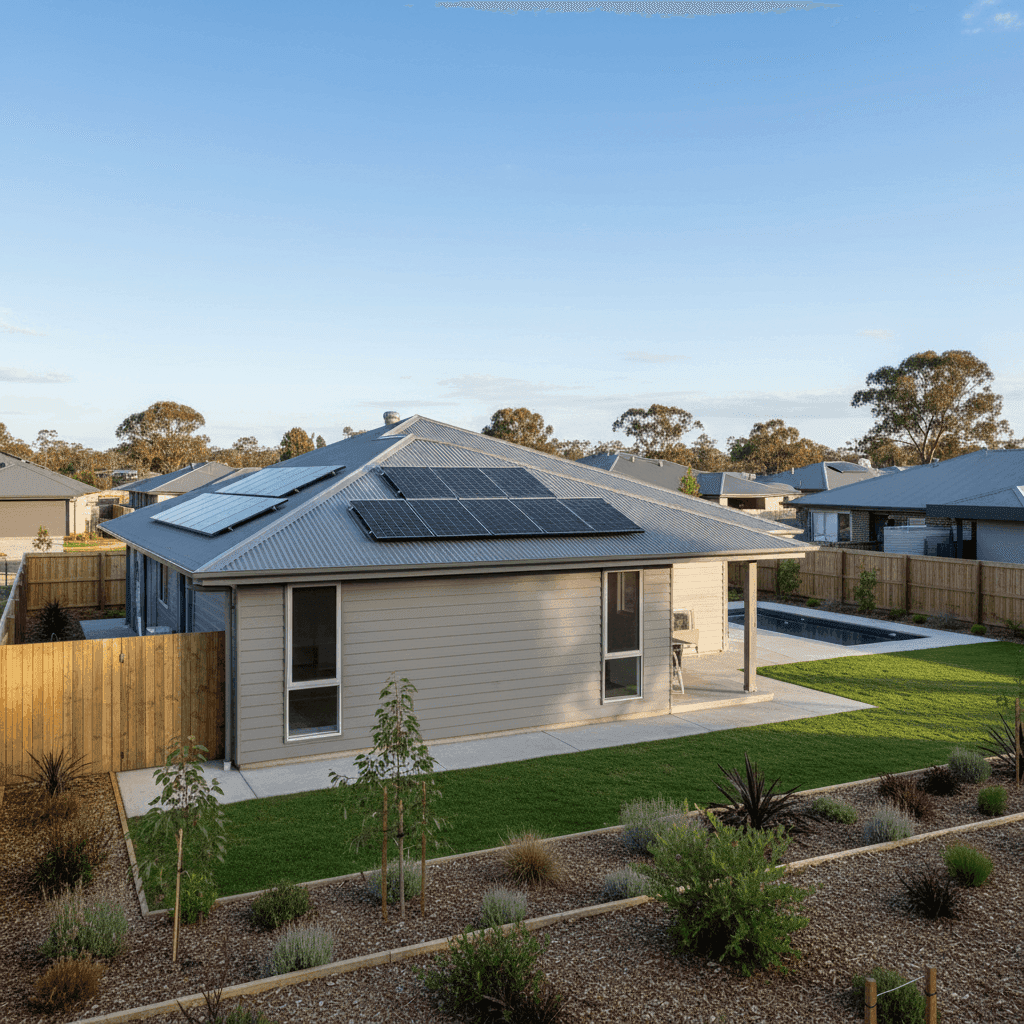
If you own a free standing home in Lidster, NSW 2800, you're likely already aware that insurance costs can vary enormously depending on your property's features, location, and the level of cover you choose. This article breaks down a real home and contents insurance quote for a three-bedroom property in Lidster, compares it against local, state, and national benchmarks, and offers practical tips to help you get better value on your cover.
---
Is This Quote Fair?
The annual premium for this quote comes in at $5,333 per year (or roughly $511 per month), covering both building and contents. Our price rating for this quote is Expensive — Above Average.
To put that in context, the suburb average for Lidster sits at $2,690 per year, with a median of $2,438. That means this particular quote is nearly double the typical premium paid by homeowners in the same postcode. Even at the upper end of local pricing — the 75th percentile sits at $3,638 — this quote still exceeds what most Lidster homeowners are paying.
So what's driving the higher cost? A few factors stand out. The building sum insured of $800,000 is a significant figure for a 139 sqm home, and insurers price heavily based on rebuild cost. Additionally, the property includes a swimming pool, solar panels, and ducted climate control — all features that add to the replacement value and, consequently, the premium. The $40,000 contents cover is relatively modest and unlikely to be a major cost driver here; the building sum insured is doing most of the heavy lifting.
It's also worth noting that both the building and contents excess are set at $1,000 each, which is fairly standard. Opting for a higher excess is one lever you can pull to bring premiums down — more on that below.
---
How Lidster Compares
Understanding where your premium sits in the broader landscape is key to knowing whether you're overpaying.
| Benchmark | Premium |
|---|---|
| This Quote | $5,333/yr |
| Lidster Suburb Average | $2,690/yr |
| Lidster Suburb Median | $2,438/yr |
| Lidster 75th Percentile | $3,638/yr |
| Dubbo LGA Average | $3,426/yr |
| NSW State Average | $9,528/yr |
| NSW State Median | $3,770/yr |
| National Average | $5,347/yr |
| National Median | $2,764/yr |
A few things jump out from this comparison. First, the NSW state average of $9,528 is extraordinarily high — this is heavily skewed by expensive coastal and flood-prone areas across the state. The state median of $3,770 is a far more representative figure for most NSW homeowners.
At the national level, the average premium is $5,347 — almost identical to this quote — while the national median is $2,764. This tells us that while the quote is above average for Lidster specifically, it's broadly in line with what Australians pay nationally when all property types and risk profiles are considered.
The Dubbo LGA average of $3,426 provides useful regional context. Lidster falls within the Dubbo region, and this quote sits well above the LGA average, reinforcing that the specific property characteristics — particularly the high building sum insured — are pushing the cost upward.
It's worth noting that the suburb sample size for Lidster is 26 quotes, which is a reasonable dataset but still relatively small. Averages can shift as more data comes in, so treat these figures as a useful guide rather than a definitive benchmark.
---
Property Features That Affect Your Premium
This property has several characteristics that directly influence how insurers price the risk:
Hardiplank/Hardiflex external walls are generally viewed favourably by insurers. This fibre cement cladding is durable, fire-resistant, and low-maintenance — qualities that reduce the likelihood of certain types of claims. It's a better outcome than weatherboard or timber from an insurance risk perspective.
Steel/Colorbond roofing is similarly well-regarded. It's lightweight, long-lasting, and performs well in extreme weather. Insurers typically price Colorbond roofs more competitively than terracotta tiles or older materials.
Concrete slab foundation is standard for a 2013-built home and generally considered low-risk. There's no elevated subfloor to worry about, which removes certain moisture and pest-related risks from the equation.
Swimming pool — pools add to the insured value of the property and introduce liability considerations. Most home and contents policies include legal liability cover, and a pool increases the exposure here. Expect this to contribute meaningfully to your premium.
Solar panels are an increasingly common feature on Australian homes, but they do add to the replacement cost. A full rooftop solar system can cost $8,000–$20,000+ to replace, and insurers factor this into the building sum insured calculation.
Ducted climate control is another high-value fixture. Ducted systems are expensive to install and replace, and their presence in the premium calculation makes sense — particularly for a home built in 2013 where the system may be approaching mid-life.
The 2013 construction year means the property is relatively modern and should be built to contemporary standards, which is a positive from a risk perspective. Newer builds tend to attract more competitive premiums than older homes with ageing infrastructure.
---
Tips for Homeowners in Lidster
1. Review your building sum insured carefully An $800,000 sum insured on a 139 sqm home is on the higher end. While it's critical not to underinsure — and rebuild costs genuinely can be substantial when you factor in site access, labour, and materials — it's worth getting an independent building valuation or using an online calculator to make sure the figure is accurate rather than inflated. Over-insuring means you're paying premiums on cover you may never need.
2. Consider increasing your excess Both excesses are currently set at $1,000. Voluntarily raising your excess to $2,000 or even $2,500 can meaningfully reduce your annual premium. This strategy works best if you have a financial buffer to cover a larger out-of-pocket cost in the event of a claim.
3. Bundle your building and contents cover This quote already combines building and contents, which is a smart move. Most insurers offer a discount for bundling, and managing a single policy is far simpler come renewal time. If you're currently holding separate policies, consolidating them could save you money.
4. Compare quotes at renewal — every year Insurance loyalty rarely pays off. Insurers often reserve their best rates for new customers, meaning long-term policyholders can quietly drift into overpaying. Make it a habit to compare quotes annually, especially given that this premium is above the local average.
---
Compare Home Insurance in Lidster
Whether this quote represents good value for your specific situation depends on your property's full replacement cost and your personal risk appetite. What's clear is that there's a meaningful gap between this premium and the typical cost for Lidster homeowners — and that gap is worth investigating.
Head to CoverClub to compare home and contents insurance quotes for your property in Lidster. It takes just a few minutes, and you might be surprised at the difference a fresh comparison can make.