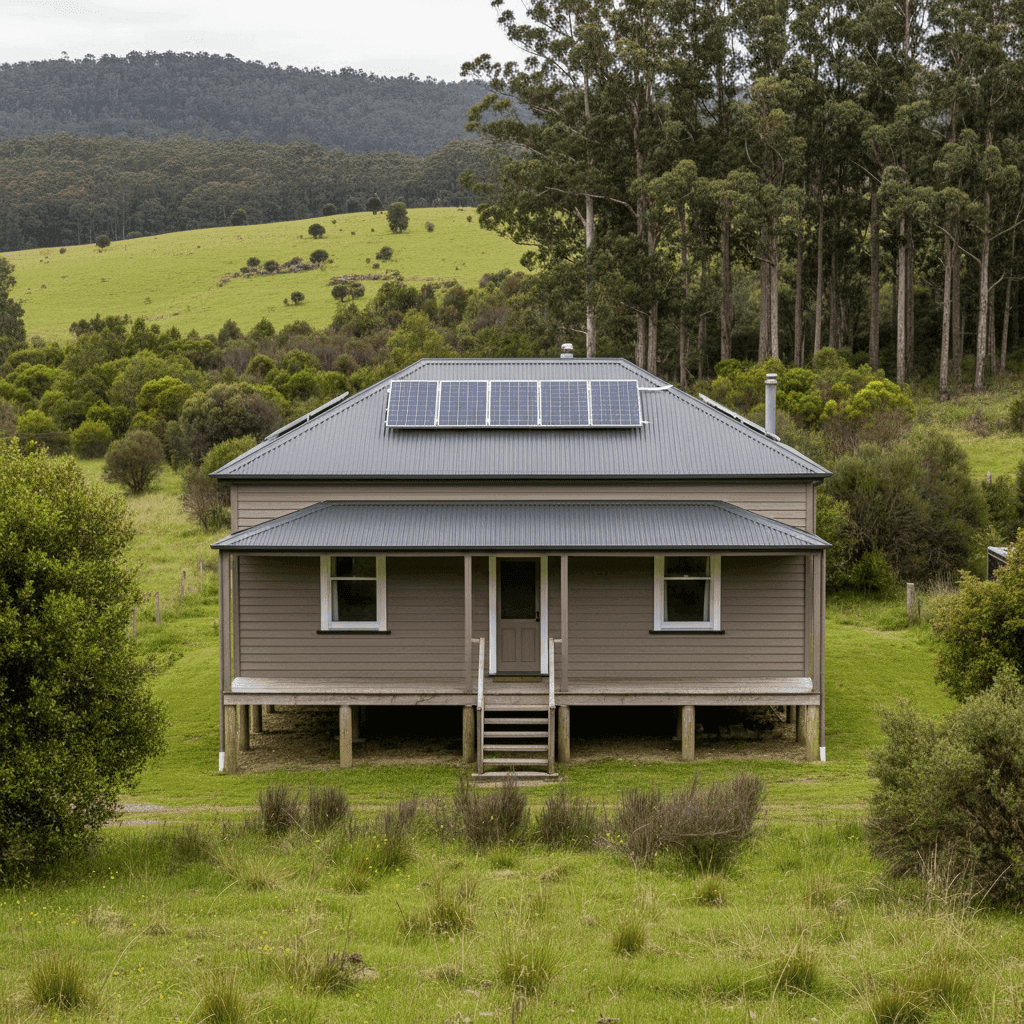
Nestled in the scenic Meander Valley region of Tasmania, Liffey (postcode 7301) is a quiet rural locality known for its lush landscapes and relaxed pace of life. For owners of free standing homes in this area, understanding the true cost of home insurance — and whether you're getting a fair deal — is an important part of protecting one of your biggest assets. This article breaks down a real home and contents insurance quote for a 3-bedroom weatherboard property in Liffey and puts it in context against local, state, and national benchmarks.
---
Is This Quote Fair?
The quote in question comes in at $2,358 per year (or $240/month), covering both building (sum insured: $699,000) and contents ($50,000). Based on our pricing data, this quote is rated CHEAP — below average for the area.
That's a meaningful finding. A below-average premium doesn't necessarily mean below-average cover; it can simply reflect that the insurer has assessed the specific risk profile of this property favourably. In this case, several features of the home likely contribute to a more competitive price: it's located outside a cyclone risk zone, has no swimming pool, and sits on a modest 143 sqm footprint with standard fittings. These are all factors that tend to keep premiums lower.
The building excess is set at $3,000 and the contents excess at $1,000. A higher excess is a common way to reduce annual premiums, so it's worth factoring in whether that trade-off suits your financial situation. If you can comfortably cover a $3,000 out-of-pocket cost in the event of a claim, the savings on your annual premium may well be worth it.
---
How Liffey Compares
To put this quote in perspective, here's how it stacks up against available benchmarks:
| Benchmark | Annual Premium |
|---|---|
| This Quote | $2,358 |
| LGA Average (Meander Valley) | $2,039 |
| TAS State Median | $2,326 |
| TAS State Average | $2,814 |
| National Median | $2,764 |
| National Average | $5,347 |
The quote sits just above the Meander Valley LGA average of $2,039 and is almost exactly in line with the Tasmanian state median of $2,326. Compared to the national average of $5,347, this quote represents a significant saving — less than half the cost that many Australian homeowners pay across the country.
It's worth noting that national averages are heavily influenced by high-risk areas such as flood-prone regions in Queensland and New South Wales, as well as cyclone-exposed coastal zones in northern Australia. Tasmania's relatively benign climate and lower exposure to extreme weather events generally translates to more affordable home insurance premiums across the board.
---
Property Features That Affect Your Premium
Every home is different, and insurers assess a range of property-specific factors when calculating your premium. Here's how the key features of this Liffey property are likely influencing the cost:
Weatherboard timber walls Weatherboard homes are a beloved part of the Australian architectural landscape, but from an insurance perspective, timber construction carries a higher fire risk than brick or rendered masonry. This can push premiums slightly higher compared to brick veneer homes. Regular maintenance — including keeping paint sealed and checking for rot — is important both for safety and for keeping your insurer happy.
Steel/Colorbond roof Colorbond roofing is generally viewed favourably by insurers. It's durable, fire-resistant, and performs well in high-wind events. Compared to older corrugated iron or terracotta tiles, a well-maintained Colorbond roof can contribute to a more competitive premium.
Stump foundation (elevated less than 1m) The property sits on stumps with a slight elevation of under one metre. Stump foundations are common in older Tasmanian homes and can be more vulnerable to subfloor moisture, pest activity, and structural movement over time. Insurers may factor in the age and condition of stumps when assessing risk. Having stumps professionally inspected periodically is a smart move.
Timber/laminate flooring Timber and laminate floors add character but can be costly to replace after water damage or fire. Make sure your contents and building sums insured adequately account for flooring replacement costs.
Solar panels The presence of solar panels on the roof adds value to the property but also introduces additional risk — particularly around electrical faults and storm damage. Confirm with your insurer that solar panels are explicitly covered under your policy, as some policies treat them as an optional add-on.
Construction year: 1985 At approximately 40 years old, this home falls into a category that insurers monitor closely. Older homes may have ageing wiring, plumbing, and structural elements that increase the likelihood of a claim. Some insurers apply loading to older properties, though this quote's competitive pricing suggests this hasn't been a significant factor here.
---
Tips for Homeowners in Liffey
Whether you're renewing your policy or shopping around for the first time, here are four practical tips to help Liffey homeowners get the most from their home insurance:
- Review your sum insured annually. Building costs have risen sharply across Australia in recent years. A sum insured of $699,000 may have been accurate when the policy was taken out, but it's worth recalculating your rebuild cost each year to avoid being underinsured. Use a building cost calculator or speak with a local builder for an up-to-date estimate.
- Get your stumps inspected. Stump foundations in older Tasmanian homes can deteriorate due to moisture and timber pests. An inspection every few years can catch problems early, protect the structural integrity of your home, and demonstrate to your insurer that the property is well-maintained.
- Check your solar panel coverage. Solar panels are a growing source of insurance claims in Australia. Ask your insurer specifically whether your panels are covered for storm damage, hail, and electrical faults — and whether there's a separate sub-limit that might leave you underinsured.
- Compare quotes before renewing. Loyalty doesn't always pay in the insurance market. Even if your current premium seems reasonable, it's worth comparing at least two or three quotes at renewal time. Premiums can vary significantly between insurers for the same property, and comparing quotes at CoverClub takes only a few minutes.
---
Find a Better Deal on Home Insurance
Whether this quote is already on your radar or you're starting from scratch, comparing your options is always worthwhile. At CoverClub, we help Australian homeowners see how their premiums stack up and find cover that suits their property and budget. Get a home insurance quote today and see how much you could save on your Liffey property.