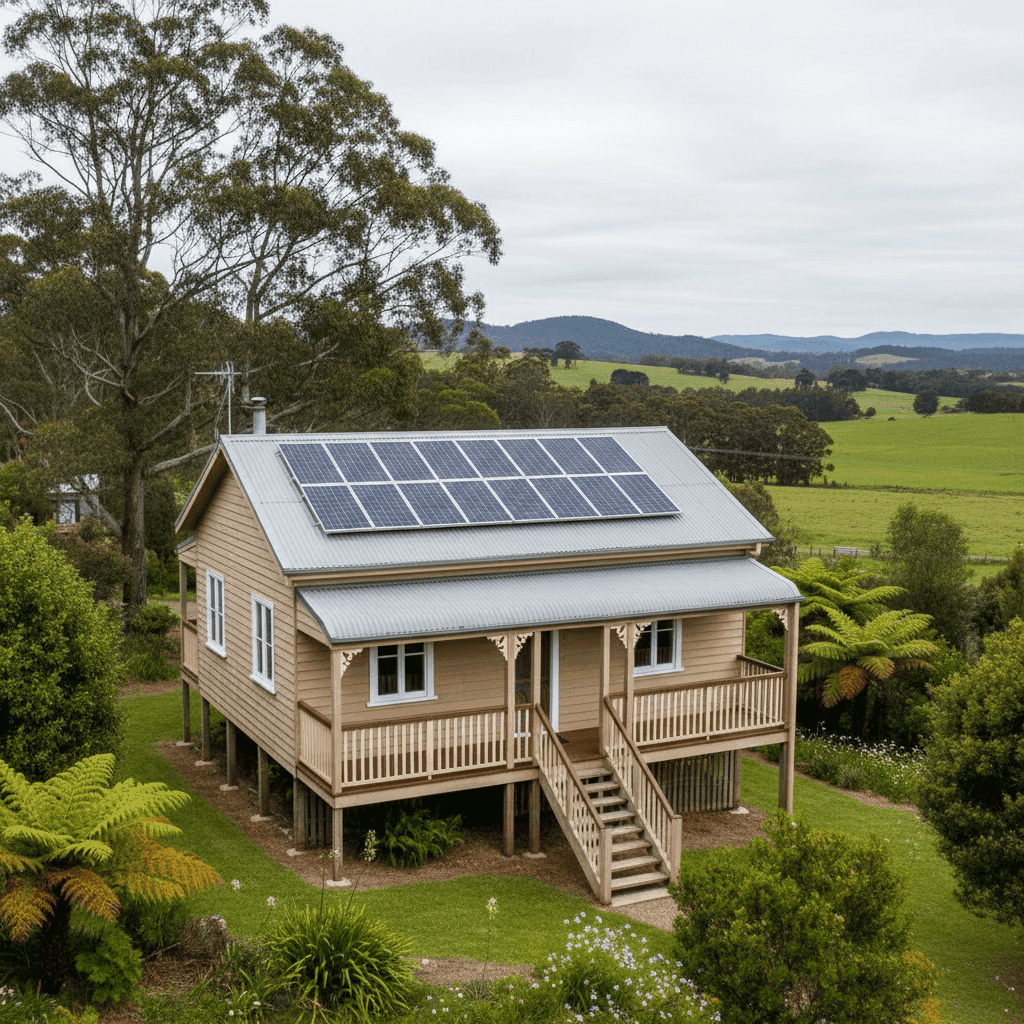
If you own a free standing home in Liffey, TAS 7301, you already know the appeal — a quiet rural setting in the Meander Valley, surrounded by Tasmania's stunning natural landscape. But with that lifestyle comes the responsibility of protecting your home appropriately, and that means understanding whether the insurance premium you're being quoted is genuinely competitive or quietly inflated.
This article breaks down a recent home and contents insurance quote for a 3-bedroom, 1-bathroom free standing home in Liffey, comparing it against local, state, and national benchmarks to help you make a more informed decision.
---
Is This Quote Fair?
The annual premium on this quote comes in at $5,193 per year (or $498/month), covering a building sum insured of $832,000 and contents valued at $101,000. Both the building and contents excess are set at $5,000.
Our price rating for this quote is Expensive — above average for the area.
To put that in context:
- The Meander Valley LGA average is just $2,039/yr
- The Tasmanian state average is $2,814/yr, with a median of $2,326/yr
- The national average sits at $5,347/yr, with a median of $2,764/yr
So while this quote is actually close to the national average, it sits well above what most Tasmanians — and most Meander Valley homeowners specifically — are paying. That's a meaningful gap worth investigating before you sign on the dotted line.
The high building sum insured of $832,000 is likely the single biggest driver of this premium. Rebuild costs in regional Tasmania can be significant, particularly for older homes with character features, but it's worth confirming whether this figure accurately reflects your home's replacement value rather than its market value. Over-insuring is a common and costly mistake.
---
How Liffey Compares
While suburb-level data for Liffey is limited due to its small population, we can draw meaningful comparisons using broader datasets. You can explore available Liffey insurance stats, Tasmania-wide data, and national benchmarks to see where this quote sits in the broader picture.
| Benchmark | Annual Premium |
|---|---|
| This Quote | $5,193 |
| Meander Valley LGA Average | $2,039 |
| TAS State Average | $2,814 |
| TAS State Median | $2,326 |
| National Average | $5,347 |
| National Median | $2,764 |
The quote is roughly 2.5× the Meander Valley LGA average and nearly double the Tasmanian state average. Even against the national average — which is skewed upward by high-risk areas like flood-prone Queensland and cyclone-affected northern Australia — this quote is only marginally cheaper.
For a property in a region without cyclone risk, this level of premium warrants scrutiny. It's not necessarily wrong, but it does suggest there may be room to negotiate or shop around.
---
Property Features That Affect Your Premium
Several characteristics of this property have a direct bearing on what insurers charge. Understanding these factors can help you have a more informed conversation with your insurer — or identify areas where you might reduce risk (and cost).
Weatherboard Timber Walls
Weatherboard wood is one of the most common external wall materials in older Tasmanian homes, but it does carry a higher fire risk than brick or rendered masonry. Insurers typically price this in, particularly for homes built before modern fire-resistant building codes came into effect.
Steel/Colorbond Roof
On the positive side, a steel Colorbond roof is generally viewed favourably by insurers. It's durable, low-maintenance, and performs well in harsh weather conditions. This may help offset some of the premium loading from the timber walls.
Construction Year: 1985
Homes built in the mid-1980s predate several key updates to the Australian building code, including improved electrical standards and structural requirements. Older wiring and plumbing can increase the likelihood of certain claims, which insurers factor into their pricing.
Elevated on Stumps
The home sits on stumps and is elevated by less than 1 metre. Stump foundations are common in Tasmania and can be a mixed bag for insurance purposes — they allow for good airflow and can reduce moisture issues, but may require periodic maintenance to remain structurally sound. Insurers will generally want to know the condition of the stumps.
Solar Panels
Solar panels are an increasingly common feature and are generally covered under home insurance, but they do add to the overall replacement value of the property. Make sure your building sum insured accounts for the cost of replacing the panels.
Ducted Climate Control
Ducted heating and cooling systems add value to a home but also add complexity — and replacement cost. As with solar panels, ensure your sum insured reflects the inclusion of this system.
Timber and Laminate Flooring
Timber flooring, while beautiful, can be expensive to replace after a water or fire event. This is a legitimate cost driver and worth keeping in mind when setting your contents and building cover levels.
---
Tips for Homeowners in Liffey
1. Review Your Building Sum Insured
At $832,000, your building cover is the dominant factor in this premium. Use an independent building cost calculator — many insurers provide one — to verify this figure reflects actual rebuild costs, not market value. Even a modest reduction in sum insured, if justified, could meaningfully lower your annual premium.
2. Shop Around Before Renewing
Insurance premiums vary significantly between providers, even for identical properties. The fact that this quote rates as expensive against both state and LGA averages suggests other insurers may price this risk more competitively. Use a comparison tool like CoverClub to see what else is available.
3. Maintain Your Stump Foundation
Insurers may apply additional loadings — or even decline cover — if a home's stumps are in poor condition. Having them professionally inspected and documented can demonstrate to insurers that the property is well-maintained, potentially supporting a lower premium at renewal.
4. Check What Your Policy Covers for Solar and Ducted Systems
Not all policies automatically cover solar panels and ducted climate control systems under building cover. Read the Product Disclosure Statement (PDS) carefully to confirm these are included — and that the sum insured is sufficient to replace them if needed.
---
Ready to Compare?
A premium of $5,193 per year is significant — and if it's above average for your area, there's a real chance you could be paying less for equivalent or better cover. At CoverClub, we make it easy to compare home and contents insurance quotes from multiple insurers in one place.
Get a quote today at CoverClub and see what Liffey homeowners like you could be saving.