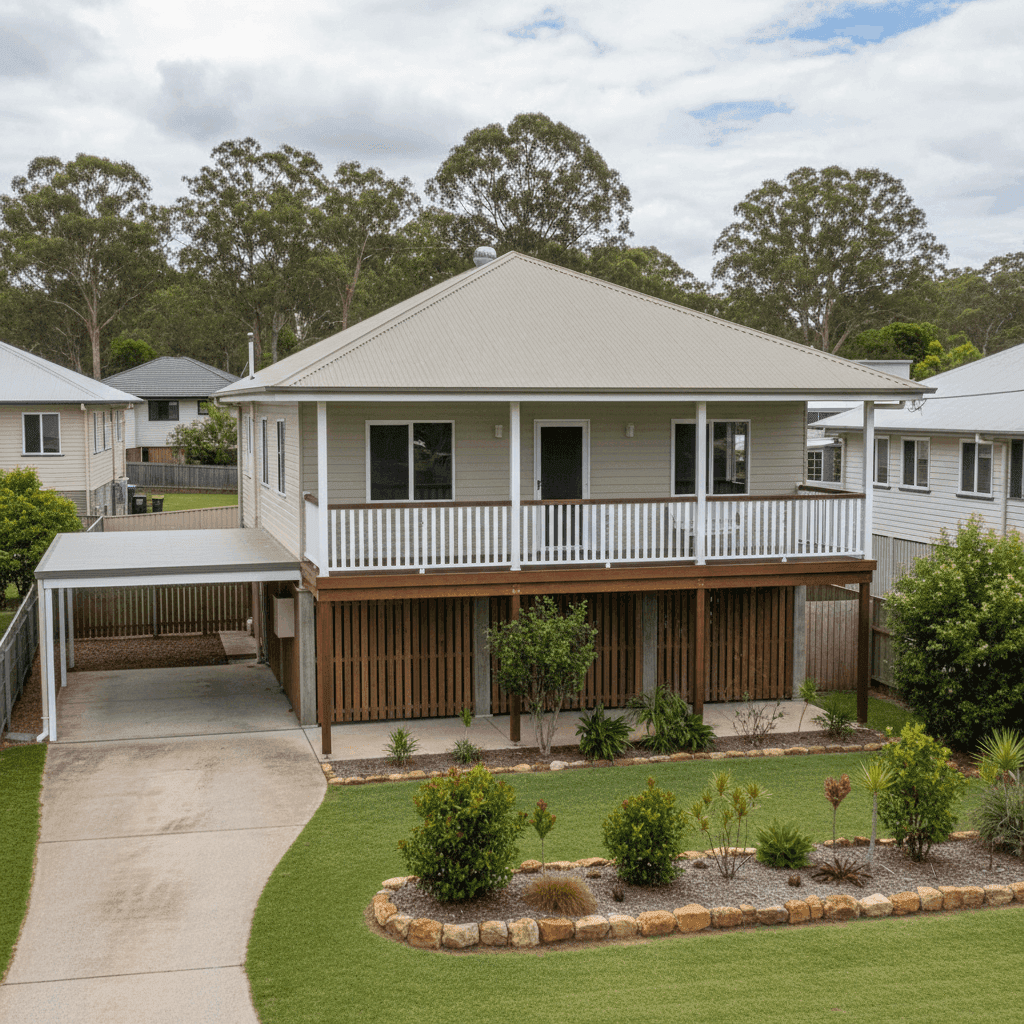
If you own a free standing home in Lilydale, QLD 4344, you're probably wondering whether what you're paying for home and contents insurance is reasonable — or whether you're leaving money on the table. This article breaks down a real insurance quote for a three-bedroom, four-bathroom property in Lilydale, compares it against Queensland and national benchmarks, and offers practical tips to help you get the best value cover.
---
Is This Quote Fair?
The quote in question comes in at $4,432 per year (or $426/month) for combined home and contents insurance, covering a building sum insured of $790,000 and $50,000 worth of contents. Both the building and contents excess are set at $1,000.
Our price rating for this quote is FAIR — Around Average, which is a reasonable result for a property of this age and construction type in regional Queensland. It's not the cheapest quote on the market, but it's not an outlier either. Given the characteristics of this home — more on those below — paying close to the Queensland average is a defensible outcome.
That said, "fair" doesn't mean you shouldn't shop around. Even a modest saving of $300–$500 per year adds up significantly over the life of your mortgage or ownership.
---
How Lilydale Compares
Understanding where your premium sits relative to broader benchmarks helps put the number in perspective. Here's how this quote stacks up:
| Benchmark | Annual Premium |
|---|---|
| This Quote | $4,432 |
| QLD State Average | $4,547 |
| QLD State Median | $3,931 |
| National Average | $2,965 |
| National Median | $2,716 |
| Lockyer Valley LGA Average | $11,404 |
A few things stand out immediately. First, this quote sits just below the Queensland state average of $4,547 — a positive sign. Second, it's notably above the national average and median, which reflects the elevated risk environment that comes with insuring property in Queensland more broadly.
Perhaps most striking is the Lockyer Valley LGA average of $11,404 per year — more than double this quote. The Lockyer Valley region has experienced significant flood and storm events in recent years, and many properties in the LGA attract substantially higher premiums as a result. By comparison, this quote looks quite competitive within its local government area context.
You can explore more detailed pricing data for this postcode at the Lilydale QLD 4344 insurance stats page, or browse Queensland-wide home insurance statistics and national home insurance benchmarks for broader context.
---
Property Features That Affect Your Premium
Every home is different, and insurers weigh up a range of property characteristics when calculating your premium. Here's how the specific features of this Lilydale property are likely influencing the quote:
Age of Construction (1955)
Built in 1955, this home is nearly 70 years old. Older homes tend to attract higher premiums because ageing electrical wiring, plumbing, and structural components carry a greater risk of failure. Insurers factor in the increased likelihood of claims related to wear and tear, even when a property has been well maintained.
Hardiplank/Hardiflex Exterior Walls
Fibre cement cladding such as Hardiplank and Hardiflex is a popular choice for Queensland homes. It offers good fire resistance and durability compared to timber weatherboard, which can work in your favour at premium time. However, it's worth noting that older fibre cement products may contain materials that increase repair costs — something insurers account for when pricing.
Steel/Colorbond Roof
A Colorbond steel roof is generally viewed favourably by insurers. It's durable, fire-resistant, and performs well in high-wind conditions. Compared to terracotta or concrete tiles, steel roofing is less prone to cracking and easier to repair, which can contribute to a more competitive premium.
Stump Foundation
Homes built on stumps — common in Queensland, particularly in older builds — introduce specific considerations for insurers. Stumped foundations can be susceptible to movement, subsidence, and termite activity over time. Maintaining your stumps and having them regularly inspected is important both for the structural integrity of your home and for keeping your insurance claims history clean.
Building Size (235 sqm) and Sum Insured ($790,000)
At 235 square metres, this is a reasonably sized home. The building sum insured of $790,000 reflects the cost to rebuild — not the market value — and is the figure that most directly drives your premium. Ensuring this figure is accurate is critical: under-insurance can leave you seriously out of pocket after a major claim.
No Pool, Solar, or Cyclone Risk
The absence of a swimming pool, solar panels, and cyclone risk classification all work to keep premiums lower. Cyclone-prone postcodes in North Queensland, for instance, can see premiums that are multiples of what's quoted here.
---
Tips for Homeowners in Lilydale
1. Review Your Sum Insured Annually
Building costs in Queensland have risen sharply in recent years due to labour shortages and materials inflation. A sum insured that was accurate two years ago may no longer be sufficient to fully rebuild your home today. Use a building cost calculator or speak with a local builder to validate your figure before each renewal.
2. Maintain Your Stump Foundation
Stumped homes require ongoing maintenance to remain structurally sound. Have your stumps inspected every few years by a qualified pest and building inspector. Addressing issues early — such as timber rot or termite damage — can prevent costly claims and keep your insurance history clean, which helps at renewal time.
3. Compare Quotes Before You Renew
Insurers rarely reward loyalty with their best pricing. With this quote rated as "fair" rather than "great," there's a reasonable chance a competing insurer could offer equivalent cover at a lower price. Set a reminder to compare at least two or three quotes before your policy renews each year.
4. Consider Adjusting Your Excess
The current excess on this policy is $1,000 for both building and contents. Opting for a higher excess — say, $1,500 or $2,000 — can meaningfully reduce your annual premium. This is a sensible strategy if you have an emergency fund and are unlikely to make small claims.
---
Compare Your Home Insurance Today
Whether you're renewing an existing policy or insuring a new purchase, it pays to see what the market has to offer. CoverClub makes it easy to compare home and contents insurance quotes from a range of Australian insurers in one place — no jargon, no pressure. Get a quote today at CoverClub and find out if you could be paying less for the same level of protection.