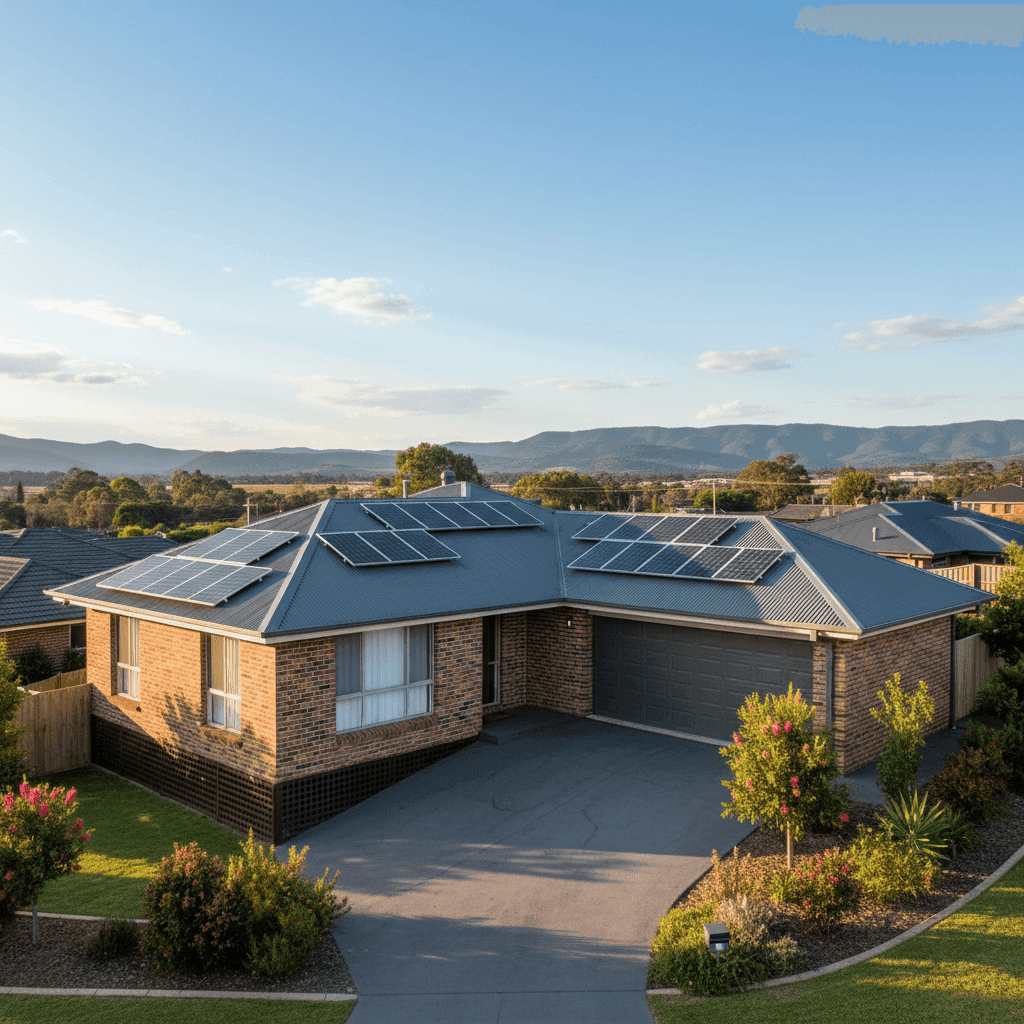
Lilydale is a well-established suburb nestled in the foothills of Melbourne's Yarra Ranges, offering a leafy, semi-rural lifestyle that many Victorians are drawn to. If you own a free standing home here, understanding what you're paying for home and contents insurance — and whether that figure is reasonable — is an important part of managing your household finances. This article breaks down a real quote for a five-bedroom brick veneer home in Lilydale, compares it against local, state, and national benchmarks, and offers practical tips for getting better value on your cover.
---
Is This Quote Fair?
The quote in question comes in at $2,479 per year (or $243 per month) for combined home and contents insurance, covering a building sum insured of $758,000 and contents valued at $50,000. Both the building and contents excess are set at $1,000.
Our price rating for this quote is FAIR — Around Average, and the data backs that up. The suburb average premium for Lilydale sits at $2,470 per year, meaning this quote lands almost exactly in line with what most homeowners in the area are paying. It's comfortably below the 75th percentile of $3,288 per year, so it's not on the expensive end of the local spectrum. At the same time, there's a meaningful gap between this figure and the 25th percentile of $1,585 per year — a reminder that cheaper options do exist for some Lilydale properties, depending on their risk profile and the insurer.
A "fair" rating doesn't mean you can't do better, but it does mean you're not being significantly overcharged relative to your neighbours. For a five-bedroom home of 235 sqm with a $758,000 building sum insured, this is a reasonable starting point.
---
How Lilydale Compares
Putting this quote into a broader geographic context reveals some interesting insights. You can explore the full breakdown on the Lilydale suburb stats page.
| Benchmark | Average Premium | Median Premium |
|---|---|---|
| Lilydale (suburb) | $2,470/yr | $2,201/yr |
| Victoria (state) | $3,000/yr | $2,718/yr |
| Australia (national) | $5,347/yr | $2,764/yr |
| Yarra Ranges (LGA) | $5,600/yr | — |
A few things stand out here. First, Lilydale homeowners are paying noticeably less than the Victorian state average of $3,000 per year — roughly 17% less on a median basis. This suggests that while the Yarra Ranges region carries some elevated risk (more on that shortly), Lilydale itself sits in a relatively favourable pocket within the LGA.
Second, the national average of $5,347 per year looks startlingly high compared to Lilydale's figures. This is largely driven by high-risk areas in Queensland and Western Australia — particularly cyclone-prone coastal regions — which pull the national average up significantly. The national median of $2,764 per year is a more useful comparison point, and Lilydale's median of $2,201 still comes in below that figure.
Third, the Yarra Ranges LGA average of $5,600 per year is considerably higher than Lilydale's suburb average. This likely reflects the bushfire exposure of more rural parts of the LGA, such as Healesville and Warburton, which face much greater risk than Lilydale's more suburban streetscape. Check out Victoria-wide insurance stats and national home insurance data for further context.
---
Property Features That Affect Your Premium
Several characteristics of this particular property influence how insurers price the risk. Here's what's relevant:
Brick veneer construction with a Colorbond roof Brick veneer walls are generally viewed favourably by insurers — they're durable, resistant to fire, and less susceptible to storm damage than timber-clad homes. The steel Colorbond roof is similarly well-regarded; it's lightweight, long-lasting, and performs well in hail events. Together, these materials typically attract more competitive premiums than, say, a weatherboard home with a tile roof.
Built in 1995 A home constructed in 1995 is approaching 30 years old, which means some insurers may factor in the age of plumbing, electrical systems, and roofing when assessing risk. That said, 1995 construction falls within a period of reasonably modern building codes, so it's unlikely to attract significant loading on that basis alone.
Stump foundation, elevated less than 1m Homes on stumps are common in Victoria and are generally well-suited to sloped terrain. The slight elevation here is minimal — less than a metre — so it doesn't trigger the kind of premium loading you'd see for a fully elevated Queenslander-style home. However, stump foundations can be more vulnerable to subsidence and pest activity, which some insurers assess carefully.
Solar panels and ducted climate control Both of these features increase the replacement value of the home, which is already reflected in the $758,000 building sum insured. Solar panels in particular can be a point of contention in claims — it's worth confirming with your insurer exactly how they're covered (some policies treat them as part of the building, others as a separate item).
No pool, no cyclone risk The absence of a pool removes one common source of liability claims, and the non-cyclone-risk classification keeps premiums lower than they'd be for equivalent homes in northern Queensland or coastal WA.
Tile flooring Tiles are a practical, durable choice that holds up well in claims involving water damage. This is a minor factor but can influence contents and building assessments.
---
Tips for Homeowners in Lilydale
1. Review your building sum insured annually Construction costs have risen sharply in recent years, and a sum insured that was adequate in 2021 may leave you underinsured today. Use a building cost calculator to check whether $758,000 genuinely reflects what it would cost to rebuild your home from scratch — including demolition, architect fees, and current labour rates.
2. Confirm your solar panels are fully covered Solar panel systems can cost $10,000–$20,000 or more to replace. Ask your insurer whether your panels are covered under the building section, whether there are any sub-limits, and what happens if they're damaged by storm or hail. Not all policies treat solar the same way.
3. Explore bushfire preparedness discounts While Lilydale itself isn't classified as a high-risk bushfire zone, properties on the fringes of the Yarra Ranges may still attract some bushfire loading. Some insurers offer discounts for homes with ember guards, metal fly screens, and well-maintained gutters. It's worth asking.
4. Compare quotes before renewal Loyalty doesn't always pay in insurance. Insurers frequently offer their best rates to new customers, and the difference between your current premium and a competitor's offer can be substantial. Even if your quote is rated "fair," there may be policies with equivalent cover at a lower price point — or better cover at the same price.
---
Ready to Compare?
Whether you're happy with your current insurer or looking for a better deal, it pays to see what else is out there. CoverClub makes it easy to compare home and contents insurance quotes from multiple providers in one place. Get a quote today and find out whether you're getting the best value for your Lilydale home.