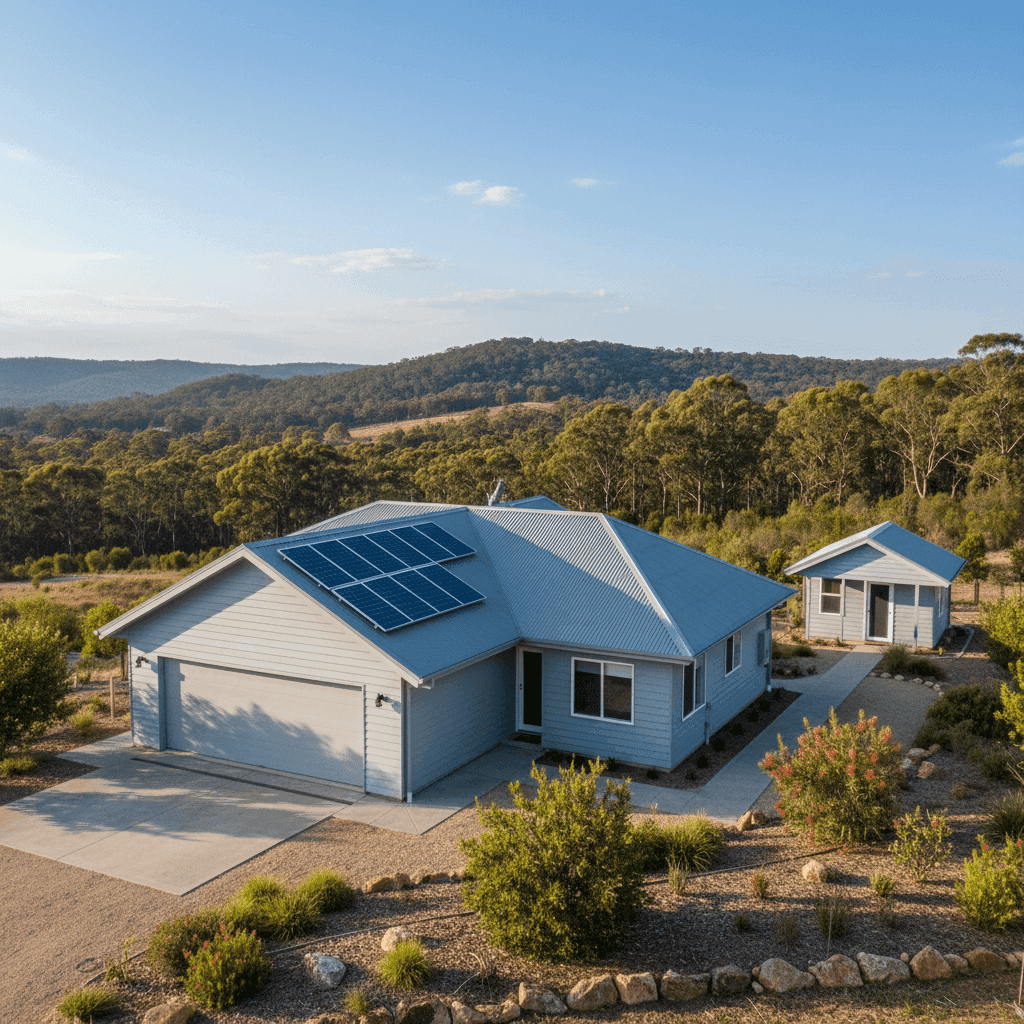
If you own a free standing home in Limeburners Creek, NSW 2324, you may already know that home insurance in regional New South Wales can be a mixed bag. Nestled in the Port Stephens hinterland near the Hunter River estuary, Limeburners Creek is a semi-rural locality that brings its own unique set of risk factors and property characteristics — all of which feed directly into what insurers charge you each year. In this article, we break down a real home and contents insurance quote for a five-bedroom, three-bathroom weatherboard home in the area, and put it in context against suburb, state, and national benchmarks.
---
Is This Quote Fair?
The quote in question comes to $6,687 per year (or $670/month) for combined home and contents cover, with a building sum insured of $759,000 and contents valued at $35,000. The building excess sits at $4,000, while the contents excess is $1,000.
Our price rating for this quote is EXPENSIVE — Above Average.
To put that into perspective: the suburb average for Limeburners Creek sits at $4,908/year, with a median of $4,668. This quote lands roughly $1,779 above the suburb average — that's about 36% more than what most comparable properties in the area are paying. Even against the suburb's 75th percentile of $5,451, this quote exceeds the mark by over $1,200.
That said, context matters. A 277 sqm home with five bedrooms, three bathrooms, a granny flat, and solar panels is larger and more complex than a typical dwelling. Higher rebuild costs naturally push the building sum insured — and therefore the premium — upward. Still, the gap is significant enough to warrant shopping around.
---
How Limeburners Creek Compares
Zooming out to a broader view, the pricing picture becomes even clearer:
| Benchmark | Average Premium | Median Premium |
|---|---|---|
| Limeburners Creek (suburb) | $4,908/yr | $4,668/yr |
| New South Wales (state) | $3,801/yr | $3,410/yr |
| Australia (national) | $2,965/yr | $2,716/yr |
This quote of $6,687 sits 76% above the NSW state average and more than double the national median of $2,716. Interestingly, the LGA average for Maitland is an eye-watering $13,875/year — which suggests there are properties in this broader council area attracting extremely high premiums, likely due to flood exposure in lower-lying parts of the Maitland LGA. By comparison, this quote looks more reasonable in that local government context, though it remains well above national norms.
The suburb sample size of 19 quotes provides a reasonable — if modest — comparison pool. As more quotes are collected for the area, these benchmarks will become increasingly reliable.
---
Property Features That Affect Your Premium
Several characteristics of this property have a direct bearing on what insurers charge. Here's how each one plays into the final figure:
Weatherboard Timber Walls
Weatherboard construction is one of the most common external wall types in older Australian homes, and it's generally viewed as a higher-risk material by insurers compared to brick veneer or double brick. Timber is more susceptible to fire spread, rot, and pest damage, which can translate to higher premiums.
Steel/Colorbond Roof
On the positive side, a Colorbond steel roof is considered durable and low-maintenance, and is generally well-regarded by insurers. It performs well in high-wind events and resists ember attack better than older roofing materials like tiles or corrugated iron.
Slab Foundation
A concrete slab foundation is a neutral to positive factor for insurers. It's structurally sound and less prone to subsidence or movement compared to older stumped or pier-and-beam foundations.
Solar Panels
Solar panels add replacement value to the building sum insured and can slightly increase premiums. They also introduce additional risk during storm events if panels are damaged or dislodged. Make sure your policy explicitly covers solar panel damage — not all standard policies do.
Granny Flat
The presence of a granny flat meaningfully increases the insurable value of the property. Whether it's used for rental income, extended family, or as a guest space, insurers treat it as additional structure that must be factored into the building sum insured. This is a likely contributor to the higher-than-average premium here.
1995 Construction
A home built in 1995 is approaching 30 years old. While not ancient, it may have ageing plumbing, electrical systems, or roofing components that increase the likelihood of a claim. Some insurers apply loading to homes over a certain age threshold.
Standard Fittings
Standard-quality fittings help keep the rebuild cost — and therefore the sum insured — at a reasonable level. Homes with premium or luxury fittings would attract a significantly higher building sum insured and, in turn, a higher premium.
---
Tips for Homeowners in Limeburners Creek
1. Review Your Sum Insured Carefully
At $759,000, the building sum insured is substantial. It's worth getting an independent building replacement cost estimate to ensure you're not over-insured (paying more than necessary) or under-insured (exposed to a gap in coverage). Tools like the Cordell Sum Sure calculator can help.
2. Shop Around — Seriously
A $1,779 gap between this quote and the suburb average is not trivial. Insurers price risk very differently, and a property with weatherboard walls, a granny flat, and solar panels will be assessed quite differently across providers. Use a comparison platform like CoverClub to see multiple quotes side by side.
3. Ask About Solar Panel Coverage
Not all home insurance policies automatically cover solar panels as part of the building. Confirm with your insurer whether panels are included, and whether storm damage, inverter failure, or accidental breakage are covered events. This is particularly relevant given the panels are already factored into your property's value.
4. Consider Your Excess Strategy
This quote carries a $4,000 building excess — which is on the higher end. A higher excess typically lowers your annual premium, but it also means a larger out-of-pocket cost when you do need to claim. Consider whether that trade-off makes sense for your financial situation, particularly for a property of this size and value.
---
Compare Your Options with CoverClub
Whether you're renewing your policy or shopping for the first time, it pays to compare. CoverClub makes it easy to see how your home insurance quote stacks up against real data from properties in your suburb and across New South Wales. Get a quote today and find out if you're paying a fair price — or leaving money on the table.