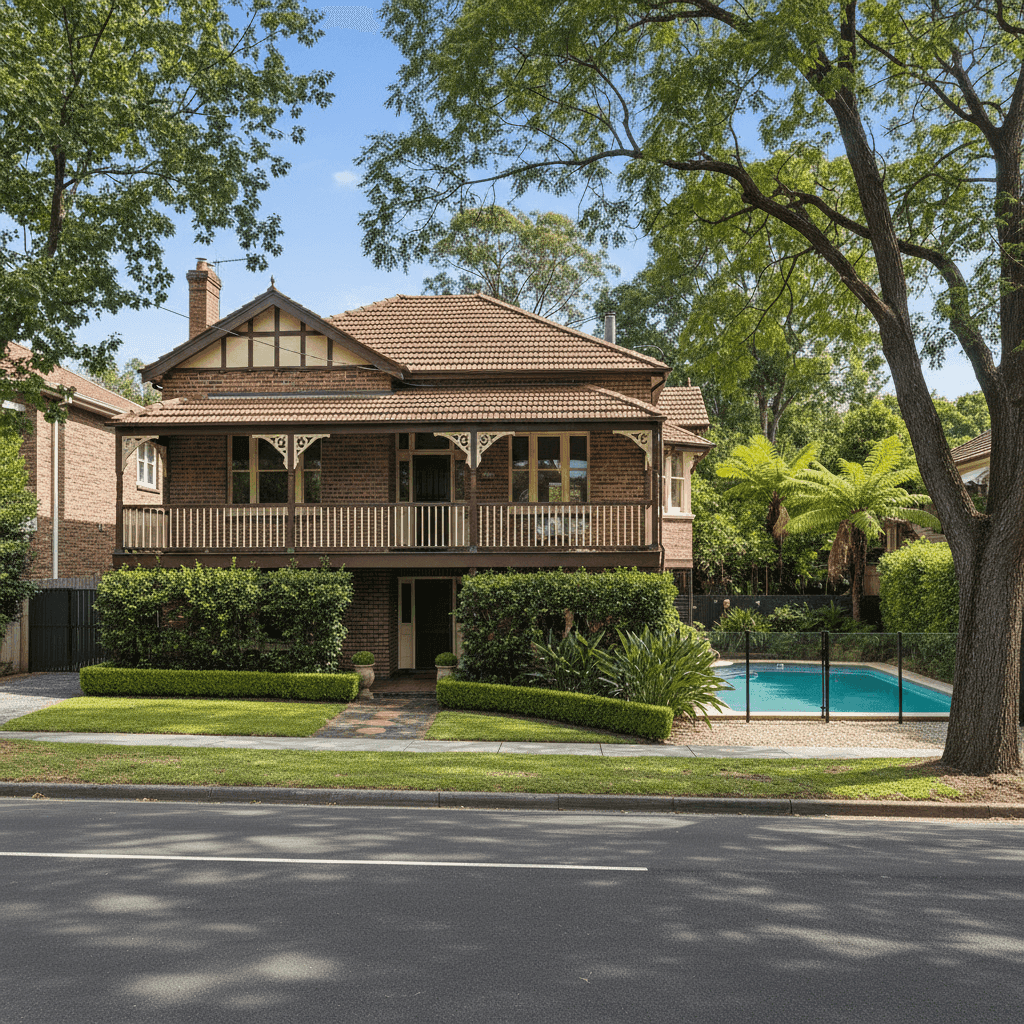
If you own a free standing home in Lindfield, NSW 2070, you're sitting in one of Sydney's most sought-after Upper North Shore suburbs — and your insurance premium is likely to reflect that. This article breaks down a real home and contents insurance quote for a five-bedroom property in the area, compares it against local, state, and national benchmarks, and offers practical tips to help you get better value on your cover.
---
Is This Quote Fair?
The annual premium for this property came in at $7,751 per year (or approximately $743 per month), covering both building and contents. Our price rating for this quote is Expensive — Above Average.
To understand why, it helps to look at what's being insured. The building sum insured is $2,944,000, with contents covered up to $499,999 — a combined insured value approaching $3.45 million. At that level of coverage, a premium just under $8,000 per year represents a rate of roughly 0.22% of total insured value, which is not unreasonable in absolute terms.
That said, when stacked against what other Lindfield homeowners are paying, this quote does sit noticeably higher. The suburb average is $4,239 per year, and the median is $3,661 — meaning this quote is nearly double the typical Lindfield premium. Even accounting for the significantly higher sum insured and above-average fittings, there is room to question whether this quote is the most competitive option available.
It's worth noting that the building excess and contents excess are both set at $1,000, which is a fairly standard level. Increasing your excess is one lever you can pull to reduce your premium — more on that below.
---
How Lindfield Compares
Understanding where your suburb sits in the broader insurance landscape is a useful reality check. Here's how Lindfield stacks up:
| Benchmark | Average Premium | Median Premium |
|---|---|---|
| Lindfield (NSW 2070) | $4,239/yr | $3,661/yr |
| New South Wales | $9,528/yr | $3,770/yr |
| National | $5,347/yr | $2,764/yr |
| Northern Beaches LGA | $3,266/yr | — |
A few things stand out here. The NSW average of $9,528 is dramatically higher than the NSW median of $3,770 — a sign that a small number of very expensive properties (think coastal, flood-prone, or high-value homes) are pulling the state average upward. The same dynamic plays out nationally, where the average of $5,347 is nearly double the median of $2,764.
Lindfield's suburb average of $4,239 sits comfortably above the Northern Beaches LGA average of $3,266, which makes sense given the older, larger, and higher-value housing stock that characterises the area. The 25th percentile for Lindfield is $3,078 and the 75th percentile is $4,512, so most local homeowners are paying between those two figures. This quote, at $7,751, sits well above the 75th percentile — though again, the sum insured here is substantially higher than a typical Lindfield policy.
(Note: This suburb data is based on a sample of 14 quotes, so treat these figures as directional rather than definitive.)
---
Property Features That Affect Your Premium
Several characteristics of this property have a meaningful influence on what insurers charge. Here's a breakdown of the key factors at play:
Heritage-Era Construction (Built 1915)
At over 110 years old, this home falls firmly into the heritage category. Older properties cost more to rebuild — skilled tradespeople, period-appropriate materials, and council requirements for heritage-listed or heritage-adjacent homes can push rebuild costs significantly higher than a modern equivalent. This is a primary driver of the elevated building sum insured.
Double Brick Walls and Tiled Roof
Double brick is one of the more durable and fire-resistant construction types, which generally works in your favour with insurers. Tiled roofs are similarly well-regarded — they're long-lasting and weather-resistant compared to Colorbond or fibrous cement alternatives. These features can moderate your premium compared to weatherboard or asbestos-clad homes of a similar era.
Stump Foundation and Elevated Position
The home sits on stumps and is elevated by at least one metre. While this style is common in older Sydney homes and can provide good underfloor ventilation, it does introduce some considerations for insurers around structural movement, pest access, and the cost of subfloor repairs. Elevated homes can also be more exposed to wind events.
Timber and Laminate Flooring
Original or high-quality timber flooring is a significant contributor to above-average fittings quality. Replacing or restoring period timber floors is expensive, and insurers factor this into their assessment of rebuild cost.
Swimming Pool
The presence of a pool adds to both the building sum insured and the liability exposure. Pool infrastructure — pumps, filtration, surrounds, and the pool shell itself — adds to the cost of a full rebuild.
Ducted Climate Control
A whole-home ducted air conditioning system is a substantial asset. These systems can cost $15,000–$40,000 to replace, and their inclusion in the building sum insured is appropriate and necessary.
Above-Average Fittings Quality
This rating captures the overall standard of fixtures, fittings, and finishes throughout the home — think stone benchtops, quality joinery, high-end appliances, and period detailing. Above-average fittings increase the per-square-metre rebuild cost significantly.
---
Tips for Homeowners in Lindfield
1. Review Your Sum Insured Carefully
A building sum insured of $2,944,000 for a 305 sqm home implies a rebuild cost of around $9,650 per square metre. While premium heritage properties with high-end fittings can absolutely reach this level, it's worth getting an independent building valuation to confirm the figure is accurate — both over-insurance and under-insurance carry real risks.
2. Compare Multiple Quotes Before Renewing
This quote is rated as expensive relative to the suburb. Given that insurers price risk differently, comparing quotes from multiple providers through a platform like CoverClub can surface meaningfully cheaper options for equivalent cover. Don't let your policy auto-renew without checking the market.
3. Consider Adjusting Your Excess
Both the building and contents excess are set at $1,000. Increasing your excess — say, to $2,000 or $2,500 — can reduce your annual premium by a noticeable margin. This makes most sense if you have the financial buffer to cover a larger out-of-pocket cost in the event of a claim.
4. Bundle and Loyalty Discounts — But Shop Around First
Many insurers offer discounts for bundling home and contents (which this policy already does), as well as loyalty discounts for multi-year customers. However, research consistently shows that loyalty discounts rarely outpace the savings available by switching providers. Use loyalty perks as a negotiating tool, not a reason to stay.
---
Compare Your Home Insurance Today
Whether you're renewing an existing policy or insuring a new purchase, it pays to understand what the market looks like before you commit. CoverClub makes it easy to compare home and contents insurance quotes for properties across NSW and Australia. Get a quote for your Lindfield home today and see how your premium stacks up against your neighbours — and the rest of the country.
You can also explore detailed insurance cost data for Lindfield and the surrounding area, across New South Wales, or nationally.