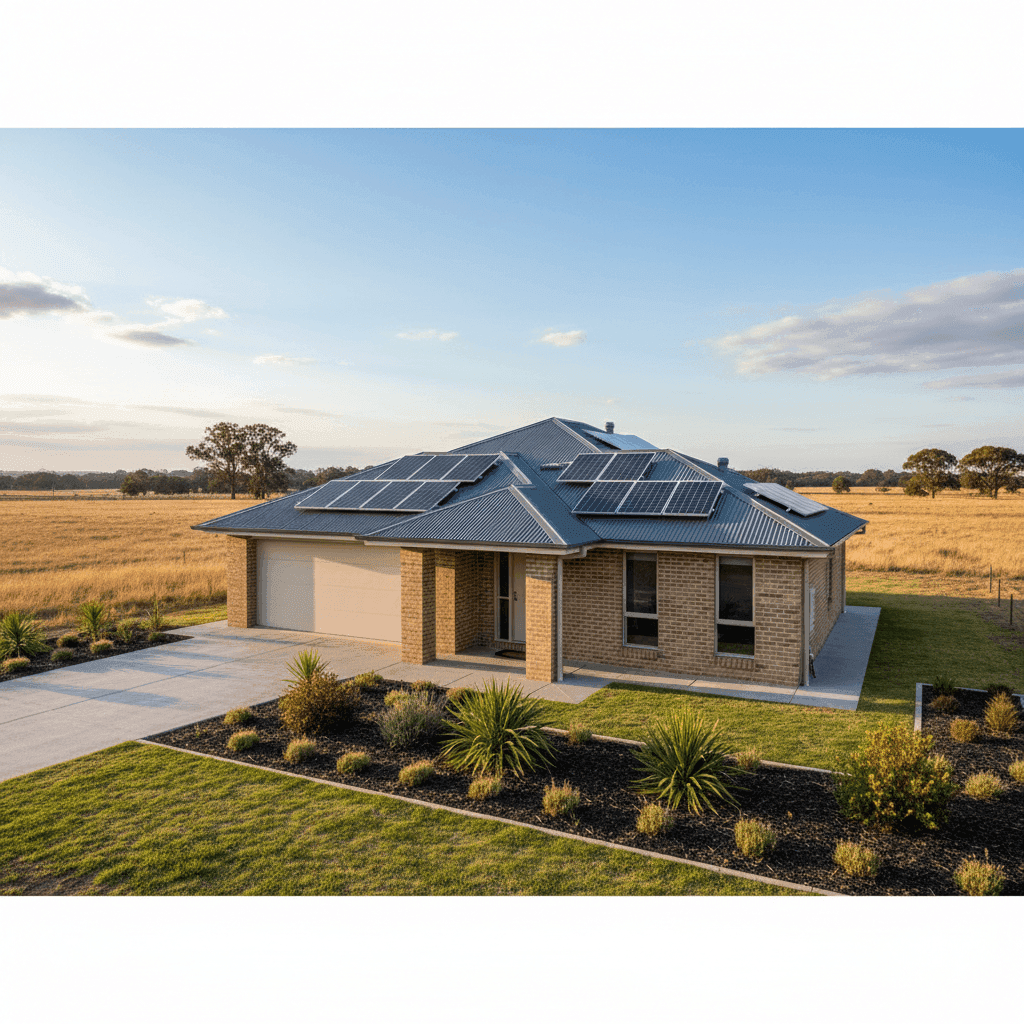
If you own a free standing home in Linton, VIC 3360, you're probably wondering whether you're paying a fair price for home and contents insurance — or leaving money on the table. This article breaks down a real insurance quote for a four-bedroom, two-bathroom brick veneer home in Linton, comparing it against suburb, state, and national benchmarks so you can make an informed decision.
---
Is This Quote Fair?
The quote in question comes in at $1,227 per year (or $120/month) for combined home and contents cover, with a building sum insured of $600,000 and contents valued at $80,000. The building excess sits at $3,000 and the contents excess at $1,000.
Our price rating for this quote is CHEAP — Below Average, and the numbers back that up convincingly.
To put it in perspective, the average home and contents premium across Linton sits at $2,052 per year, with a median of $2,055. This quote is roughly 40% below the suburb average — a substantial saving of over $800 annually. Even compared to the cheapest quarter of quotes in the area (the 25th percentile at $1,836/yr), this premium still comes in well under the mark.
So yes — by any local measure, this is a genuinely competitive quote. Whether that's down to the insurer's pricing model, the property's characteristics, or a combination of both, homeowners in a similar position would do well to benchmark their own policy against figures like these.
---
How Linton Compares to the Rest of Victoria and Australia
Zooming out beyond the suburb level paints an even clearer picture. According to data from CoverClub's Linton insurance stats page, the local average of $2,052/yr is already notably lower than broader benchmarks — but this quote undercuts even that.
| Benchmark | Average Premium |
|---|---|
| This Quote | $1,227/yr |
| Linton (suburb average) | $2,052/yr |
| Linton (suburb median) | $2,055/yr |
| Corangamite LGA average | $2,724/yr |
| Victoria state average | $2,921/yr |
| National average | $2,965/yr |
Across Victoria as a whole, the average annual premium sits at $2,921 — meaning this quote is less than half the state average. Nationally, the picture is similar, with the Australian average at $2,965/yr and a median of $2,716/yr.
Linton itself benefits from being a small rural township in the Corangamite LGA — away from the high-density urban risk corridors, coastal flood zones, and cyclone-prone regions that push premiums up in other parts of the country. That said, rural Victoria does carry its own set of risks, particularly around bushfire exposure, which makes it all the more notable that this quote remains so competitive.
---
Property Features That Affect Your Premium
Several characteristics of this property likely contribute to its favourable pricing:
Brick Veneer Construction Brick veneer is one of the most common — and insurer-friendly — wall materials in Australia. It offers good fire resistance and durability, which typically translates to lower rebuilding risk and, consequently, lower premiums compared to timber-framed or clad exteriors.
Steel/Colorbond Roof A Colorbond steel roof is highly regarded by insurers. It's resistant to fire, doesn't rot, handles hail reasonably well, and has a long service life. This is a meaningful tick in the box when underwriters assess risk.
Slab Foundation Concrete slab foundations are considered stable and low-risk. They're less susceptible to subsidence, termite ingress, and the kind of structural movement that can lead to costly claims — all factors insurers weigh up.
Newly Built (2025) A brand-new home carries significantly less risk than an older dwelling. Modern builds must comply with current Australian building codes, meaning better structural integrity, updated electrical and plumbing systems, and materials that meet contemporary fire and safety standards. Insurers reward this with more competitive pricing.
Solar Panels While solar panels do add some value to insure (they're typically covered under building insurance), their presence on a new home with a Colorbond roof is unlikely to materially inflate the premium. It's worth confirming with your insurer that solar panels are explicitly included in your building sum insured.
No Pool, No Ducted Climate Control The absence of a pool removes a common liability risk, and without ducted climate control there's one less complex system that could fail and cause damage. Both factors help keep the premium lean.
Timber/Laminate Flooring Flooring type can influence contents and building claims. Timber and laminate floors are standard in Australian homes and don't typically flag any unusual risk.
Standard Fittings With standard-quality fittings throughout, the rebuilding cost estimate is more predictable and less likely to be underestimated — reducing the risk of being underinsured.
---
Tips for Homeowners in Linton
1. Check Your Building Sum Insured Carefully At $600,000 for a 139 sqm home built in 2025, the sum insured looks reasonable — but construction costs in regional Victoria have risen sharply in recent years. Use an independent building cost calculator to verify your figure annually, and factor in demolition and debris removal costs, which are often overlooked.
2. Confirm Solar Panels Are Covered Solar panel systems can represent $10,000–$20,000 or more in value. Ask your insurer explicitly whether panels are included in the building sum insured and whether damage from storms, hail, or electrical faults is covered under the policy.
3. Review Your Contents Value $80,000 in contents cover is a solid starting point, but it's easy to underestimate how much your belongings are actually worth. Walk through each room and tally up furniture, appliances, clothing, electronics, and valuables. Many Australians are significantly underinsured on contents.
4. Don't Set and Forget Even though this quote is well-priced today, insurance premiums can shift significantly at renewal. Set a reminder to compare quotes each year before your policy auto-renews. A few minutes of comparison can easily save hundreds of dollars — and CoverClub makes it straightforward to do exactly that.
---
Compare Your Own Quote
Whether you're a Linton local or simply researching what home insurance should cost in regional Victoria, the numbers here highlight just how much premiums can vary. A well-priced policy on a modern, well-built home can come in at a fraction of the state average — but you won't know unless you compare.
Get a home insurance quote at CoverClub and see how your premium stacks up against real data from your suburb, your LGA, and across Australia. It takes minutes and could save you significantly.