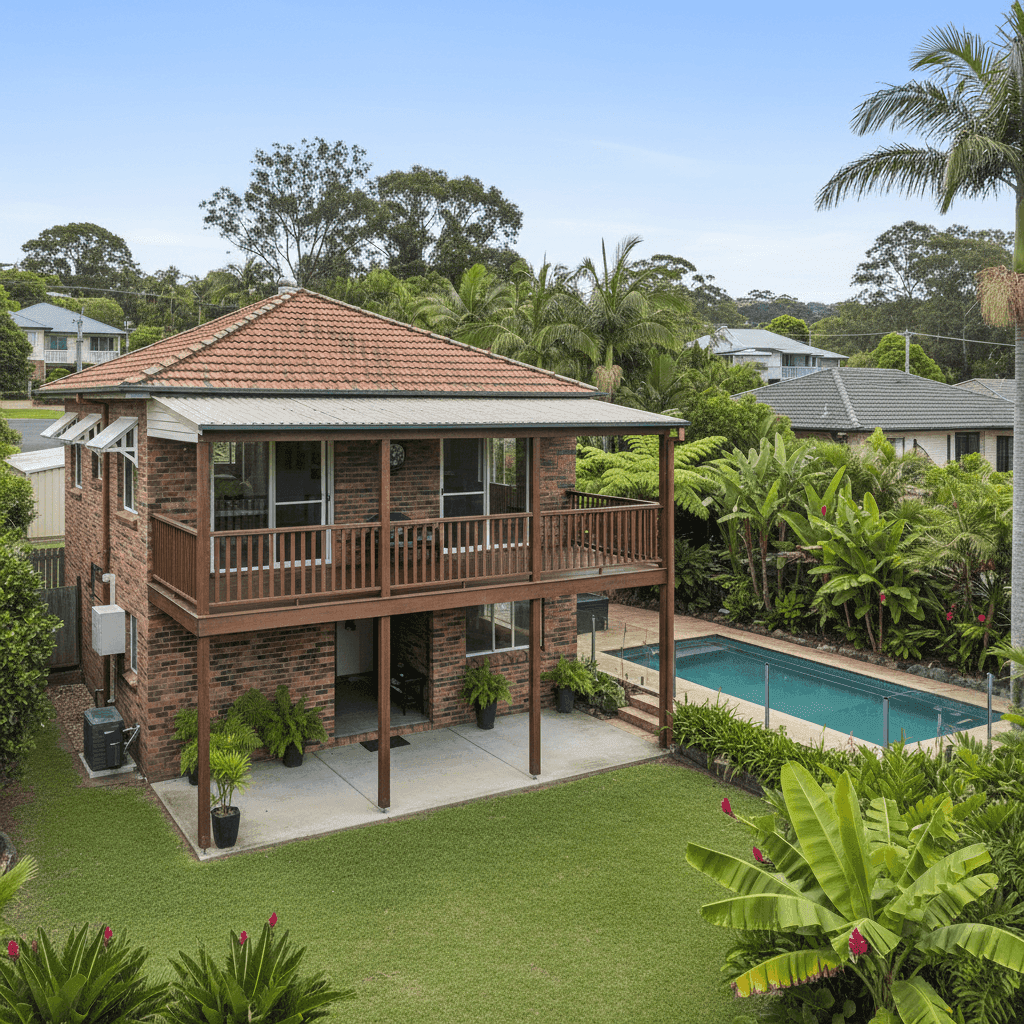
If you own a free standing home in Lismore, NSW 2480, you already know this region comes with its own unique set of risks and rewards. Nestled in the Northern Rivers of New South Wales, Lismore is a vibrant community — but one that has faced significant flood and weather-related challenges in recent years. All of that context feeds directly into what you'll pay for home insurance. This article breaks down a real building insurance quote for a 3-bedroom, 3-bathroom brick veneer home in the suburb, and puts the numbers in perspective against local, state, and national benchmarks.
---
Is This Quote Fair?
The quote in question comes in at $2,880 per year (or $281/month) for building-only cover on a home insured for $686,000, with a building excess of $2,000.
Our price rating for this quote is FAIR — Around Average, and when you look at the data, that assessment holds up well. At $2,880/yr, this premium sits just above the national average of $2,965/yr and comfortably below the NSW state average of $3,801/yr. More strikingly, it sits dramatically below the Lismore suburb average of $8,049/yr — which tells you a great deal about just how expensive insurance can be for some properties in this postcode.
To put it plainly: for Lismore, this is actually a very competitive result. The suburb's 25th percentile sits at $2,505/yr, meaning this quote is only slightly above the cheapest quarter of quotes seen in the area. Given the flood history and elevated risk profile of the broader Lismore region, securing cover close to national average pricing is a genuinely solid outcome.
---
How Lismore Compares
The pricing gap between Lismore and the rest of the country is significant and worth understanding clearly.
| Benchmark | Premium |
|---|---|
| This Quote | $2,880/yr |
| Lismore Suburb Average | $8,049/yr |
| Lismore Suburb Median | $7,728/yr |
| Lismore 25th Percentile | $2,505/yr |
| Lismore 75th Percentile | $9,012/yr |
| Ballina LGA Average | $5,486/yr |
| NSW State Average | $3,801/yr |
| NSW State Median | $3,410/yr |
| National Average | $2,965/yr |
| National Median | $2,716/yr |
(Based on 19 quotes sampled in the Lismore 2480 postcode)
The spread of premiums in Lismore is enormous — from around $2,505 at the low end to over $9,012 at the 75th percentile. This wide range reflects the highly variable flood risk across the postcode. Properties in lower-lying areas of Lismore have faced devastating inundation, particularly during the 2022 floods, and insurers price that risk accordingly. Properties that are elevated or otherwise less exposed to flood risk can attract premiums much closer to state and national norms.
You can explore the full breakdown of Lismore insurance statistics, compare with NSW state-wide data, or check out national home insurance benchmarks to see how your own quote measures up.
---
Property Features That Affect Your Premium
Several characteristics of this particular property help explain why it has attracted a more competitive premium than the Lismore suburb average.
Elevated Foundation (Poles) Perhaps the single most important factor here is that the home sits on a pole (stump) foundation and is elevated by less than 1 metre. In a flood-prone region like Lismore, even modest elevation can meaningfully reduce a property's assessed flood risk. Insurers factor floor height into their flood risk models, and homes that sit above ground level — even slightly — are generally viewed more favourably than slab-on-ground constructions.
Brick Veneer Walls & Tiled Roof The combination of brick veneer external walls and a tiled roof is a well-regarded construction type in the Australian insurance market. Both materials offer solid resistance to fire and general weather damage. Compared to weatherboard or fibre cement cladding, brick veneer tends to attract more competitive premiums.
Older Construction (1969) At over 55 years old, the home's age is a factor worth noting. Older homes can carry higher risk due to ageing plumbing, wiring, and structural elements that may not meet current building codes. This can push premiums upward slightly, though it's often offset by other favourable characteristics.
Swimming Pool The presence of a pool adds a small layer of liability and maintenance risk that insurers account for. Pool-related claims — from equipment damage to structural issues — are a modest but real premium factor.
Timber/Laminate Flooring Timber and laminate floors can be more susceptible to water damage than tiles, which is a relevant consideration in a flood-risk area. This may be a minor upward pressure on premiums.
No Solar Panels, No Ducted Climate Control The absence of solar panels and ducted air conditioning simplifies the risk profile slightly. Both systems can be costly to repair or replace, so their absence marginally reduces the insurer's exposure.
---
Tips for Homeowners in Lismore
1. Document your floor height and get it certified If your home is elevated, having a formal floor height certificate (often called a Flood Information Certificate or similar) can help you negotiate with insurers. Some providers will offer meaningful discounts when you can demonstrate your finished floor level relative to flood planning levels. Contact Lismore City Council for guidance on obtaining the relevant flood data for your property.
2. Shop around — the spread in Lismore is enormous As the data shows, premiums in Lismore 2480 range from roughly $2,500 to over $9,000 per year. That's not a small difference — it's potentially thousands of dollars annually. The same property can attract wildly different quotes from different insurers depending on how each company models flood risk. Never accept a renewal without comparing alternatives.
3. Review your sum insured annually With construction costs continuing to rise across Australia, it's easy to find yourself underinsured if you set your sum insured and leave it unchanged year after year. The $686,000 sum insured on this property reflects current rebuild costs — make sure yours does too. Underinsurance can leave you significantly out of pocket after a major claim.
4. Consider flood cover inclusions carefully Not all policies treat flood cover the same way. In a postcode like Lismore, the distinction between "flood" (rising water from a river or lake) and "storm surge" or "rainwater runoff" can be the difference between a paid claim and a declined one. Read the Product Disclosure Statement (PDS) carefully, and if in doubt, call the insurer directly to clarify exactly what flood scenarios are covered.
---
Compare Your Own Quote
Whether you're a first-time buyer in Lismore or a long-time homeowner reassessing your cover, the best thing you can do is compare. Premiums vary dramatically between providers — especially in high-risk postcodes — and what seems like a fair price today might be beaten significantly by another insurer tomorrow.
Get a building insurance quote for your Lismore home at CoverClub and see how your premium stacks up against real data from your suburb, your state, and across Australia. It takes just a few minutes and could save you hundreds — or more.