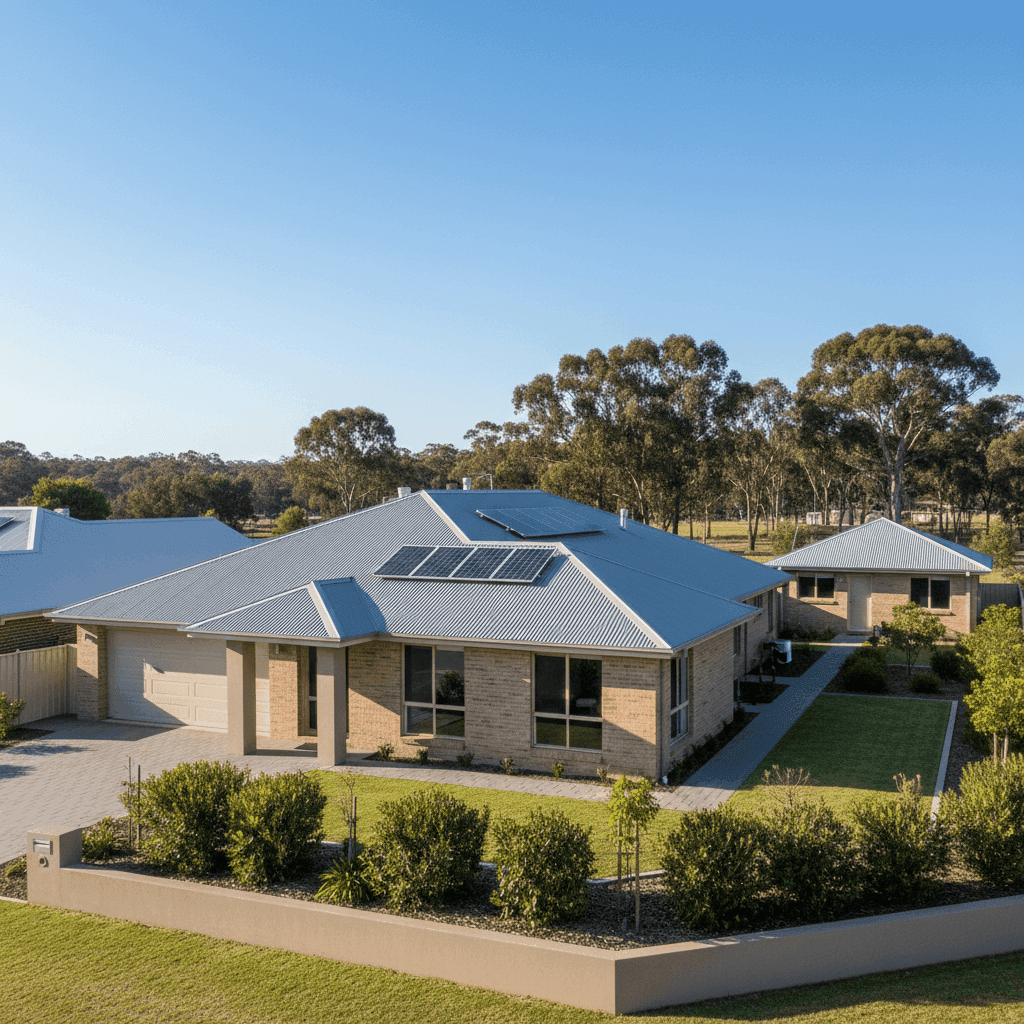
If you own a free standing home in Lithgow, NSW 2790, you've probably noticed that home insurance premiums can vary wildly — and not always in ways that feel fair. This article breaks down a real building insurance quote for a four-bedroom, two-bathroom property in Lithgow, comparing it against local, state, and national benchmarks so you can understand exactly where you stand.
---
Is This Quote Fair?
The quote in question comes in at $6,041 per year (or $592 per month) for building-only cover, with a $2,000 building excess. Our analysis rates this as EXPENSIVE — above average.
To put that in perspective, the suburb average for Lithgow sits at just $1,839 per year, and the median is even lower at $1,655 per year. That means this quote is more than 3× the local average — a significant gap that warrants a closer look.
Even at the upper end of the local market (the 75th percentile), Lithgow homeowners are typically paying around $2,451 per year. This quote exceeds that figure by roughly $3,600 annually, which is a substantial premium loading that's likely driven by a combination of property-specific features and insurer risk assessments.
It's worth noting that not all insurers price the same property the same way. Shopping around — particularly for older homes with unique characteristics — can make a meaningful difference to your bottom line.
---
How Lithgow Compares
Understanding where Lithgow sits in the broader insurance landscape helps put this quote in context. Here's a snapshot:
| Benchmark | Annual Premium |
|---|---|
| This Quote | $6,041 |
| Lithgow Suburb Average | $1,839 |
| Lithgow Suburb Median | $1,655 |
| Blue Mountains LGA Average | $3,517 |
| NSW State Average | $3,801 |
| NSW State Median | $3,410 |
| National Average | $2,965 |
| National Median | $2,716 |
A few things stand out here. First, Lithgow's local averages are notably lower than both the NSW state average and the national average — which is somewhat surprising given the region's bushfire exposure. This may reflect the mix of properties in the suburb sample, or the fact that many local homeowners are underinsured relative to true replacement costs.
Second, even against the Blue Mountains LGA average of $3,517, this quote is priced significantly higher. The LGA figure is itself above the Lithgow suburb average, which suggests that insurers do apply some regional loading for the broader Blue Mountains area — but this quote goes well beyond that.
You can explore Lithgow suburb insurance statistics, NSW state-wide data, and national home insurance benchmarks to dig deeper into how your property compares.
---
Property Features That Affect Your Premium
Several characteristics of this particular property are likely contributing to the elevated premium. Let's walk through the key ones.
Construction Year: 1945
Older homes — particularly those built before modern building codes — are a known risk factor for insurers. A home built in 1945 may have ageing internal systems (plumbing, wiring, structural elements) that increase the likelihood of a claim, even if the exterior has been well maintained. Many insurers apply age-related loadings to properties of this era.
Double Brick Walls
On the positive side, double brick construction is generally viewed favourably by insurers. It offers strong fire resistance and structural durability. However, double brick can also be more expensive to repair or rebuild than lighter-weight construction, which can push up the sum insured — and therefore the premium.
Sum Insured: $545,000
The building sum insured of $545,000 for a 130 sqm home in Lithgow is on the higher end. This may reflect the cost of rebuilding a double brick home with quality fittings, or it may be overestimated. It's worth checking whether your sum insured aligns with current construction costs in your area — both over-insurance and under-insurance carry risks.
Solar Panels
Solar panels add replacement value to the roof and can complicate claims involving roof damage. Some insurers treat them as an additional risk factor, particularly if they're not explicitly listed under the policy.
Ducted Climate Control
Ducted air conditioning systems are a significant fixed asset within the building. Their inclusion in the building sum insured is appropriate, but it does contribute to a higher replacement cost — and therefore a higher premium.
Granny Flat
The presence of a granny flat on the property meaningfully increases the insurable asset value. A separate dwelling structure adds complexity to a claim and increases the total rebuild cost, which is likely reflected in both the sum insured and the premium loading.
Colorbond Roof
A steel/Colorbond roof is generally considered a positive risk factor — it's durable, fire-resistant, and low-maintenance. This shouldn't be adding to the premium, and may in fact be moderating it slightly.
Bushfire & Environmental Risk
Lithgow and the broader Blue Mountains region carry elevated bushfire risk. While this property isn't in a designated cyclone risk area, bushfire exposure is a key driver of insurance costs in this part of NSW and is almost certainly factored into the premium.
---
Tips for Homeowners in Lithgow
If you're looking to get better value on your home insurance, here are four practical steps worth considering.
1. Review your sum insured carefully. At $545,000 for a 130 sqm home, it's worth getting an independent building replacement cost estimate. Tools like the Cordell Sum Sure Calculator can help. Over-insuring means you're paying a higher premium than necessary; under-insuring means you could be left short after a major claim.
2. Compare quotes from multiple insurers. The gap between this quote and the Lithgow suburb average is significant. Different insurers weight risk factors differently — especially for older homes with granny flats and solar panels. Get a fresh quote at CoverClub to see what other insurers are offering for your specific property.
3. Ask about bundling or loyalty discounts. Some insurers offer discounts when you combine building and contents cover, or when you've been a customer for several years. Even if you're on building-only cover now, it's worth asking.
4. Consider your excess settings. A $2,000 building excess is already at the higher end of the standard range. Increasing your excess further can reduce your annual premium, but make sure you can comfortably cover that amount out of pocket if you need to make a claim.
---
Compare Your Options with CoverClub
Whether you're renewing your policy or shopping around for the first time, it pays to see the full picture. CoverClub makes it easy to compare home insurance quotes from a range of Australian insurers — all in one place, with transparent pricing data to back it up.
Start comparing home insurance quotes for your Lithgow property today →