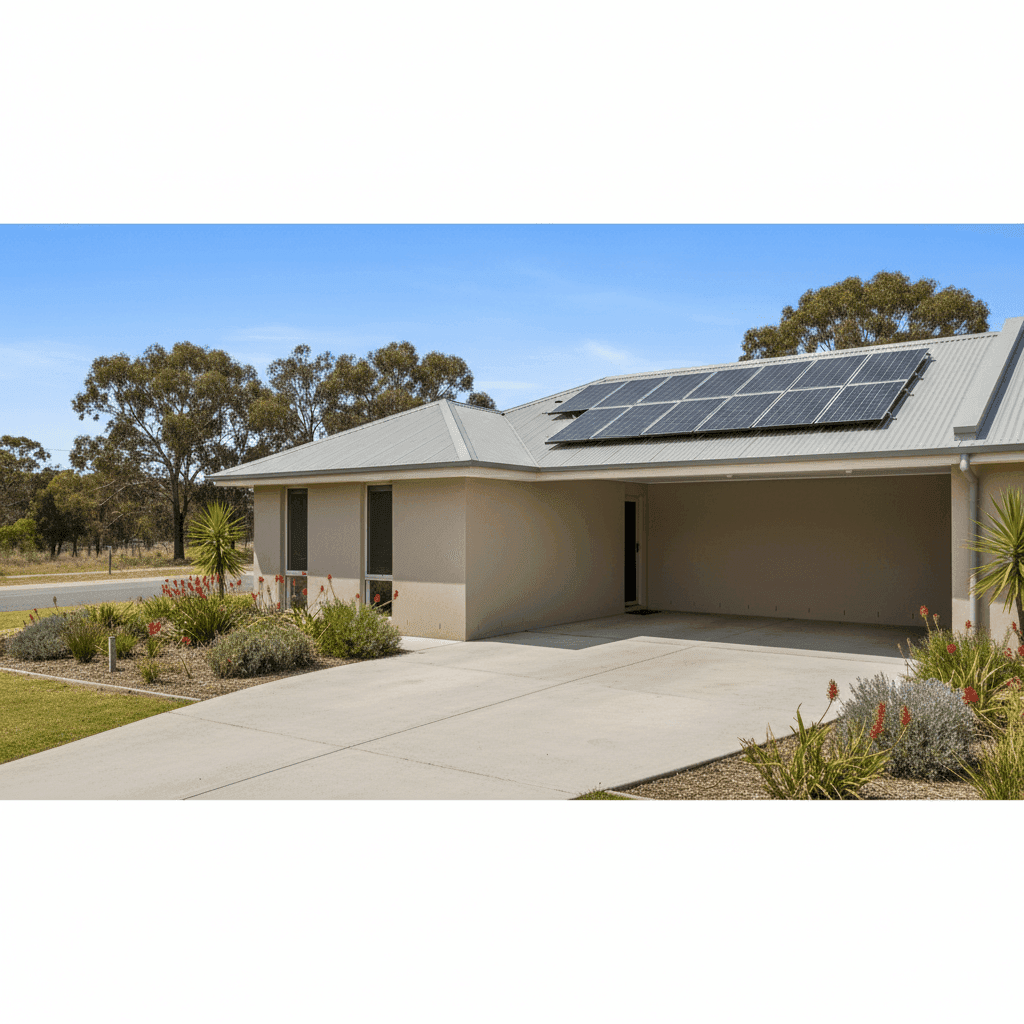
Little Hartley is a quiet semi-rural locality nestled in the Blue Mountains region of New South Wales, known for its scenic surroundings and relaxed lifestyle. For homeowners in this postcode, understanding what drives home insurance costs — and whether a quote stacks up — can make a real difference to your household budget. This article breaks down a recent Home and Contents insurance quote for a four-bedroom, two-bathroom semi detached property in Little Hartley (NSW 2790), and puts the numbers in context against local, state, and national benchmarks.
---
Is This Quote Fair?
The quoted annual premium of $3,813 (or $365/month) has been rated Fair — Around Average, and the data backs that up. Sitting above the suburb median of $3,398 but well within the suburb's interquartile range of $2,877 to $4,161, this quote is neither a bargain nor an outlier — it's squarely in the middle of what Little Hartley homeowners are typically paying.
A few factors push the premium toward the upper half of the local range. The building sum insured of $1,004,000 is substantial, reflecting the cost to fully rebuild a 214 sqm semi detached home with above-average fittings. Higher rebuild values naturally attract higher premiums, and insurers price accordingly. The $50,000 contents cover adds a further layer, though this is a relatively modest inclusion for a four-bedroom home. Both the building and contents excess are set at $2,000, which is on the higher side and would typically help keep premiums lower — suggesting the underlying risk profile of this property is doing some of the heavy lifting on price.
Overall, paying $3,813 per year for comprehensive Home and Contents cover on a well-appointed property in this part of NSW is a reasonable outcome. You're not overpaying significantly, but there's likely room to sharpen the premium with the right insurer.
---
How Little Hartley Compares
Understanding your quote in isolation only tells part of the story. Here's how the $3,813 premium sits across different comparison points:
| Benchmark | Annual Premium |
|---|---|
| This Quote | $3,813 |
| Suburb Average (Little Hartley) | $3,592 |
| Suburb Median (Little Hartley) | $3,398 |
| LGA Average (Blue Mountains) | $4,220 |
| NSW State Median | $3,770 |
| NSW State Average | $9,528 |
| National Median | $2,764 |
| National Average | $5,347 |
A few things stand out here. First, the NSW state average of $9,528 is dramatically higher than both the suburb average and this quote — a figure heavily skewed by high-value properties and elevated-risk areas across the state (think coastal flood zones, bushfire-prone regions, and inner-city high-density dwellings). The state median of $3,770 is a far more representative benchmark, and this quote sits just below it.
Compared to the Blue Mountains LGA average of $4,220, this quote is actually performing well — $407 cheaper per year than the broader local government area average. This is worth noting, as the Blue Mountains region carries meaningful bushfire and weather-related risk that can inflate premiums significantly.
Against the national median of $2,764, the Little Hartley quote is higher — but this is expected. Regional NSW properties, particularly in elevated or semi-rural settings, tend to attract more risk-sensitive pricing than the national median, which is anchored by lower-risk metropolitan and suburban properties across Australia.
You can explore more local data on the Little Hartley insurance stats page, compare it against NSW-wide figures, or view national home insurance benchmarks.
---
Property Features That Affect Your Premium
Every property tells its own risk story, and this one has several characteristics that insurers weigh carefully.
Concrete external walls are viewed favourably by most insurers. Concrete is highly resistant to fire, impact, and weather damage — all relevant considerations in a semi-rural NSW setting. This construction type can contribute to a more competitive premium compared to timber-clad homes.
Steel/Colorbond roofing is another positive signal. Colorbond is durable, low-maintenance, and performs well in high-wind and ember-attack scenarios. Insurers generally price Colorbond roofs more competitively than terracotta tiles or older roofing materials.
Slab foundation and tile flooring round out a solid, low-maintenance construction profile. Slab homes have no underfloor void, which reduces certain risks (such as subfloor fire spread or pest entry), and tile flooring is resilient to water damage — a practical choice in any climate.
Solar panels are worth flagging. While they add value to the property and reduce energy costs, solar panels do introduce a modest additional risk factor for insurers — primarily around storm or hail damage and the cost of replacement. Homeowners should confirm that their policy explicitly covers solar panels as part of the building sum insured.
The property's above-average fittings quality is a key driver of the high building sum insured. Premium fixtures, quality cabinetry, and high-spec finishes all increase the cost to rebuild, which flows directly into the premium calculation. It's important that the sum insured accurately reflects these inclusions to avoid being underinsured.
Finally, as a semi detached property, there are shared-wall considerations. Damage to the adjoining dwelling could affect your home, and it's worth ensuring your policy addresses shared structural elements clearly.
---
Tips for Homeowners in Little Hartley
1. Review your building sum insured annually. Construction costs have risen sharply across Australia in recent years. A sum insured of $1,004,000 may be appropriate today, but it should be recalculated each year to account for rising labour and materials costs. Underinsurance is one of the most common — and costly — mistakes homeowners make.
2. Confirm solar panel coverage explicitly. Not all policies automatically include solar panels under building cover. Check your Product Disclosure Statement (PDS) to confirm your panels are covered for storm, hail, and accidental damage, and that the replacement value is factored into your sum insured.
3. Consider the bushfire risk context. The Blue Mountains region has well-documented bushfire exposure. Ensure your policy includes adequate cover for fire and ember attack, and check whether your property is rated in a bushfire-prone area under the NSW Rural Fire Service mapping. Some insurers apply loadings or exclusions in higher-risk zones.
4. Compare quotes before renewing. With a Fair price rating, there's a reasonable chance a competing insurer could offer equivalent cover at a lower price. Loyalty doesn't always pay in insurance — shopping around at renewal time is one of the simplest ways to reduce your annual outgoings without sacrificing protection.
---
Find a Better Deal with CoverClub
Whether you're renewing your current policy or insuring a property for the first time, comparing quotes is the single most effective way to make sure you're not overpaying. CoverClub makes it easy to see how your premium stacks up and find competitive options tailored to your property. Get a home insurance quote today and see what Little Hartley homeowners are paying right now.