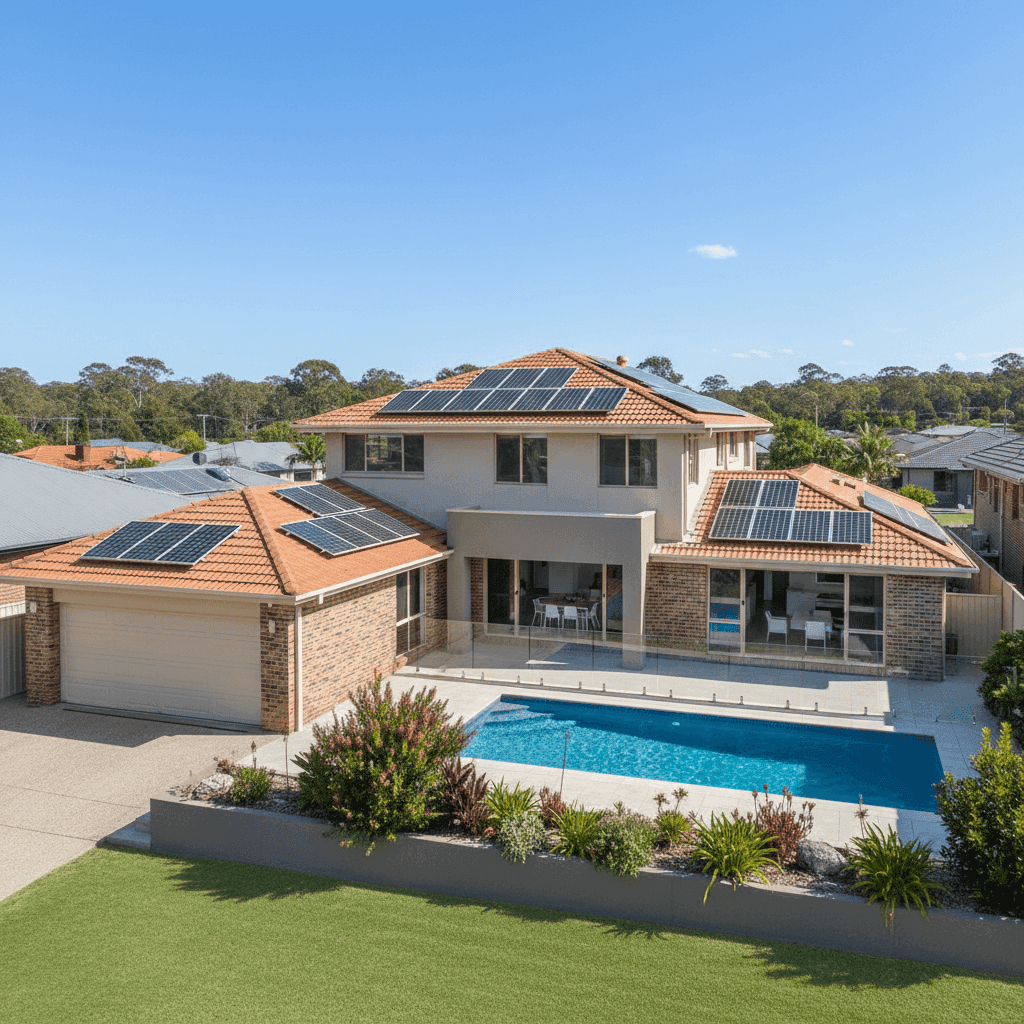
Little Mountain, nestled in Queensland's Sunshine Coast hinterland, is a well-regarded family suburb known for its spacious blocks, modern homes, and relaxed coastal lifestyle. If you own a free standing home here — particularly a larger, well-appointed one — understanding whether your insurance premium is competitive is well worth your time. In this article, we analyse a recent home and contents insurance quote for a five-bedroom property in Little Mountain (postcode 4551) and put the numbers in context.
---
Is This Quote Fair?
The quote in question comes in at $4,537 per year (or $406 per month), covering a building sum insured of $1,268,000 and contents valued at $249,000, each with a $2,000 excess. Our pricing analysis rates this as Expensive — above average for the area.
To be clear, "above average" doesn't automatically mean the quote is wrong or that you're being overcharged. A property of this size and specification will naturally attract a higher premium than a modest three-bedroom home on the same street. That said, the gap between this quote and the suburb benchmarks is significant enough to warrant scrutiny.
At $4,537 annually, this premium sits 54% above the suburb average of $2,945 and 71% above the suburb median of $2,648. Even compared to the 75th percentile for Little Mountain — meaning 75% of quotes in the area are cheaper — this figure of $3,356 is still well below what's been quoted here. In short, this homeowner is paying more than the vast majority of their neighbours, even accounting for a larger, higher-value property.
---
How Little Mountain Compares
To fully appreciate where this quote lands, it helps to look at the broader picture. Based on Little Mountain suburb insurance data drawn from 71 quotes:
| Benchmark | Premium |
|---|---|
| Little Mountain average | $2,945/yr |
| Little Mountain median | $2,648/yr |
| Little Mountain 25th percentile | $2,103/yr |
| Little Mountain 75th percentile | $3,356/yr |
| This quote | $4,537/yr |
Zooming out to the state level, the picture shifts considerably. Queensland's average home insurance premium sits at $9,129 per year — a figure heavily skewed by high-risk cyclone and flood zones in North Queensland. The state median of $3,903 is a more representative figure, and against that benchmark, this quote looks more reasonable.
At the national level, the average premium is $5,347 per year, with a national median of $2,764. The Sunshine Coast LGA average is $7,249 per year — again, inflated by higher-risk pockets across the region.
So while this quote is expensive relative to Little Mountain itself, it sits below both the QLD and national averages, and well below the broader Sunshine Coast LGA average. The key takeaway: there may be room to negotiate or shop around, but this isn't an outlier in the broader Queensland context.
---
Property Features That Affect Your Premium
Several characteristics of this property directly influence what insurers charge. Understanding them helps you have more informed conversations with providers.
Size and sum insured: At 286 sqm with a building sum insured of $1,268,000, this is a substantial home. Larger homes cost more to rebuild, and insurers price accordingly. The contents value of $249,000 also reflects a well-furnished household, adding meaningfully to the total premium.
Above average fittings quality: Kitchens, bathrooms, and fixtures that are above average in quality increase the cost of reinstatement. Insurers factor in the cost of like-for-like replacement, so premium finishes mean a higher sum insured and, consequently, a higher premium.
Brick veneer construction and tiled roof: These are generally viewed favourably by insurers. Brick veneer is considered a resilient and fire-resistant material, and tiled roofs typically perform well in storms. Compared to weatherboard or metal roofing, this combination can attract more competitive pricing.
Slab foundation, slightly elevated: The property sits on a slab foundation and is elevated by less than one metre. In Queensland, elevation can be a double-edged sword — modest elevation may offer some flood protection, but properties elevated more significantly (as is common in traditional Queenslander homes) can attract different structural risk assessments.
Pool, solar panels, and ducted climate control: Each of these adds to the replacement cost of the property. A pool introduces liability considerations, solar panels represent a significant capital asset on the roof, and ducted air conditioning systems are expensive to replace. All three contribute to a higher overall sum insured and premium.
No cyclone risk: Little Mountain falls outside designated cyclone risk zones, which is a meaningful saving compared to properties further north along the Queensland coast. Cyclone cover can add substantially to premiums in affected areas.
---
Tips for Homeowners in Little Mountain
1. Review your sum insured regularly With a building sum insured of $1,268,000, it's important to ensure this figure accurately reflects current rebuild costs — not just the market value of your home. Construction costs have risen sharply in recent years. Underinsuring can leave you significantly out of pocket after a major claim, while overinsuring means you're paying more premium than necessary.
2. Shop around — and use comparison data Given that this quote sits above the suburb's 75th percentile, it's worth getting multiple quotes before renewing. Insurers assess risk differently, and the same property can attract meaningfully different premiums across providers. Tools like CoverClub's quote comparison make it straightforward to benchmark your options.
3. Consider your excess strategically Both the building and contents excesses are set at $2,000. Opting for a higher excess — say $2,500 or $3,000 — can reduce your annual premium noticeably. If you have the financial buffer to cover a larger out-of-pocket cost in the event of a claim, this is often a smart trade-off for a lower ongoing premium.
4. Bundle and ask about discounts Many insurers offer discounts when you hold multiple policies — such as home, contents, and car insurance — with the same provider. It's also worth asking directly about loyalty discounts, security system discounts (if you have an alarm), or any available promotions. These aren't always advertised upfront.
---
Find a Better Deal with CoverClub
Whether you're renewing your policy or shopping for the first time, CoverClub makes it easy to see how your quote stacks up against real data from your suburb, state, and across Australia. With transparent benchmarking and access to multiple insurers, you can make a confident, informed decision. Get a home insurance quote today and find out if you're paying a fair price for your Little Mountain home.