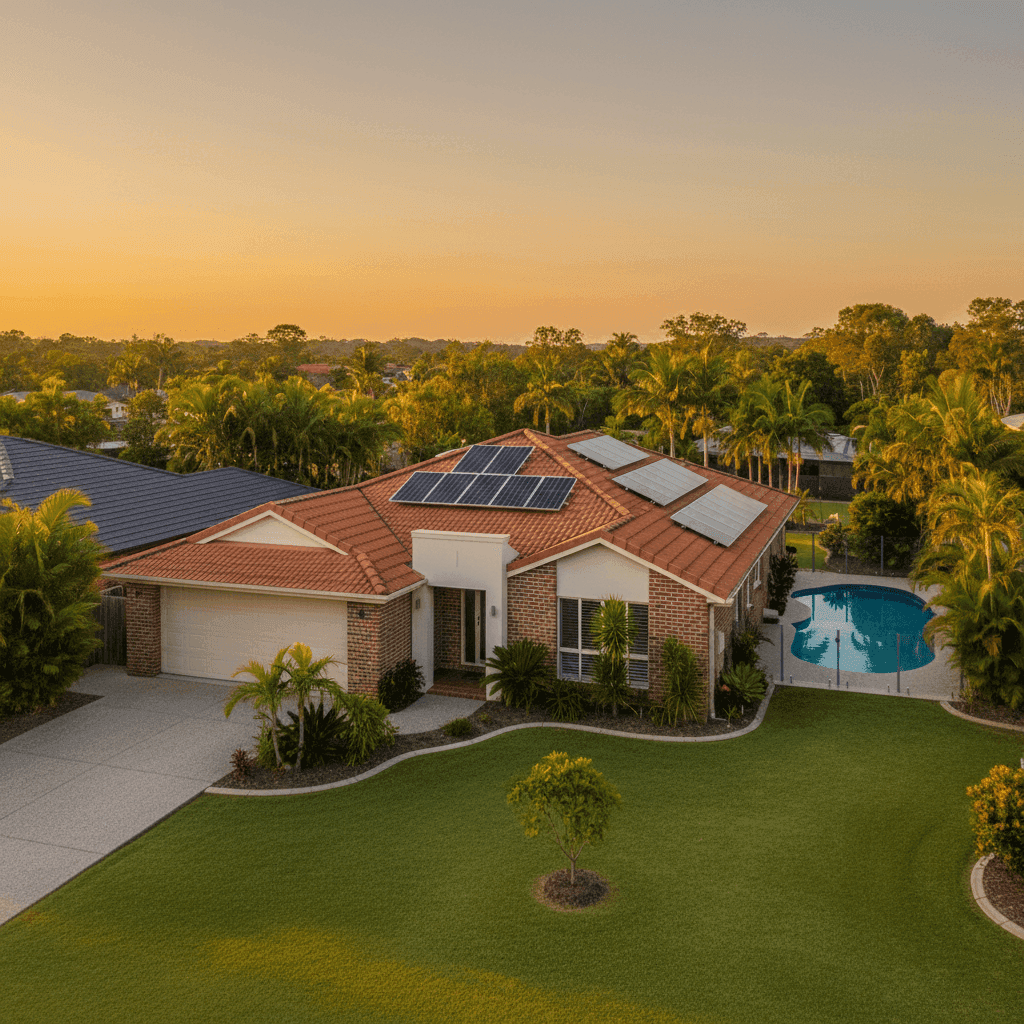
Little Mountain, nestled in Queensland's Sunshine Coast region, is a well-established suburban pocket known for its family-friendly streets, leafy blocks, and proximity to the coast. For owners of a free standing home in this area, understanding what you're paying for home and contents insurance — and whether that figure is competitive — can make a real difference to your household budget.
This article breaks down a recent home and contents insurance quote for a five-bedroom, two-bathroom brick veneer home in Little Mountain (postcode 4551), comparing it against local, state, and national benchmarks to help you make a more informed decision.
---
Is This Quote Fair?
The quote in question came in at $3,952 per year (or $379 per month) for combined home and contents cover, with a building sum insured of $1,009,000 and contents valued at $100,000. Both the building and contents excesses are set at $1,000.
Our price rating for this quote is Expensive — above average for the Little Mountain area.
To put that in context: the suburb average premium sits at $2,945 per year, and the median is even lower at $2,648. That means this particular quote is running roughly 34% above the suburb average and nearly 49% above the median. While it doesn't fall completely outside the range — the 75th percentile for Little Mountain is $3,356 — it does exceed even that upper benchmark, placing it among the pricier quotes seen in this postcode.
That said, a higher-than-average premium isn't always unjustified. The building sum insured of just over $1 million is on the higher end for the area, and the property's features — including a swimming pool and solar panels — do add to the insurer's risk exposure. Still, it's worth exploring whether a better rate is available elsewhere.
---
How Little Mountain Compares
Understanding your premium in isolation only tells half the story. Here's how Little Mountain's insurance costs stack up against broader benchmarks:
| Benchmark | Average Premium | Median Premium |
|---|---|---|
| Little Mountain (4551) | $2,945/yr | $2,648/yr |
| Sunshine Coast LGA | $7,249/yr | — |
| Queensland | $9,129/yr | $3,903/yr |
| National | $5,347/yr | $2,764/yr |
A few things stand out here. The Queensland state average of $9,129 per year is extraordinarily high — largely driven by cyclone-prone regions in Far North Queensland, where premiums can be eye-watering. Little Mountain is not a designated cyclone risk area, which is a meaningful advantage for local homeowners and helps keep premiums relatively contained compared to the state average.
Similarly, the national average of $5,347 is pulled upward by high-risk coastal and flood-prone areas across the country. Little Mountain's suburb median of $2,648 compares favourably against the national median of $2,764, suggesting this is generally a more affordable area to insure — provided you're getting a competitive quote.
The Sunshine Coast LGA average of $7,249 is notably higher than the Little Mountain suburb figure, which may reflect the influence of beachside and flood-affected properties elsewhere in the region dragging the LGA average up.
---
Property Features That Affect Your Premium
Several characteristics of this property will directly influence what insurers charge. Here's what's at play:
Brick veneer construction and tiled roof — These are considered among the more resilient and fire-resistant building materials available, and insurers generally view them favourably. Compared to timber-framed weatherboard homes or older fibro construction, brick veneer with a tile roof typically attracts lower premiums all else being equal.
Slab foundation — A concrete slab is a solid, low-maintenance foundation type that poses fewer subsidence and pest-related risks than some alternatives. This is a neutral-to-positive factor for insurers.
Swimming pool — Pools introduce additional liability considerations and increase the overall replacement cost of the property. Insurers factor in the cost of pool fencing compliance, equipment, and the pool structure itself, which can nudge premiums upward.
Solar panels — With solar panels installed, there's added complexity around electrical systems and the cost of replacing the panels themselves in the event of storm, hail, or fire damage. It's worth confirming exactly what your policy covers when it comes to solar — not all policies treat panels the same way.
Building size (325 sqm) and sum insured ($1,009,000) — A larger home naturally costs more to rebuild, and a sum insured of just over $1 million reflects that. Ensuring your sum insured accurately reflects current rebuilding costs (not market value) is critical — underinsurance is a common and costly mistake.
Standard fittings quality — Standard-grade fixtures and fittings, as opposed to premium or luxury finishes, generally result in a more straightforward claims assessment and can help keep replacement costs — and therefore premiums — more predictable.
---
Tips for Homeowners in Little Mountain
1. Shop around — seriously This quote is above the suburb average, which is a clear signal that comparison shopping is worthwhile. Premiums for the same property can vary by hundreds — sometimes thousands — of dollars between insurers. Use a tool like CoverClub to compare multiple quotes side by side without the legwork.
2. Review your sum insured annually Building costs in Queensland have risen significantly in recent years due to labour shortages and material price increases. Make sure your $1,009,000 sum insured still reflects what it would actually cost to rebuild your home today — not what you paid for it, and not what it's worth on the market. Your insurer may offer a building cost calculator, or you can consult a quantity surveyor.
3. Ask about your pool and solar panel coverage specifically Before renewing or switching policies, confirm in writing how your insurer handles claims involving the swimming pool and solar panels. Some policies include these as standard; others treat them as optional extras or apply separate sub-limits. Knowing this upfront avoids nasty surprises at claim time.
4. Consider your excess strategically Both excesses on this policy are set at $1,000. Opting for a higher excess — say $2,000 — can meaningfully reduce your annual premium. If you have the financial buffer to absorb a larger out-of-pocket cost in the event of a claim, this is often a smart trade-off for lower ongoing costs.
---
Compare Your Options with CoverClub
Whether you're renewing your policy or shopping for the first time, it pays to know where your quote stands. CoverClub makes it easy to benchmark your premium against real data from your suburb and beyond. Get a quote today and find out if you could be paying less for the same level of cover — because in a market this variable, loyalty doesn't always pay.