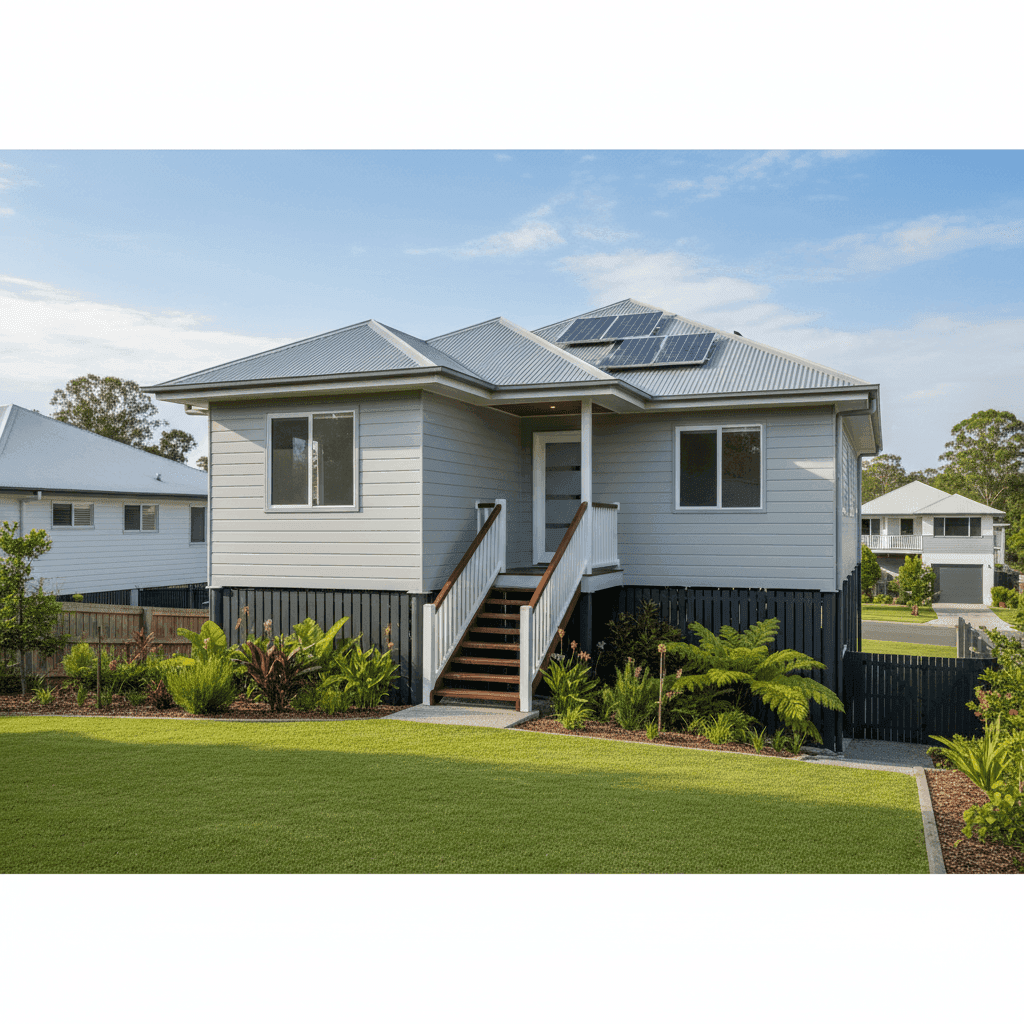
If you own a free standing home in Little Mountain, QLD 4551, you've probably noticed that insurance premiums can vary wildly depending on who you ask. This article breaks down a real home and contents insurance quote for a three-bedroom property in the suburb, puts the price in context against local, state, and national benchmarks, and offers practical advice to help you get the best value cover.
---
Is This Quote Fair?
The quote in question comes in at $2,230 per year (or around $200 per month) for combined home and contents cover — with a building sum insured of $284,000 and contents valued at $50,000. Both the building and contents excess sit at $1,000.
Our price rating for this quote is FAIR — Around Average, and the data backs that up. Across 71 quotes collected for Little Mountain (postcode 4551), the suburb average premium sits at $2,945/yr and the median at $2,648/yr. This quote lands comfortably below both figures, placing it in the lower half of the local price range — closer to the 25th percentile of $2,103/yr than to the 75th percentile of $3,356/yr.
In plain terms: you're not getting the cheapest deal on the market, but you're paying less than most of your neighbours. For a property with the features described here, that's a reasonable outcome.
---
How Little Mountain Compares
To really appreciate what this quote means, it helps to zoom out and look at the bigger picture.
| Benchmark | Premium |
|---|---|
| This quote | $2,230/yr |
| Little Mountain suburb average | $2,945/yr |
| Little Mountain suburb median | $2,648/yr |
| QLD state average | $9,129/yr |
| QLD state median | $3,903/yr |
| Sunshine Coast LGA average | $7,249/yr |
| National average | $5,347/yr |
| National median | $2,764/yr |
The gap between the Queensland state average of $9,129/yr and this quote is striking. Queensland's elevated state average is heavily skewed by high-risk coastal and cyclone-prone areas — think Far North Queensland and parts of the Whitsundays — where premiums can run into the tens of thousands. Little Mountain, sitting on the Sunshine Coast hinterland fringe, benefits from a significantly lower risk profile than those regions.
Even compared to the national average of $5,347/yr, this quote looks attractive. The national median of $2,764/yr is the more useful comparison point, and at $2,230/yr, this quote sits roughly $534 below that figure.
The Sunshine Coast LGA average of $7,249/yr is particularly telling. It reflects the diversity of risk across the council area — from beachside suburbs exposed to storm surge and coastal flooding, to elevated hinterland suburbs like Little Mountain that enjoy a more sheltered position. Location within the LGA matters enormously.
---
Property Features That Affect Your Premium
Several characteristics of this property influence how insurers price the risk — for better and for worse.
Aluminium weatherboard walls and Colorbond steel roof are generally viewed favourably by insurers. Both materials are durable, low-maintenance, and perform well in the sub-tropical Queensland climate. Colorbond roofing in particular is resistant to corrosion and performs well under heavy rainfall, which is a genuine consideration on the Sunshine Coast.
Stump foundations are common in older Queensland homes and can be a double-edged sword. On the positive side, being elevated — even by less than one metre — can reduce flood risk exposure and improve underfloor ventilation. On the other hand, stumped homes require periodic inspection and maintenance, and some insurers apply a loading if the stumps are original timber rather than concrete or steel.
Timber and laminate flooring is a standard feature in homes of this era and construction type. It doesn't typically attract a premium loading, though it's worth ensuring your contents sum insured accounts for the cost of replacing flooring if it's included in your contents policy rather than building cover — this varies between insurers.
Solar panels are an increasingly common feature and worth flagging at quote time. Most insurers cover rooftop solar systems under the building policy, but the level of cover (replacement value vs. indemnity) can differ. At $284,000 building sum insured, it's worth confirming that your solar system's replacement cost is factored in.
No pool and no ducted climate control keeps the risk profile clean. Pools add liability exposure and can complicate claims; ducted systems can be expensive to replace and are a common source of claims. Their absence here likely contributes to the competitive premium.
The property is also noted as not being in a cyclone risk area, which is a meaningful distinction in Queensland. Cyclone-rated premiums can be dramatically higher, so Little Mountain's inland position on the Sunshine Coast works in the homeowner's favour.
---
Tips for Homeowners in Little Mountain
1. Review your building sum insured annually Construction costs in South East Queensland have risen sharply in recent years. A $284,000 sum insured may have been accurate when the policy was first taken out, but it's worth cross-checking against a current building cost estimate — ideally using a quantity surveyor's report or an online calculator. Being underinsured at claim time is a costly mistake.
2. Check how your solar panels are covered Ask your insurer explicitly whether your solar system is included under the building sum insured, and whether cover is on a replacement or indemnity basis. If it's not clearly covered, request an endorsement or consider a separate policy extension.
3. Get your stumps inspected If your home is on original timber stumps, a pest and building inspection every few years is sensible — not just for insurance purposes, but for your own peace of mind. Some insurers will ask about stump condition, and undisclosed deterioration could affect a claim.
4. Compare quotes before renewal A "fair" rating means you're around the average — but that doesn't mean you can't do better. Insurance pricing varies significantly between providers, and loyalty doesn't always pay. Shopping the market at renewal time is one of the simplest ways to reduce your annual outgoings without sacrificing cover quality.
---
Compare Your Options with CoverClub
Whether you're renewing soon or just curious about how your current premium stacks up, CoverClub makes it easy to see where you stand. Our free comparison tool lets you get a home insurance quote in minutes and benchmark it against real data from your suburb and beyond. Don't settle for the first number you're given — the right cover at the right price is out there.