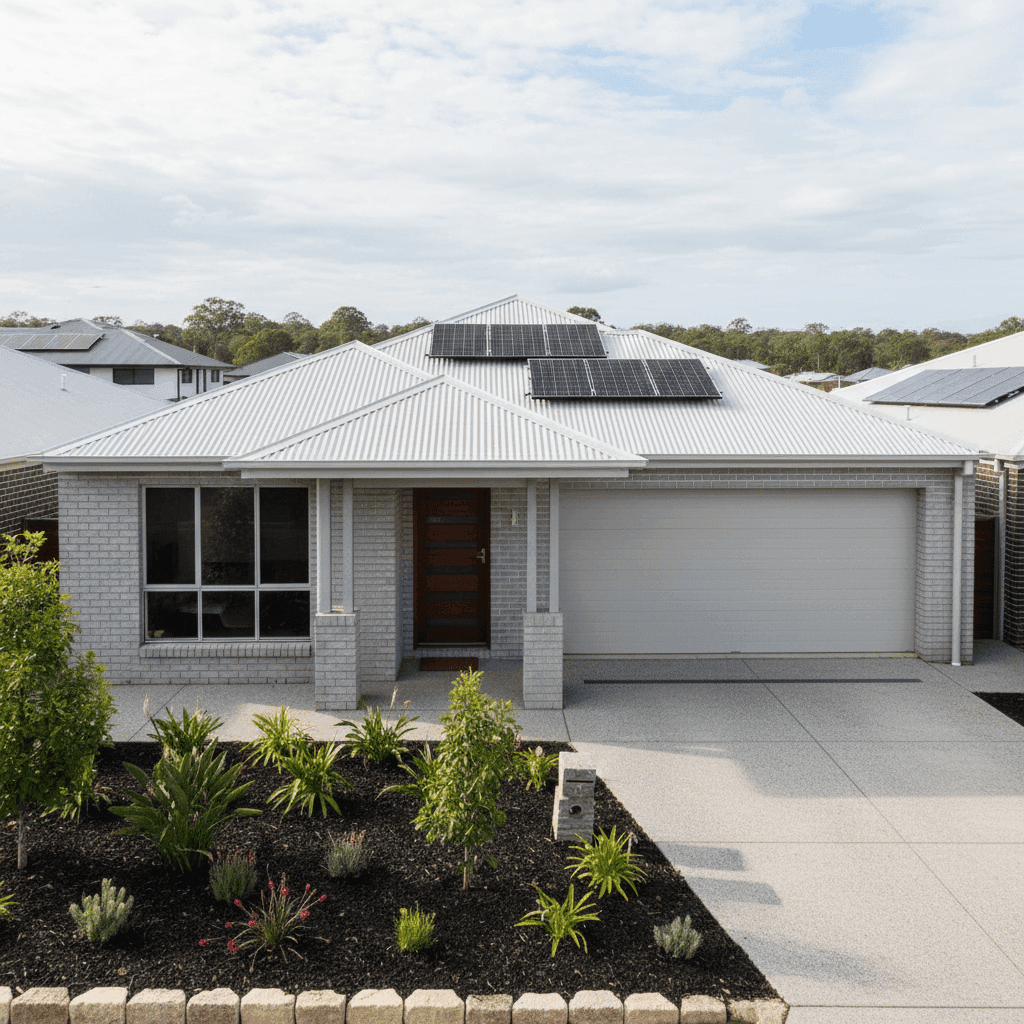
Nestled on the Sunshine Coast hinterland fringe, Little Mountain is a well-established suburb in postcode 4551 that continues to attract families drawn to its quiet streets, modern housing stock, and easy access to Caloundra. This analysis takes a close look at a real home insurance quote for a four-bedroom, two-bathroom free-standing home in the area — breaking down how the premium stacks up against local, state, and national benchmarks, and what property features are doing the heavy lifting on price.
---
Is This Quote Fair?
The short answer: yes — and then some. This quote came in at $2,070 per year (or roughly $202 per month) for combined Home and Contents cover, with a building sum insured of $588,000 and $50,000 in contents cover. CoverClub's pricing engine has rated this quote as CHEAP — Below Average, meaning it sits comfortably below what most homeowners in Little Mountain are paying.
To put that in context, the suburb average premium across 52 quotes collected for postcode 4551 is $3,578 per year, with a median of $3,379. This quote lands well below even the 25th percentile benchmark of $2,157 — meaning it's cheaper than at least 75% of comparable quotes in the area. That's a meaningful saving of over $1,500 annually compared to the suburb average, and it's the kind of difference that compounds significantly over the life of a mortgage.
For a property insured at $588,000 in building value alone, achieving a sub-$2,100 annual premium is genuinely strong value. Homeowners renewing without shopping around could easily be paying $1,000–$2,000 more per year without realising it.
---
How Little Mountain Compares
Understanding where your suburb sits relative to broader benchmarks helps put your own premium in perspective. Here's how Little Mountain's pricing compares across different geographic levels:
| Benchmark | Average Premium | Median Premium |
|---|---|---|
| Little Mountain (4551) | $3,578/yr | $3,379/yr |
| Sunshine Coast LGA | $4,608/yr | — |
| Queensland (QLD) | $4,547/yr | $3,931/yr |
| National | $2,965/yr | $2,716/yr |
A few things stand out here. First, Little Mountain's suburb average of $3,578 is notably lower than both the broader Sunshine Coast LGA average of $4,608 and the Queensland state average of $4,547. This likely reflects the suburb's relatively modern housing stock, lower flood exposure compared to coastal or riverine areas, and its designation as a non-cyclone risk zone — a significant pricing factor in Queensland.
Interestingly, Little Mountain's suburb average is also slightly above the national average of $2,965, which reflects the broader reality that Queensland homeowners generally pay more for insurance than their southern counterparts, driven by climate risk, storm activity, and higher rebuild costs in coastal growth corridors.
The quote analysed here, at $2,070, sits well below every benchmark in the table — a strong outcome by any measure.
---
Property Features That Affect Your Premium
Several characteristics of this property work in its favour from an insurance pricing perspective:
Brick Veneer Walls Brick veneer is one of the more insurer-friendly external wall materials in Australia. It offers solid fire resistance and structural durability, which typically translates to lower premiums compared to timber or weatherboard construction.
Steel / Colorbond Roof A Colorbond steel roof is modern, low-maintenance, and highly resistant to fire, wind, and corrosion. Insurers generally view it favourably, particularly in Queensland where storm damage is a leading cause of claims. This is a meaningful premium reducer compared to older tile or terracotta roofs.
Concrete Slab Foundation Slab foundations are considered stable and resistant to subsidence, which reduces the risk of structural claims. Combined with tile flooring — another durable, low-maintenance material — the property presents a low-risk profile for insurers.
Built in 2010 At around 15 years old, this home hits a sweet spot: modern enough to meet contemporary building codes (which significantly improved after the 2011 Queensland floods and storm seasons), but old enough to have a well-established claims and valuation history. Newer builds often attract more competitive premiums than older homes requiring more maintenance.
Solar Panels While solar panels add value to the property and are generally covered under home insurance, they can sometimes add a small amount to premiums due to the cost of replacement. However, their impact here appears minimal given the overall competitiveness of the quote.
Ducted Climate Control Ducted air conditioning is a fixed installation and typically forms part of the building sum insured. It adds to the overall rebuild cost, which is already reflected in the $588,000 building valuation. Ensuring this is accurately captured avoids underinsurance risk.
No Pool The absence of a swimming pool removes a category of liability and property risk that can add to premiums — a small but not insignificant factor.
Non-Cyclone Risk Zone This is arguably the most significant risk factor for Queensland homeowners. Little Mountain's classification as outside a designated cyclone risk zone keeps premiums considerably lower than comparable properties in north Queensland or coastal areas with higher wind event exposure.
---
Tips for Homeowners in Little Mountain
1. Don't auto-renew without comparing The gap between this quote ($2,070) and the suburb average ($3,578) is over $1,500 per year. If you're rolling over your policy each year without checking the market, you could be significantly overpaying. Use a comparison tool like CoverClub to benchmark your renewal quote before accepting it.
2. Review your sum insured regularly Construction costs in South East Queensland have risen sharply in recent years. Make sure your building sum insured reflects current rebuild costs — not the figure set when you first took out the policy. Underinsurance is one of the most common and costly mistakes homeowners make.
3. Check what your solar panels are covered for Solar panel coverage varies between insurers. Some policies cover panels for accidental damage and storm, while others may exclude certain events or limit the payout. Confirm your policy explicitly covers your system for its full replacement value.
4. Consider your excess strategically This quote carries a $3,000 building excess and $1,000 contents excess. Higher excesses typically reduce your annual premium, but make sure you can comfortably meet that cost in the event of a claim. If the $3,000 building excess feels high, it's worth modelling what a lower excess would cost — the premium difference is sometimes smaller than expected.
---
Compare Your Own Quote
Whether you're buying, renewing, or simply curious about what you should be paying, CoverClub makes it easy to see how your premium stacks up. With real quote data from across Australia, you can benchmark your cover in minutes and make sure you're not leaving money on the table.