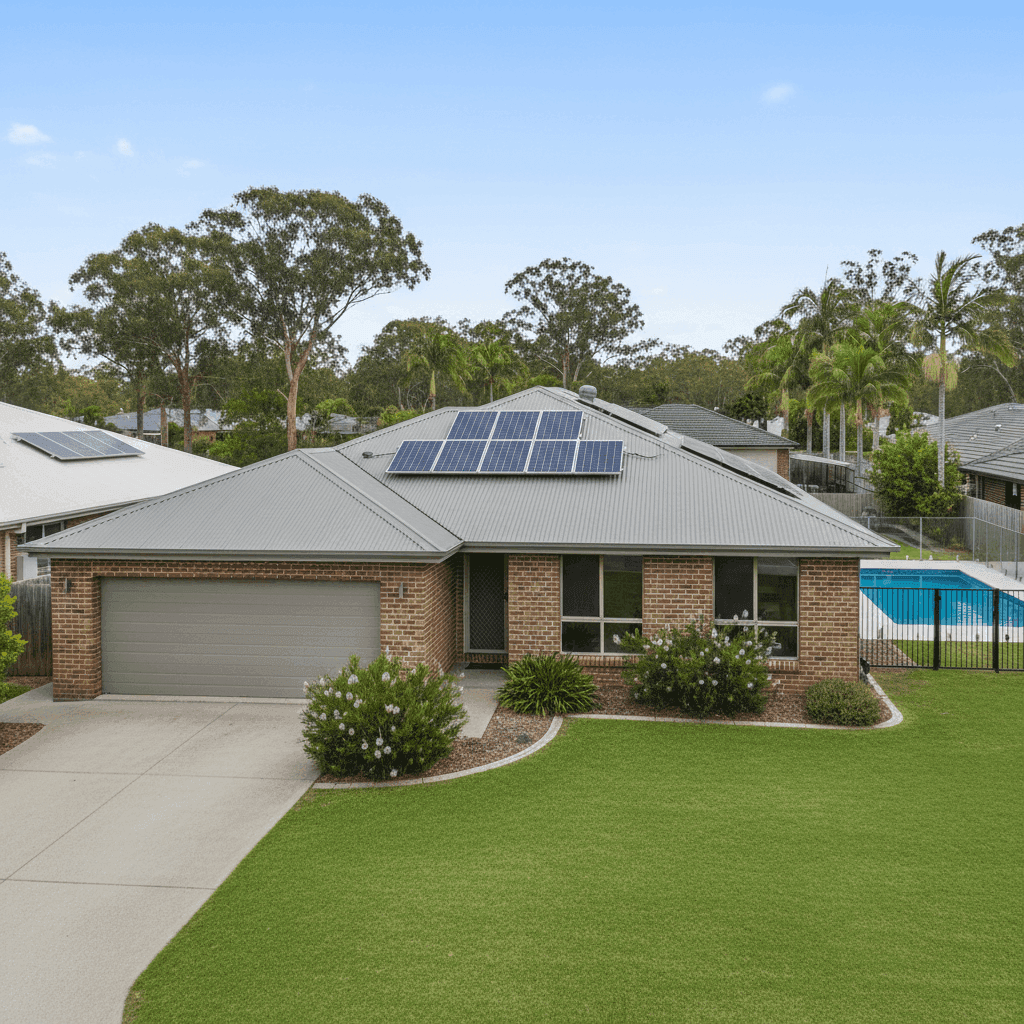
If you own a free standing home in Little Mountain, QLD 4551, you've probably wondered whether you're paying a fair price for home insurance — or quietly overpaying while your neighbours get a better deal. This article breaks down a real home and contents insurance quote for a five-bedroom property in the suburb, and puts that number into context against local, state, and national benchmarks.
---
Is This Quote Fair?
The annual premium for this quote comes in at $2,304 per year (or roughly $230/month), covering both building and contents for a 277 sqm brick veneer home with a sum insured of $582,000 on the building and $50,000 on contents. Both the building and contents excess are set at $2,000.
Our rating for this quote is FAIR — Around Average.
That might sound underwhelming, but in the context of Queensland home insurance pricing, landing near the average is actually a reasonable outcome. Queensland consistently ranks among the most expensive states in Australia for home insurance, driven by extreme weather exposure, flood risk in many areas, and a history of significant insurance losses across the state. A quote that sits around the average — rather than well above it — suggests the insurer has priced this property without applying heavy risk loadings.
That said, "fair" doesn't mean "the best available." There's likely room to shop around and potentially push this premium lower, particularly given that the 25th percentile of quotes in the suburb sits at $2,157/year — not far below what's been quoted here.
---
How Little Mountain Compares
To put this quote in proper perspective, here's how it stacks up across three geographic levels:
| Benchmark | Average Premium | Median Premium |
|---|---|---|
| Little Mountain (4551) | $3,578/yr | $3,379/yr |
| Queensland | $4,547/yr | $3,931/yr |
| National | $2,965/yr | $2,716/yr |
| Sunshine Coast LGA | $4,608/yr | — |
At $2,304/year, this quote sits well below the suburb average of $3,578 and even below the suburb's 25th percentile of $2,157 — meaning it's among the more competitive quotes being issued in the area. It's also significantly below both the Queensland average ($4,547) and the Sunshine Coast LGA average ($4,608), which are both elevated by higher-risk coastal and hinterland properties across the region.
Compared to the national average of $2,965, this quote is about $661 cheaper per year — a meaningful saving that reflects both the property's characteristics and the suburb's relatively moderate risk profile within an otherwise expensive state.
You can explore more data for this suburb at the Little Mountain insurance stats page, or broaden your view with Queensland-wide insurance data and national home insurance statistics.
---
Property Features That Affect Your Premium
Several characteristics of this property play a meaningful role in how insurers calculate the premium. Understanding these can help you anticipate future changes — or identify where you might have leverage when negotiating.
Brick Veneer Walls & Colorbond Roof
Brick veneer construction is generally viewed favourably by insurers. It offers solid fire resistance and structural durability, without the full cost of double-brick. Paired with a steel Colorbond roof — which is lightweight, resistant to corrosion, and performs well in high-wind conditions — this combination typically attracts more competitive premiums than, say, weatherboard cladding with terracotta tiles.
Concrete Slab Foundation
A slab-on-ground foundation is standard for Queensland homes of this era and is considered low-risk from an insurance perspective. There's no subfloor void to trap moisture or provide entry points for pests, and slab homes tend to perform well structurally in storm events.
Pool and Solar Panels
Both of these features add value to the property but also introduce additional liability and replacement cost considerations. A pool increases liability exposure (particularly relevant for contents and liability cover), while solar panels — increasingly common on Queensland rooftops — add to the building sum insured and can be costly to replace if damaged by hail or storm. It's worth confirming with your insurer that both are explicitly covered under your policy.
Construction Year: 2006
Homes built in 2006 were constructed under updated Queensland building codes introduced after the devastation of Cyclone Larry, meaning they generally meet stronger structural standards than older properties. This can work in your favour at renewal time.
No Cyclone Risk Classification
Little Mountain falls outside the designated cyclone risk zone, which is a notable premium advantage for a Queensland property. Cyclone cover adds significant cost in northern Queensland — avoiding that loading keeps this quote more competitive than comparable properties further up the coast.
Standard Fittings
With standard-grade fittings throughout, the cost to repair or replace internal fixtures is more predictable and moderate. High-end or custom fittings can push building sums insured — and premiums — considerably higher.
---
Tips for Homeowners in Little Mountain
1. Review Your Building Sum Insured Annually
At $582,000, the building sum insured needs to keep pace with rising construction costs. Queensland has seen significant increases in labour and materials since 2020, and being underinsured at claim time can leave you significantly out of pocket. Use a building cost calculator or speak to a quantity surveyor if you're unsure.
2. Check Your Pool and Solar Are Explicitly Covered
Not all standard home insurance policies automatically cover solar panel systems or swimming pools to the extent you'd expect. Read your Product Disclosure Statement (PDS) carefully and ask your insurer directly about storm damage to panels and public liability relating to pool access.
3. Consider Raising Your Excess to Lower Your Premium
With both excesses currently set at $2,000, there may be room to increase this further if you have an emergency fund in place. A higher voluntary excess can meaningfully reduce your annual premium — just ensure you're comfortable covering that amount in the event of a claim.
4. Compare at Renewal, Not Just Once
Insurance pricing shifts year to year based on claims history, reinsurance costs, and local risk assessments. The fact that this quote is competitive today doesn't guarantee the same insurer will offer the best price at your next renewal. Set a reminder to compare quotes again before your policy renews.
---
Ready to Find a Better Deal?
Whether you're reviewing your current policy or shopping for the first time, comparing quotes is the single most effective way to make sure you're not overpaying. CoverClub makes it easy to see how your premium stacks up — and to find a better price if one exists. Get a home insurance quote today and see what Little Mountain homeowners are actually paying.