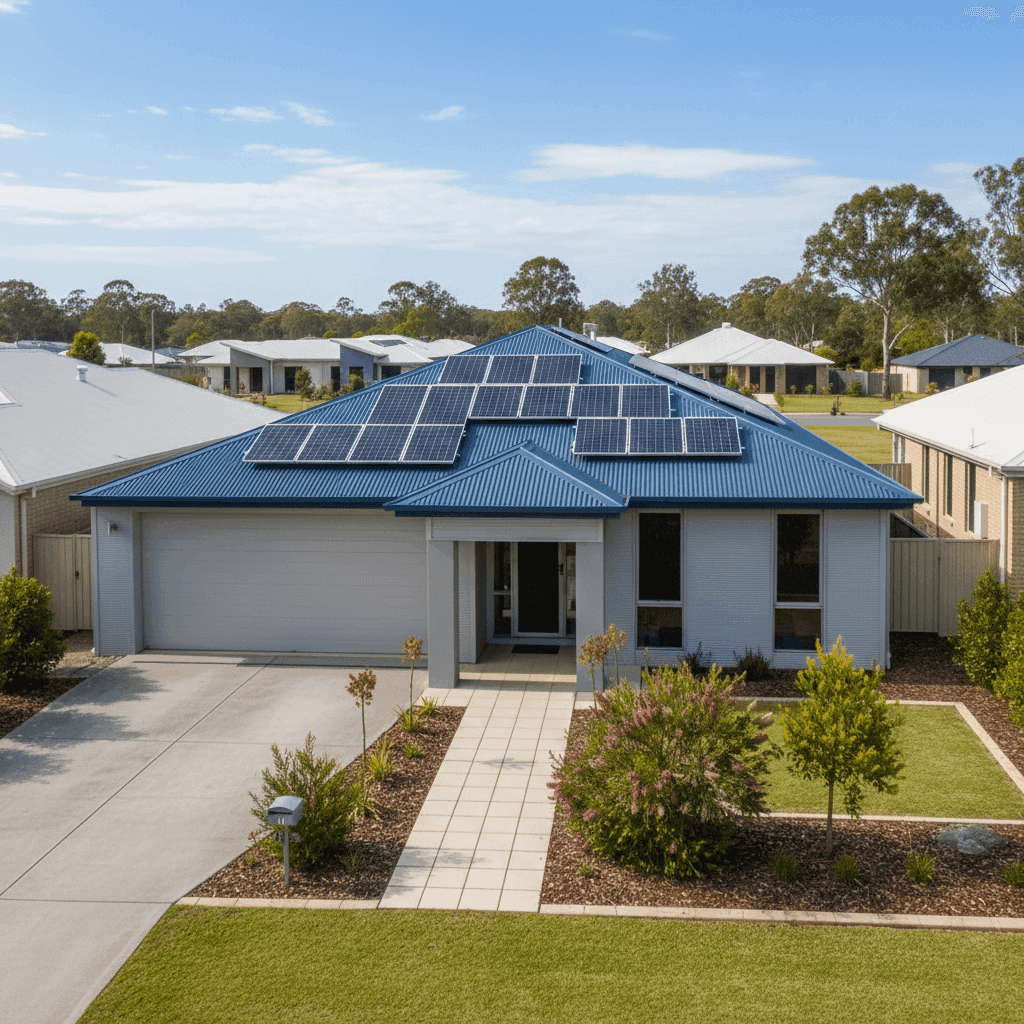
Little Mountain is a well-established residential suburb on Queensland's Sunshine Coast, sitting just inland from Caloundra and popular with families drawn to its quiet streets and proximity to coastal amenities. For owners of free standing homes in the area, understanding what drives home insurance premiums — and whether a given quote represents good value — can make a real difference to the household budget.
This article takes a close look at a real home and contents insurance quote for a four-bedroom, free standing home in Little Mountain (postcode 4551), breaking down the numbers against suburb, state, and national benchmarks.
---
Is This Quote Fair?
The quote in question comes in at $2,653 per year (or $254 per month) for combined home and contents cover, with a building sum insured of $500,000 and contents valued at $50,000. Both the building and contents excess are set at $1,000.
Our price rating for this quote is FAIR — Around Average, which is a reasonable outcome when you look at the full picture.
At first glance, $2,653 sits comfortably below the suburb average of $3,578 and the suburb median of $3,379 — meaning this homeowner is paying less than the majority of comparable properties in Little Mountain. It also falls well below the Queensland state average of $4,547 and the Sunshine Coast LGA average of $4,608, both of which reflect the elevated risk profile that insurers assign to much of coastal and near-coastal Queensland.
Compared to the national average of $2,965, this quote is slightly below par, which is a solid result for a Queensland property. The national median sits at $2,716, placing this quote just a touch above the midpoint across all Australian homes — hence the "around average" rating rather than a standout bargain.
In short: while there may be room to shop around, this is not an overpriced quote by any stretch.
---
How Little Mountain Compares
Little Mountain's insurance data — drawn from 52 quotes — paints a clear picture of the local pricing landscape:
| Benchmark | Premium |
|---|---|
| This quote | $2,653/yr |
| Suburb 25th percentile | $2,157/yr |
| Suburb median | $3,379/yr |
| Suburb average | $3,578/yr |
| Suburb 75th percentile | $4,171/yr |
| QLD state average | $4,547/yr |
| Sunshine Coast LGA average | $4,608/yr |
| National average | $2,965/yr |
| National median | $2,716/yr |
This quote lands between the 25th and 50th percentile for the suburb — meaning roughly 25–50% of Little Mountain homeowners are paying less, and the majority are paying more. The wide spread between the 25th percentile ($2,157) and the 75th percentile ($4,171) highlights just how much individual property characteristics and insurer pricing models can vary, even within a single postcode.
The fact that Little Mountain's averages sit significantly above the national figures is largely a reflection of Queensland's broader insurance environment, where weather-related risks — including storms, hail, and flooding — push premiums higher across the board.
---
Property Features That Affect Your Premium
Several characteristics of this particular property work in the homeowner's favour from an insurance pricing perspective.
Construction materials: The home features aluminium external walls and a steel/Colorbond roof — both of which are generally viewed positively by insurers. Colorbond roofing in particular is durable, resistant to corrosion, and performs well in storm conditions, which can help moderate premiums compared to older or less resilient roofing materials.
Slab foundation and tile flooring: A concrete slab foundation is a stable, low-maintenance base that insurers tend to regard as lower risk than older stumped or timber subfloor constructions. Tiled flooring is similarly straightforward — it's durable and less susceptible to water damage than carpet or timber in the event of a minor leak or flood.
Construction year (1988): At around 36 years old, the home sits in a middle ground. It's not a new build, so some wear and tear is expected, but it was constructed after many of the major building code improvements introduced in the 1980s. Homes of this era are generally well-regarded by insurers, though it's worth ensuring the building sum insured accurately reflects current rebuild costs.
Solar panels: The presence of solar panels adds a small amount to the insured value of the property, and some insurers factor this into their pricing. It's worth confirming with your insurer that solar panels are explicitly covered under your policy — whether as part of the building or as a separate item.
No pool, no ducted climate control, not in a cyclone risk zone: These three factors each reduce the complexity (and cost) of the risk profile. The absence of a cyclone risk classification is particularly notable for a Queensland property — homes in cyclone-declared zones can attract significantly higher premiums.
Standard fittings quality: With standard-grade fittings throughout, the rebuild cost estimate is more predictable and less likely to be underestimated, which supports a reasonable sum insured figure.
---
Tips for Homeowners in Little Mountain
1. Review your building sum insured regularly Construction costs have risen sharply in recent years across Queensland. A sum insured of $500,000 for a 214 sqm home may be appropriate today, but it's worth recalculating your estimated rebuild cost annually — particularly as labour and materials costs continue to fluctuate. Being underinsured at claim time can be a costly mistake.
2. Confirm solar panel coverage Solar panels are a significant asset, and not all policies cover them automatically or comprehensively. Check whether your policy includes them as part of the building sum insured, and whether accidental damage and power surge are included in that coverage.
3. Shop around at renewal time This quote sits below the suburb average, but the 25th percentile for Little Mountain is $2,157 — suggesting there are cheaper options available for comparable properties. Using a comparison service like CoverClub at renewal time takes only a few minutes and could reveal meaningfully lower premiums without sacrificing cover quality.
4. Consider your excess carefully Both the building and contents excess on this policy are set at $1,000. Opting for a higher voluntary excess can reduce your annual premium, but make sure the saving is worthwhile relative to the out-of-pocket cost you'd face at claim time. For most homeowners, a $1,000 excess strikes a reasonable balance.
---
Compare Your Own Quote
Whether you're renewing your existing policy or shopping for the first time, it pays to see what the broader market looks like before you commit. CoverClub makes it easy to get a home insurance quote and understand how your premium stacks up against your neighbours and the national average. With insurance costs varying so widely — even within a single suburb — a few minutes of comparison could save you hundreds of dollars a year.