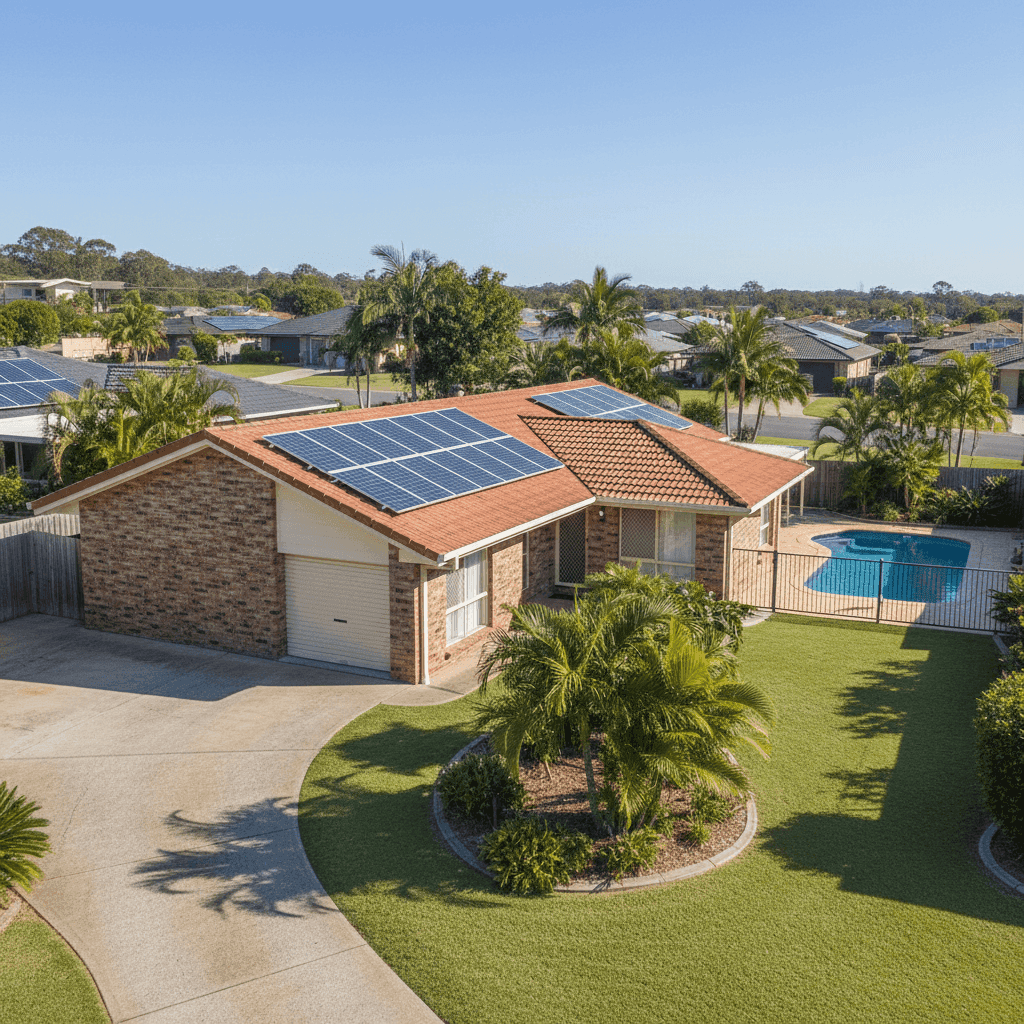
If you own a free standing home in Little Mountain, QLD 4551, you've probably wondered whether your home insurance premium is competitive — or whether you're quietly paying more than you need to. Little Mountain sits on the Sunshine Coast hinterland fringe, a relaxed residential pocket that attracts families and downsizers alike. It's the kind of suburb where brick veneer homes from the 1980s still dominate the streetscape, and where the combination of a pool, solar panels and tiled roofs is increasingly common.
This article breaks down a real home and contents insurance quote for a 3-bedroom, 2-bathroom free standing home in Little Mountain — and puts it in context against local, state and national benchmarks so you can judge for yourself whether the price stacks up.
---
Is This Quote Fair?
The quote in question comes in at $2,960 per year (or $288/month) for combined home and contents cover. The building is insured for $481,000, contents are covered up to $50,000, and both the building and contents excess sit at $1,000.
Our pricing engine rates this quote as FAIR — Around Average, and the data backs that up. Based on 71 quotes collected for Little Mountain (postcode 4551), the suburb average premium is $2,945/yr and the median sits at $2,648/yr. At $2,960, this quote lands just slightly above both the average and median — placing it in the upper half of the distribution, but comfortably within the normal range for the area.
To put it another way: 25% of comparable quotes in Little Mountain come in under $2,103/yr, and 25% exceed $3,356/yr. This quote sits between the median and the 75th percentile — not a bargain, but certainly not an outlier.
---
How Little Mountain Compares to the Rest of Queensland and Australia
Context is everything when assessing an insurance premium, and the broader picture here is quite reassuring for Little Mountain homeowners.
Across Queensland as a whole, the average home insurance premium is a striking $9,129/yr — with a state median of $3,903/yr. That enormous average is heavily skewed by high-risk coastal and far-north Queensland properties, where cyclone exposure, flooding and storm surge push premiums into the tens of thousands. Little Mountain, notably, is not classified as a cyclone risk area, which is a meaningful advantage.
At the Sunshine Coast LGA level, the average premium sits at $7,249/yr — again, significantly higher than what Little Mountain homeowners are typically paying. The suburb benefits from its inland position and relatively benign risk profile compared to beachside or low-lying Sunshine Coast suburbs.
Nationally, the average premium is $5,347/yr with a median of $2,764/yr. The quote we're analysing sits just above the national median, which further reinforces the "fair" rating — this is a pretty typical result for a well-constructed suburban home in a moderate-risk area.
| Benchmark | Average | Median |
|---|---|---|
| Little Mountain (4551) | $2,945/yr | $2,648/yr |
| Sunshine Coast LGA | $7,249/yr | — |
| Queensland | $9,129/yr | $3,903/yr |
| National | $5,347/yr | $2,764/yr |
---
Property Features That Affect Your Premium
Several characteristics of this property have a direct bearing on how insurers price the risk. Here's what's at play:
Brick Veneer Construction & Tiled Roof Brick veneer walls and terracotta or concrete tile roofing are generally viewed favourably by insurers. They offer solid fire resistance and reasonable durability compared to timber or fibrous cement alternatives. For a home built in 1980, these materials have proven their longevity — though insurers will factor in the age of the building when assessing wear and potential claims.
Slab Foundation A concrete slab foundation is standard for Queensland homes of this era and carries no particular premium loading. It's a neutral factor in most insurer assessments.
Swimming Pool A pool adds both value and liability to a property. Insurers typically factor in the cost of pool fencing, pumps, filtration systems and the pool shell itself when calculating the building sum insured. The $481,000 sum insured here should account for pool reinstatement costs — it's worth double-checking your policy schedule to confirm.
Solar Panels Solar panels are increasingly common on Sunshine Coast homes, but they do add replacement cost to the building sum insured. A standard 6–10kW system can cost $8,000–$15,000 to replace, and not all policies cover panels automatically. Confirm your insurer explicitly covers rooftop solar under the building section.
Ducted Climate Control Ducted air conditioning is a fixed building fixture and should be covered under the building sum insured rather than contents. At replacement cost, a ducted system can add $10,000–$20,000 to your rebuild figure — make sure your sum insured reflects this.
Standard Fittings With standard-grade fittings throughout, this home doesn't attract the premium loadings associated with high-end or bespoke finishes. That's a modest but genuine cost advantage.
---
Tips for Homeowners in Little Mountain
1. Review Your Sum Insured Annually Construction costs in South East Queensland have risen sharply in recent years. A building insured for $481,000 may have been adequate when the policy was first taken out, but with rising labour and materials costs, it's worth getting an updated replacement cost estimate — particularly for a home with a pool, solar system and ducted air conditioning. Underinsurance is one of the most common and costly mistakes homeowners make.
2. Confirm Solar and Pool Coverage Not all home insurance policies automatically extend cover to rooftop solar panels or pool equipment. Read your Product Disclosure Statement carefully, or call your insurer directly, to confirm these are included — and at what value.
3. Shop Around at Renewal Time Even a "fair" premium can often be improved. Insurers adjust their pricing models regularly, and loyalty doesn't always pay. Use a comparison tool like CoverClub to benchmark your renewal quote against the market before you simply auto-renew.
4. Consider Your Excess Level Both the building and contents excess on this policy are set at $1,000. Opting for a higher voluntary excess — say, $2,000 — can reduce your annual premium noticeably. If you have a good claims history and a financial buffer, this can be a sensible trade-off.
---
Get a Quote Tailored to Your Home
Whether you're reviewing an existing policy or shopping for cover for the first time, it pays to compare. CoverClub aggregates real quote data from across Australia, so you can see exactly where your premium sits relative to your neighbours and the broader market. Start a quote for your Little Mountain home today and find out if you're getting the best deal available.