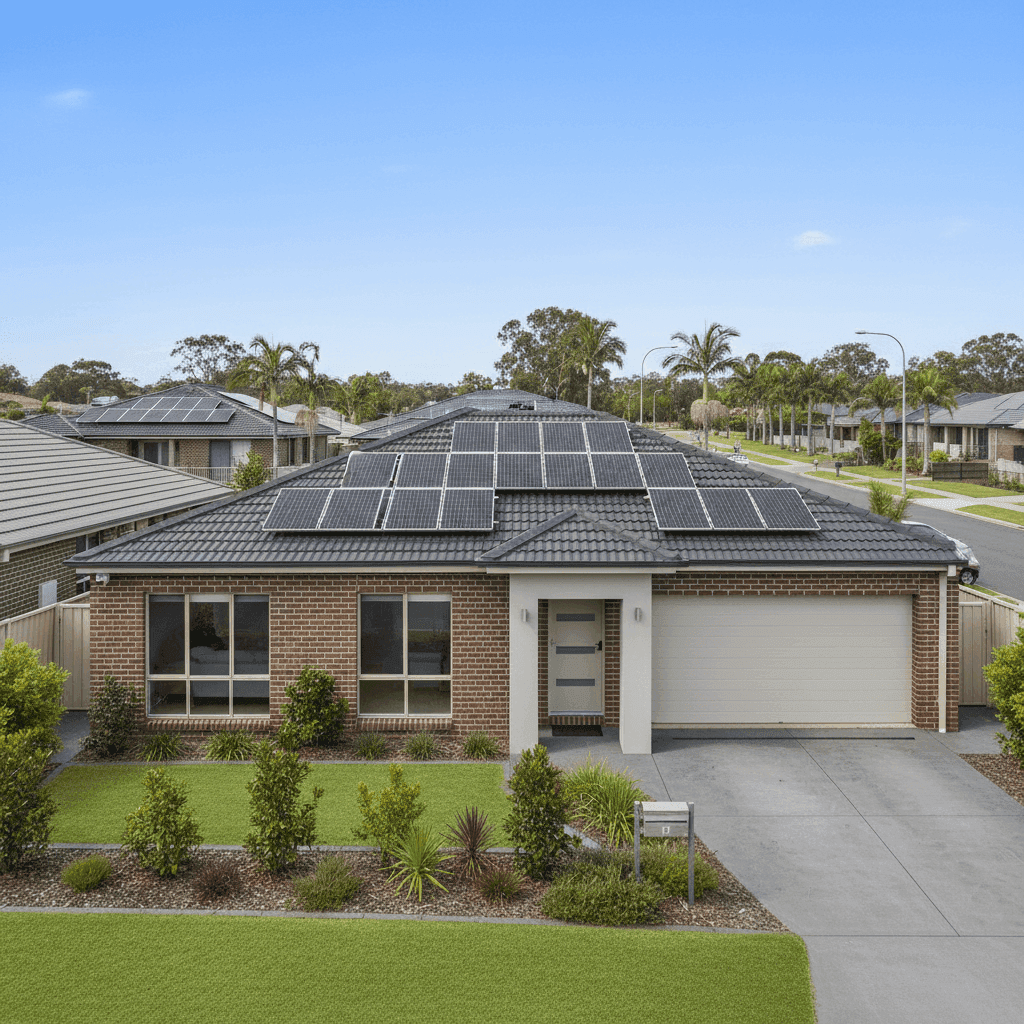
If you own a free standing home in Little Mountain, QLD 4551, you've probably wondered whether your home insurance premium is reasonable — or whether you're quietly paying too much. This article breaks down a real building insurance quote for a four-bedroom, two-bathroom brick veneer home in the suburb, and benchmarks it against local, state, and national data so you can make a more informed decision.
---
Is This Quote Fair?
The annual premium for this property came in at $2,679 per year (or $257/month) for building-only cover, with a $1,000 building excess and a sum insured of $608,000.
Our price rating for this quote is FAIR — Around Average, and the data backs that up. Based on 71 quotes collected for Little Mountain (4551), the suburb's median premium sits at $2,648/yr, meaning this quote lands almost exactly at the midpoint of what locals are paying. The suburb average is slightly higher at $2,945/yr, which suggests a handful of higher-priced policies are pulling that figure up.
In practical terms, this homeowner is neither getting a standout deal nor being significantly overcharged. They're sitting comfortably in the middle of the pack — which, for a relatively modern home in a stable suburb, is a reasonable outcome. That said, "average" doesn't mean "optimal," and there's always room to explore whether a better rate exists for the same level of cover.
---
How Little Mountain Compares
One of the most telling aspects of this quote is just how well Little Mountain compares to the broader Queensland and national landscape.
| Benchmark | Premium |
|---|---|
| This quote | $2,679/yr |
| Little Mountain suburb median | $2,648/yr |
| Little Mountain suburb average | $2,945/yr |
| Sunshine Coast LGA average | $7,249/yr |
| QLD state average | $9,129/yr |
| QLD state median | $3,903/yr |
| National average | $5,347/yr |
| National median | $2,764/yr |
The contrast with the Queensland state average of $9,129/yr is striking. That figure is heavily influenced by high-risk coastal and cyclone-prone areas across the state — think Far North Queensland — where premiums can be eye-watering. Little Mountain, sitting on the Sunshine Coast hinterland fringe, benefits from not being classified as a cyclone risk area, which makes a meaningful difference to the bottom line.
Even within the Sunshine Coast LGA, the average premium of $7,249/yr is dramatically higher than what Little Mountain homeowners are typically paying. This suggests that other pockets of the Sunshine Coast — particularly beachside or flood-prone areas — are pulling that LGA figure up considerably.
Compared to the national median of $2,764/yr, this quote is actually slightly below, which is a positive sign. Little Mountain appears to be one of the more affordably insured suburbs in Queensland, at least for properties with a similar risk profile.
---
Property Features That Affect Your Premium
Several characteristics of this property work in the homeowner's favour from an insurance pricing perspective.
Construction year (2016): A relatively modern build means the home was constructed to contemporary Australian building standards, which generally translates to better structural resilience and lower insurer risk. Older homes — particularly those built before cyclone-resistant codes were introduced — can attract noticeably higher premiums.
Brick veneer walls and tiled roof: This combination is widely regarded as a solid, durable construction type by insurers. Brick veneer offers good fire resistance and structural integrity, while a tiled roof is considered more robust than corrugated iron in many risk assessments. Both features typically support competitive premium pricing.
Slab foundation: A concrete slab is a straightforward, low-risk foundation type for insurers. It avoids the complications associated with raised timber stumps or older pier-and-beam systems, which can be more susceptible to moisture damage and movement.
Solar panels: The property includes solar panels, which adds some replacement value to the building sum insured. It's worth confirming with your insurer that solar panels are explicitly covered under your policy — not all standard building policies automatically include them, or they may be subject to sub-limits.
Ducted climate control: Similarly, ducted air conditioning is a fixed building fixture that should be captured in the sum insured. At $608,000, the building cover appears to account for a well-appointed home of 214 sqm, but it's always worth reviewing your sum insured annually to ensure it reflects current construction costs.
No pool, no cyclone risk zone: The absence of a swimming pool removes a common liability consideration, and the property falling outside a cyclone risk zone is a significant premium advantage in Queensland.
---
Tips for Homeowners in Little Mountain
1. Review your sum insured every year Construction costs in South East Queensland have risen significantly in recent years. A sum insured set at settlement or purchase may no longer reflect what it would actually cost to rebuild your home today. Use a building cost calculator or speak to a quantity surveyor to validate your figure — being underinsured can be a costly mistake at claim time.
2. Confirm solar panels are covered With solar panels on the roof, double-check your policy wording. Some insurers cover them as part of the building, others require a specific endorsement, and some apply a cap. Given the replacement cost of a quality solar system, this is worth a five-minute phone call to your insurer.
3. Shop the market at renewal This quote rated as "fair," but the 25th percentile for Little Mountain sits at $2,103/yr — meaning roughly a quarter of comparable properties are paying notably less. Even if your current insurer is competitive, getting two or three comparison quotes at renewal costs nothing and could save you hundreds annually.
4. Consider your excess strategically The $1,000 building excess on this policy is fairly standard. If you have the financial buffer to absorb a higher out-of-pocket cost in the event of a claim, opting for a higher excess (say, $2,000) can reduce your annual premium. Conversely, if cash flow is a concern, a lower excess might be worth the slightly higher premium.
---
Ready to Compare?
Whether you're reviewing your existing policy or shopping for the first time, comparing quotes is the smartest thing you can do before renewing. CoverClub makes it easy to benchmark your premium against real data from your suburb and beyond.
Get a home insurance quote today at CoverClub and see how your premium stacks up — you might be surprised by what you find.