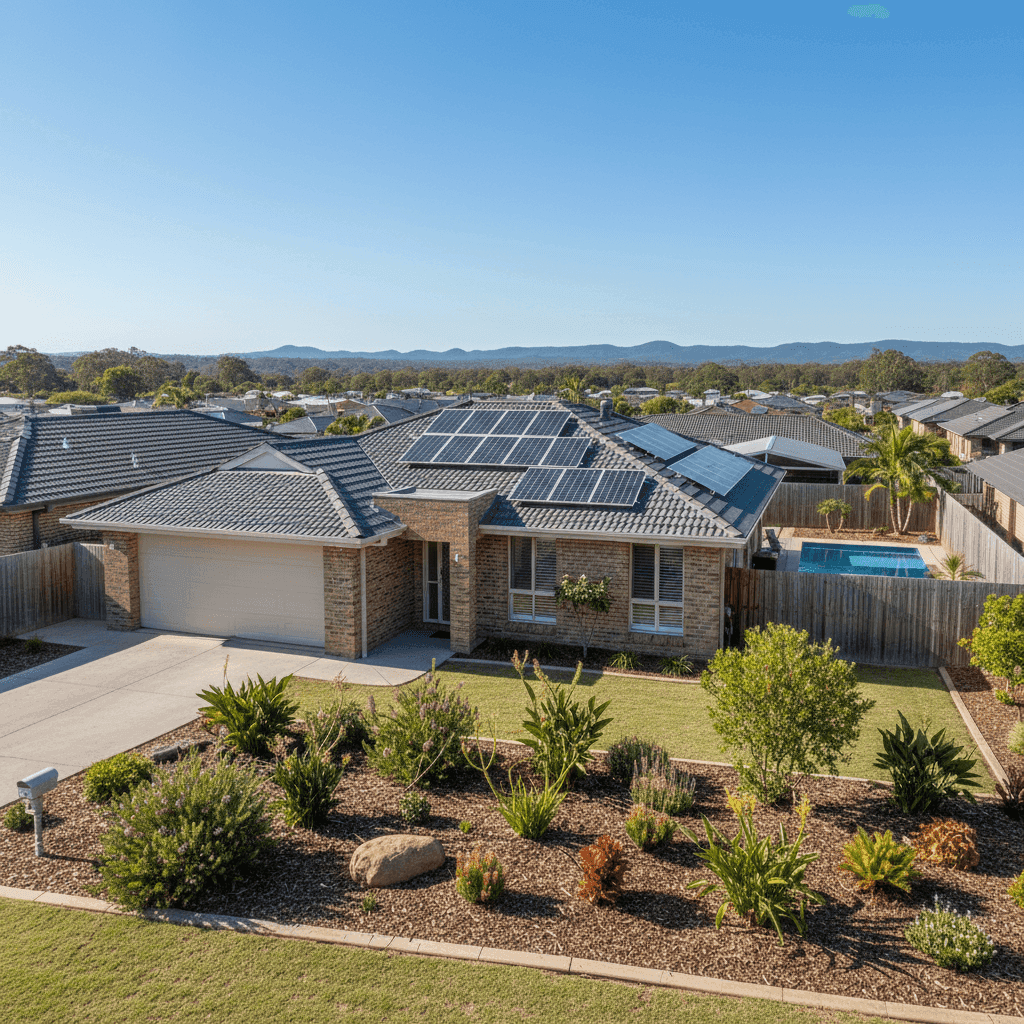
Getting a handle on what you should be paying for home insurance can feel like guesswork — especially when premiums vary so dramatically from one street to the next. This article breaks down a real home and contents insurance quote for a three-bedroom, free-standing home in Little Mountain, QLD 4551, examining whether the price stacks up and what factors are likely pushing the number in either direction.
---
Is This Quote Fair?
The quote in question comes in at $2,805 per year (or $262/month) for combined home and contents cover, with a building sum insured of $481,000 and contents valued at $50,000. Both the building and contents excess sit at $1,000.
Our pricing engine rates this quote as Fair — Around Average, and the data backs that up. The suburb average premium for Little Mountain currently sits at $2,945/year, meaning this quote is tracking about $140 below the local average — a modest but genuine saving. It also falls comfortably within the middle band of the market: the suburb's 25th percentile is $2,103/year and the 75th percentile is $3,356/year, placing this quote solidly in the second quartile.
In plain terms: this homeowner isn't getting a screaming bargain, but they're not being overcharged either. There's meaningful room to do better — particularly if they shopped around and landed closer to the suburb median of $2,648/year — but the quote is reasonable for the property profile.
---
How Little Mountain Compares
To put this quote in broader context, it helps to zoom out and look at how Little Mountain compares to the rest of Queensland and the nation.
| Benchmark | Premium |
|---|---|
| This quote | $2,805/yr |
| Little Mountain suburb average | $2,945/yr |
| Little Mountain suburb median | $2,648/yr |
| Sunshine Coast LGA average | $7,249/yr |
| QLD state average | $9,129/yr |
| QLD state median | $3,903/yr |
| National average | $5,347/yr |
| National median | $2,764/yr |
(Based on 71 quotes collected for the Little Mountain suburb.)
The contrast between Little Mountain and the broader Queensland insurance market is striking. The state average of $9,129/year is more than three times this quote — though that figure is heavily skewed by Far North Queensland postcodes, where cyclone risk drives premiums into the stratosphere. The state median of $3,903/year is a more representative benchmark, and this quote sits well below it.
Compared to national figures, the story is similarly encouraging. The national average of $5,347/year is inflated by high-risk coastal and flood-prone areas, but even the national median of $2,764/year is only marginally below this quote. Little Mountain appears to be a relatively affordable area to insure — at least by Queensland standards.
The Sunshine Coast LGA average of $7,249/year is worth noting. This elevated figure reflects the diversity of risk across the broader region, including beachfront and flood-affected suburbs. Little Mountain, sitting slightly inland from Caloundra, avoids some of the coastal premium loading that affects nearby areas.
---
Property Features That Affect Your Premium
Several characteristics of this property influence how insurers price the risk.
Brick veneer construction with a tiled roof is generally viewed favourably by insurers. Brick veneer offers solid fire resistance and structural durability, while tiled roofs are considered more resilient than Colorbond or corrugated iron in many risk assessments. Together, these materials typically attract lower premiums compared to timber-framed or clad homes.
Slab foundation is standard for Queensland homes of this era and doesn't carry any particular loading or discount — it's essentially a neutral factor in most pricing models.
Built in 1980, the home is over four decades old. While it's not considered heritage-aged, insurers do factor in the age of a property when estimating rebuild costs and the likelihood of claims related to ageing infrastructure (plumbing, wiring, roofing). The building sum insured of $481,000 for a 139 sqm home reflects a rebuild rate of roughly $3,460/sqm — broadly in line with current construction costs in South East Queensland.
The swimming pool adds a small but real component to the premium. Pools increase liability exposure and can complicate claims involving water damage or structural movement. Insurers typically factor this into both building and liability cover.
Solar panels are increasingly common on Queensland rooftops, but they do add to the insured value of the home and can be a source of claims — particularly during hail events or severe storms. Ensuring your sum insured accounts for the replacement cost of your solar system is important.
Ducted climate control is another feature that adds to the overall value of the home and its contents. Ducted systems are expensive to repair or replace, and their inclusion in the building sum insured is worth confirming with your insurer.
Notably, this property is not in a cyclone risk area — a significant factor in keeping premiums at a manageable level. Many Queensland coastal postcodes carry cyclone loading that can add hundreds or even thousands of dollars to annual premiums.
---
Tips for Homeowners in Little Mountain
1. Review your sum insured annually. Construction costs have risen sharply in recent years. A building sum insured set even two or three years ago may no longer reflect the true cost to rebuild. Use a building cost calculator or ask your insurer to reassess — being underinsured at claim time can be a costly mistake.
2. Check what's covered for your solar and pool. Not all policies treat solar panels and swimming pools the same way. Some include them automatically under building cover; others require them to be listed separately. Confirm with your insurer exactly what's covered and for how much.
3. Shop around at renewal time. A "Fair" rating means there's room to improve. Based on suburb data, homeowners in Little Mountain can find premiums as low as the 25th percentile of $2,103/year. Loyalty doesn't always pay — comparing quotes at renewal could save several hundred dollars annually.
4. Consider your excess carefully. Both the building and contents excess on this policy are set at $1,000. Opting for a higher excess (say, $2,000 or $2,500) can meaningfully reduce your annual premium. If you have the financial buffer to cover a larger out-of-pocket cost in a claim, this is often a smart trade-off.
---
Ready to See If You Can Do Better?
Whether you're renewing your existing policy or shopping for cover on a new purchase, comparing quotes is the single most effective way to make sure you're not overpaying. Get a home insurance quote through CoverClub and see how your premium stacks up against the suburb, state, and national benchmarks — in minutes, not hours.