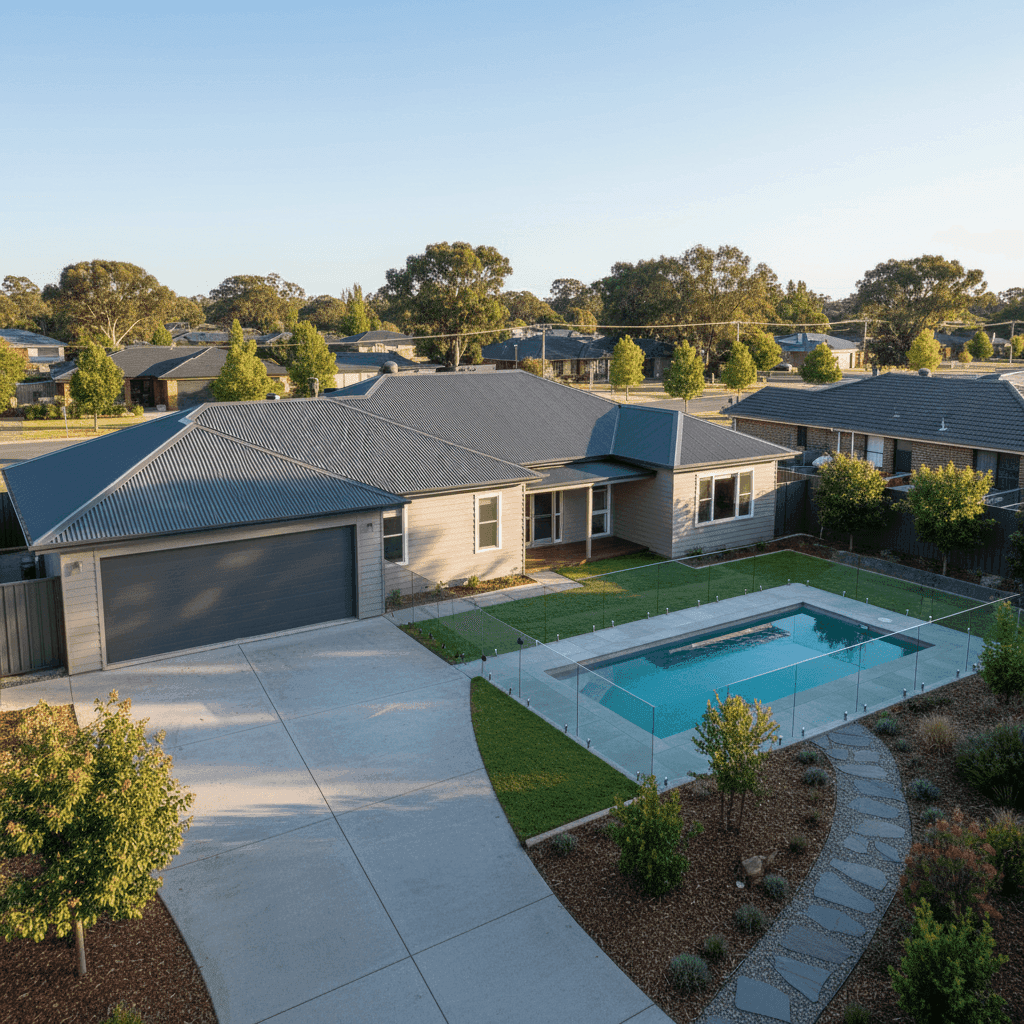
If you own a free standing home in Lochinvar, NSW 2321, you're likely no stranger to the task of finding the right home insurance. Nestled in the Hunter Valley region, Lochinvar is a growing suburb with a mix of established and newer properties — and insurance premiums here can vary quite significantly depending on your home's features and the level of cover you choose. This article breaks down a recent home and contents insurance quote for a four-bedroom, two-bathroom weatherboard home in the area, examines whether the price stacks up, and offers practical tips to help you get better value on your cover.
---
Is This Quote Fair?
The quote in question comes in at $4,233 per year (or $430/month) for combined home and contents insurance, covering a building sum insured of $1,248,000 and $200,000 in contents. Our price rating for this quote is Expensive (Above Average).
To put that in perspective, the suburb average for Lochinvar sits at just $2,020 per year, with a median of $1,806. This quote is more than double the local median — a significant gap that warrants a closer look.
That said, context matters. The building sum insured of $1,248,000 is substantial, and the contents cover of $200,000 is on the higher end. Both figures push the premium upward. Additionally, a $3,000 building excess and $1,000 contents excess are already factored in — higher excesses typically reduce premiums, so without them, the cost could have been even greater.
When benchmarked against the NSW state average of $3,801 per year, this quote is about 11% above the state norm. Compared to the national average of $2,965, it's roughly 43% higher. So while it's not wildly out of line with broader NSW pricing, it does sit meaningfully above what most homeowners across the country are paying.
---
How Lochinvar Compares
Here's a snapshot of how premiums in Lochinvar stack up against broader benchmarks:
| Benchmark | Annual Premium |
|---|---|
| This Quote | $4,233 |
| Lochinvar Suburb Average | $2,020 |
| Lochinvar Suburb Median | $1,806 |
| Lochinvar 25th Percentile | $1,526 |
| Lochinvar 75th Percentile | $2,333 |
| Port Stephens LGA Average | $3,116 |
| NSW State Average | $3,801 |
| National Average | $2,965 |
A few things stand out here. First, the suburb-level data (based on 15 quotes) suggests that most Lochinvar homeowners are paying considerably less — the 75th percentile is $2,333, meaning roughly three-quarters of quotes in the area come in below that figure. This quote exceeds even the top quartile by a wide margin.
However, when you zoom out to the Port Stephens LGA average of $3,116, the gap narrows. And at the NSW state level, the difference becomes more modest. This suggests the higher-than-local-average premium may be partly driven by the property's specific characteristics — particularly the high building sum insured — rather than purely by location risk.
It's worth noting that the suburb sample size is relatively small (15 quotes), so the local averages should be treated as indicative rather than definitive. Exploring Lochinvar's suburb insurance stats can give you a more detailed picture as more data becomes available.
---
Property Features That Affect Your Premium
Several characteristics of this home are likely contributing to the higher-than-average premium:
Weatherboard Timber Walls
Weatherboard wood external walls are a known risk factor for insurers. Timber is more susceptible to fire, rot, and pest damage compared to brick or rendered masonry. This typically results in a higher premium, as the cost to repair or rebuild a weatherboard home can be greater, and the fire risk profile is elevated.
Steel/Colorbond Roof
On the positive side, a steel Colorbond roof is generally viewed favourably by insurers. It's durable, low-maintenance, and performs well in storms and high winds — all of which can help moderate the premium compared to, say, terracotta tiles.
Slab Foundation
A concrete slab foundation is standard for homes built in the mid-1990s in NSW and is generally considered a neutral-to-positive factor from an insurance perspective. It offers good structural stability and reduces the risk of subsidence-related claims.
Swimming Pool
Having a pool adds to the replacement cost of the property and introduces additional liability considerations. Insurers factor in the cost of pool repair or replacement, as well as any associated safety features, when calculating your premium.
Above-Average Fittings Quality
With fittings rated as above average, the internal finishes — think stone benchtops, quality cabinetry, premium tapware — are more expensive to replace. This directly influences both the building sum insured and the overall premium.
1995 Build Year
At around 30 years old, this home sits in a middle ground. It's old enough that some components (plumbing, electrical, roofing) may be approaching the end of their serviceable life, but recent enough to have been built to modern standards. Insurers may apply a modest loading for the age of the property.
Large Building Size (268 sqm)
At 268 square metres, this is a generously sized home. A larger floor area means a higher rebuild cost, which directly supports the $1,248,000 building sum insured and contributes to the premium.
---
Tips for Homeowners in Lochinvar
1. Review Your Building Sum Insured Carefully
At $1,248,000, the building sum insured is substantial. It's important to ensure this figure accurately reflects your home's rebuild cost — not its market value. Overinsuring can lead to unnecessarily high premiums, while underinsuring leaves you exposed. Use a professional building cost estimator or speak with a quantity surveyor to validate the figure.
2. Shop Around and Compare Multiple Quotes
The most effective way to reduce your premium is to compare offers from multiple insurers. Pricing can vary enormously between providers for the same property, and loyalty doesn't always pay. Get a quote at CoverClub to see how different insurers price your specific risk profile.
3. Consider Adjusting Your Excess
This policy carries a $3,000 building excess and a $1,000 contents excess. If you're comfortable self-funding smaller claims, increasing your excess further could reduce your annual premium. Just make sure the excess remains an amount you could genuinely afford to pay in the event of a claim.
4. Maintain Your Weatherboard Exterior
Regular maintenance of your timber cladding — including repainting, sealing, and treating for pests — not only protects your home but demonstrates to insurers that the property is well-cared-for. Some insurers may look more favourably on well-maintained older homes when assessing risk.
---
Ready to Find a Better Deal?
Whether you're renewing your policy or comparing for the first time, it pays to know where your premium stands. CoverClub makes it easy to benchmark your quote against real data from homeowners in your suburb, your state, and across Australia. Start comparing home insurance quotes today and make sure you're not paying more than you need to.