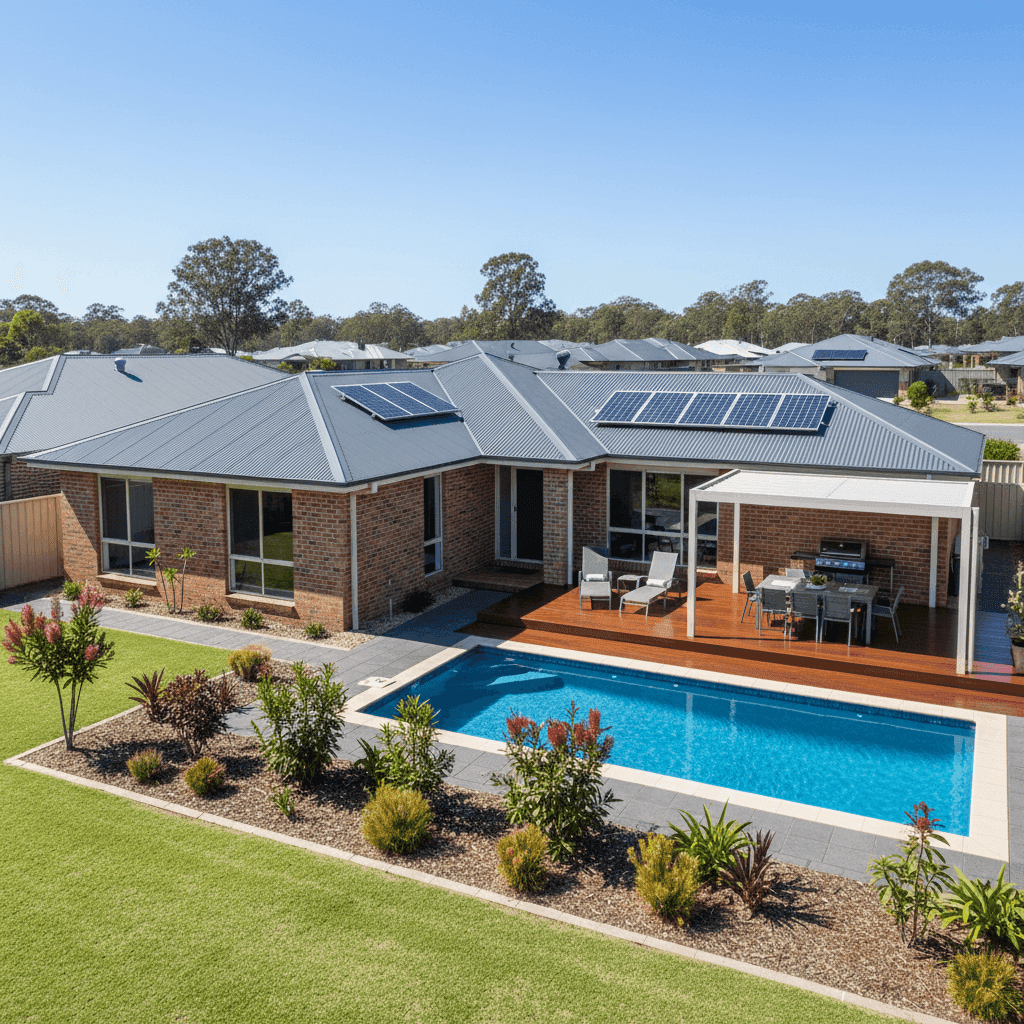
A four-bedroom, two-bathroom free standing home in Logan Reserve, QLD 4133 recently received a combined Home and Contents insurance quote of $1,970 per year (or $193/month). That's a notably competitive result — and if you're a homeowner in the area wondering whether your own premium stacks up, the comparison data below is well worth a read.
---
Is This Quote Fair?
In short: yes — and then some. CoverClub rates this quote as CHEAP (Below Average), meaning it sits comfortably beneath what most comparable properties in the suburb are paying.
At $1,970 annually, this premium lands below the suburb's 25th percentile of $2,109/yr, which means fewer than one in four Logan Reserve quotes in our dataset came in this low. The suburb average sits at $2,890/yr and the median at $3,245/yr — so this homeowner is saving roughly $920–$1,275 per year compared to their neighbours on equivalent cover.
When you zoom out to the broader Queensland insurance market, the picture becomes even more striking. The state average premium is a hefty $4,547/yr, and the state median is $3,931/yr. Queensland is one of the most expensive states in the country for home insurance, largely driven by extreme weather exposure across much of the state. Against that backdrop, a sub-$2,000 premium for a well-appointed home with a pool and solar panels is genuinely impressive.
Compared to the national average of $2,965/yr and national median of $2,716/yr, this quote is still sitting well below the pack.
---
How Logan Reserve Compares
Here's a quick snapshot of where this quote sits across the key benchmarks:
| Benchmark | Premium |
|---|---|
| This quote | $1,970/yr |
| Suburb 25th percentile | $2,109/yr |
| Suburb average | $2,890/yr |
| Suburb median | $3,245/yr |
| Suburb 75th percentile | $3,457/yr |
| LGA (Logan) average | $3,411/yr |
| QLD state average | $4,547/yr |
| National average | $2,965/yr |
It's worth noting that the Logan Reserve suburb statistics are based on a sample of 8 quotes, so the local data should be treated as a useful guide rather than a definitive benchmark. That said, the consistency between the suburb figures and the broader Logan LGA average ($3,411/yr) suggests the local pricing trend is reliable.
Logan Reserve itself is a relatively new, master-planned suburb in the City of Logan, situated roughly 35 kilometres south of Brisbane's CBD. Its newer housing stock — like this 2022-built home — tends to attract more favourable premiums than older dwellings, which can carry greater risk of structural issues or outdated materials.
---
Property Features That Affect Your Premium
Several characteristics of this particular property work in the homeowner's favour when it comes to pricing:
Modern construction (2022). Newer homes are generally cheaper to insure. Building codes have tightened significantly over recent decades, meaning a 2022-built home is likely to be more structurally sound, better sealed against water ingress, and built with materials that meet current fire and weather resistance standards.
Brick veneer walls and Colorbond roof. Brick veneer is a widely used and well-regarded construction method in Queensland. It offers solid weather resistance without the full cost of double-brick. Colorbond steel roofing is durable, lightweight, and performs well in heat — a sensible choice for South East Queensland's climate.
Concrete slab foundation. Slab-on-ground foundations are standard for newer Queensland homes and are generally considered low-risk by insurers compared to older raised timber stumps, which can be prone to rot, termite damage, or subsidence.
Not in a cyclone risk zone. This is a significant factor. Properties in North Queensland, particularly those north of the Tropic of Capricorn, attract substantial cyclone loading on their premiums. Logan Reserve sits well outside this zone, which keeps premiums considerably lower than comparable homes in Cairns, Townsville, or the Whitsundays.
Pool, solar panels, and ducted climate control. These features add replacement value to the property and can nudge premiums upward slightly — but they're also common in this style of home and are generally well-factored into standard building sum insured calculations. The building sum insured here is $500,000, which appears appropriate for a 214 sqm home of this specification.
Contents insured at $50,000. This is a relatively modest contents sum, which helps keep the overall premium down. Homeowners should periodically review whether this figure accurately reflects the replacement value of their belongings, particularly if they've made significant purchases since taking out the policy.
---
Tips for Homeowners in Logan Reserve
Whether you're renewing an existing policy or shopping around for the first time, here are a few practical steps to make sure you're getting the best deal on your home insurance.
1. Don't auto-renew without comparing. Insurers typically increase premiums at renewal, sometimes significantly. The gap between this quote ($1,970) and the suburb average ($2,890) shows how much variation exists in the market — it pays to check what else is available before you accept your renewal offer.
2. Review your sum insured regularly. Building costs have risen sharply across Australia in recent years. If your building sum insured hasn't kept pace with construction cost inflation, you could be underinsured in the event of a total loss. Use a building cost calculator or speak with a quantity surveyor to validate your figure annually.
3. Consider your excess settings carefully. This quote carries a $3,000 building excess and $1,000 contents excess. Higher excesses generally reduce your premium, but make sure you could comfortably cover that amount out of pocket if you needed to make a claim. If $3,000 would be a stretch, it may be worth paying a slightly higher premium for a lower excess.
4. Keep your home well-maintained. Insurers can reduce or reject claims if damage is attributable to poor maintenance rather than a sudden insured event. In South East Queensland's humid climate, staying on top of roof condition, gutters, drainage, and any pool-related infrastructure is both good practice and good insurance hygiene.
---
Ready to See What You Could Pay?
If you own a home in Logan Reserve — or anywhere else in Australia — it's worth finding out how your current premium compares to the market. CoverClub makes it easy to get a personalised home insurance quote and benchmark it against real data from your suburb, your state, and across the country.