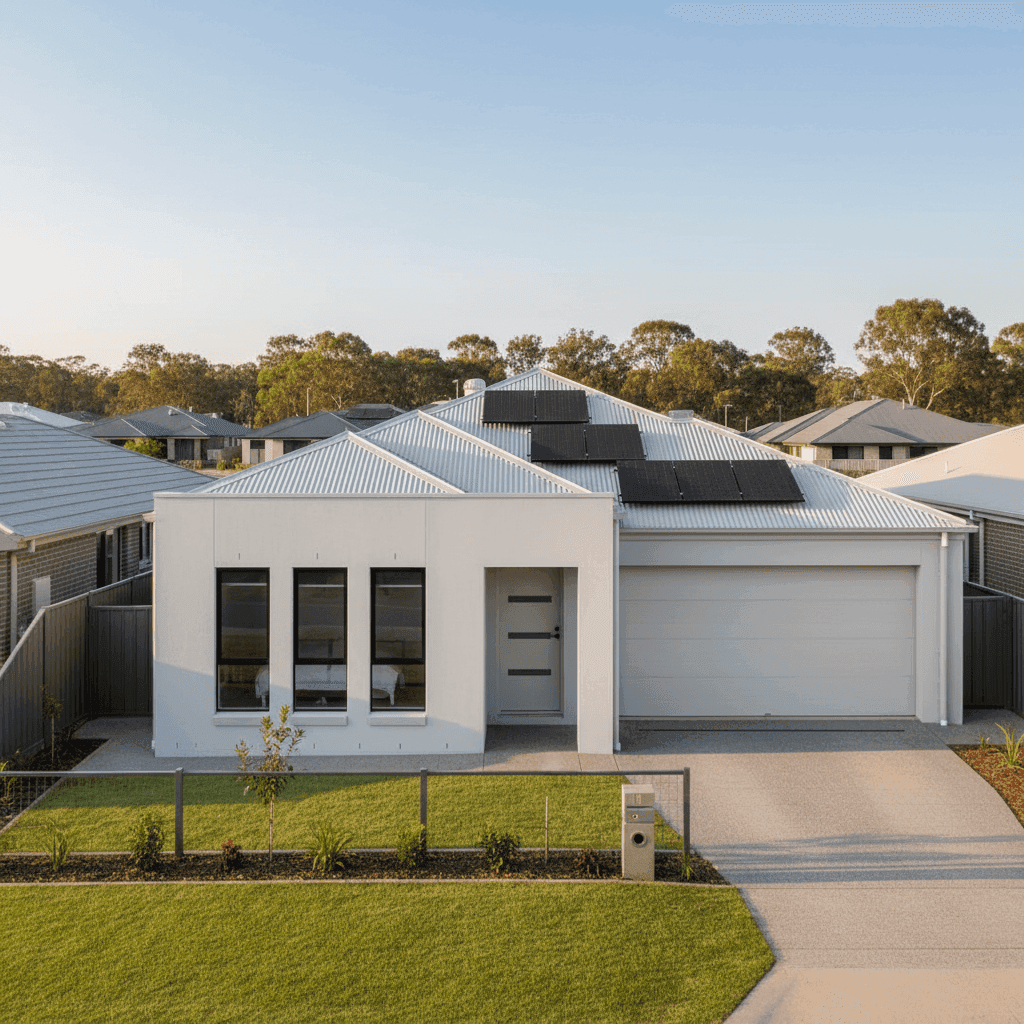
Logan Reserve is a fast-growing suburb in Brisbane's southern corridor, sitting within the City of Logan — one of Queensland's most dynamic residential growth areas. With new estates continuing to pop up across the region, properties like this newly built, free-standing home represent a wave of modern construction that's reshaping the suburb's landscape. But with that growth comes an important question every homeowner should be asking: is what you're paying for home insurance actually fair?
This article breaks down a recent home and contents insurance quote for a 2-bedroom, 2-bathroom free-standing home in Logan Reserve (postcode 4133), comparing it against local, state, and national benchmarks to help you understand where your money is going — and whether there's room to do better.
---
Is This Quote Fair?
The quoted annual premium for this property is $17,223 per year (or $1,651/month), covering a building sum insured of $616,000 and contents valued at $50,000, each with a $1,000 excess.
Our price rating for this quote is Expensive (Above Average) — and the data backs that up clearly.
The suburb average premium in Logan Reserve sits at just $2,671 per year, with a median of $2,230. Even at the 75th percentile — meaning 75% of comparable quotes come in lower — the figure is only $3,529/year. This quote at $17,223 is roughly 6.4 times the suburb median and nearly 5 times the suburb average. That's a significant gap that warrants a closer look.
It's worth noting that a high building sum insured ($616,000) will naturally push premiums upward compared to properties insured for less. However, even accounting for this, the premium appears elevated relative to what the local market suggests is typical. If you haven't already, it's well worth comparing quotes on CoverClub to see whether a more competitive rate is available for your specific property profile.
---
How Logan Reserve Compares
To put this quote in proper context, here's how Logan Reserve stacks up against broader benchmarks:
| Benchmark | Average Premium | Median Premium |
|---|---|---|
| Logan Reserve (suburb) | $2,671/yr | $2,230/yr |
| Logan LGA | $4,617/yr | — |
| Queensland | $9,129/yr | $3,903/yr |
| National | $5,347/yr | $2,764/yr |
(Based on 49 quotes sampled in the Logan Reserve area)
A few things stand out here. Queensland's average premium of $9,129/yr is notably high — driven largely by cyclone-prone regions in North Queensland that significantly skew the state average upward. The Queensland state median of $3,903/yr is a more reliable indicator for South East Queensland homeowners, and Logan Reserve's suburb median of $2,230 sits comfortably below even that figure.
Nationally, the average premium is $5,347/yr with a median of $2,764. Logan Reserve's median is again below the national median, suggesting it's generally a relatively affordable area to insure — which makes this particular quote stand out even more starkly.
For homeowners in the Logan LGA, the average of $4,617/yr is a useful local reference point. This quote at $17,223 is still nearly four times that LGA average.
---
Property Features That Affect Your Premium
Several characteristics of this property are relevant to how insurers price the risk:
Hebel external walls — Hebel (autoclaved aerated concrete panels) is a modern, lightweight building material increasingly popular in new construction. It offers solid fire resistance and good insulation properties, which insurers generally view favourably. However, it can be more costly to repair or replace than traditional brick, which may influence rebuilding cost estimates.
Steel/Colorbond roof — Colorbond steel roofing is widely regarded as one of the most durable and low-maintenance roofing options in Australia. It performs well in extreme weather and is resistant to fire, pests, and corrosion. This is generally a positive factor for insurers.
Slab foundation and tiled flooring — A concrete slab foundation is standard for new builds in South East Queensland and presents minimal risk to insurers. Tiled flooring similarly adds durability and is easier to remediate after water damage than carpet or timber.
2024 construction year — Being a brand-new home is typically a strong positive. New builds meet current Australian building codes, use modern materials, and are less likely to have hidden structural issues. Insurers often price new homes more favourably as a result.
Solar panels — Solar panels add to the replacement value of the home and can introduce additional risk (e.g., electrical faults, storm damage to panels). It's important to confirm your policy explicitly covers solar panels and that your building sum insured accounts for their replacement cost.
Ducted climate control — Ducted air conditioning systems are a significant fixed asset and should be factored into your building sum insured. They can also present a claims risk if they fail due to a covered event such as a storm or electrical surge.
Above average fittings quality — Higher-quality fixtures, fittings, and finishes increase the cost to rebuild or repair, which is reflected in the higher building sum insured of $616,000. Ensuring this figure accurately reflects your rebuild cost (not market value) is essential to avoid being underinsured.
---
Tips for Homeowners in Logan Reserve
1. Review your building sum insured carefully At $616,000, your building sum insured is the single biggest driver of your premium. Make sure this figure reflects the true cost to rebuild your home from scratch — including demolition, professional fees, and the cost of your specific materials (like Hebel cladding). Using a quantity surveyor or an online rebuild cost calculator can help you avoid both underinsurance and overinsurance.
2. Confirm solar panel coverage Not all standard home insurance policies automatically cover solar panel systems, or they may apply sub-limits. Ask your insurer directly whether your panels are covered for storm damage, accidental damage, and electrical breakdown — and for how much.
3. Compare multiple quotes before renewing Given this quote is significantly above suburb and national medians, shopping around is strongly recommended. Premiums can vary enormously between insurers for the same property, and getting a quote through CoverClub takes only a few minutes. Even a modest saving of $1,000–$2,000 per year compounds significantly over time.
4. Consider your excess level Both the building and contents excess are set at $1,000. Opting for a higher voluntary excess (e.g., $2,500 or $5,000) can meaningfully reduce your annual premium. If your financial position allows you to absorb a larger out-of-pocket cost in a claim, this can be a smart trade-off — particularly for a new home that's less likely to need claims in the short term.
---
Ready to Find a Better Rate?
If this quote has you wondering whether you're paying too much, you're not alone. Home insurance premiums in Australia have risen sharply in recent years, but that doesn't mean you have to accept the first number you're given. CoverClub makes it easy to compare home and contents insurance quotes for your specific property in Logan Reserve — so you can make a confident, informed decision.