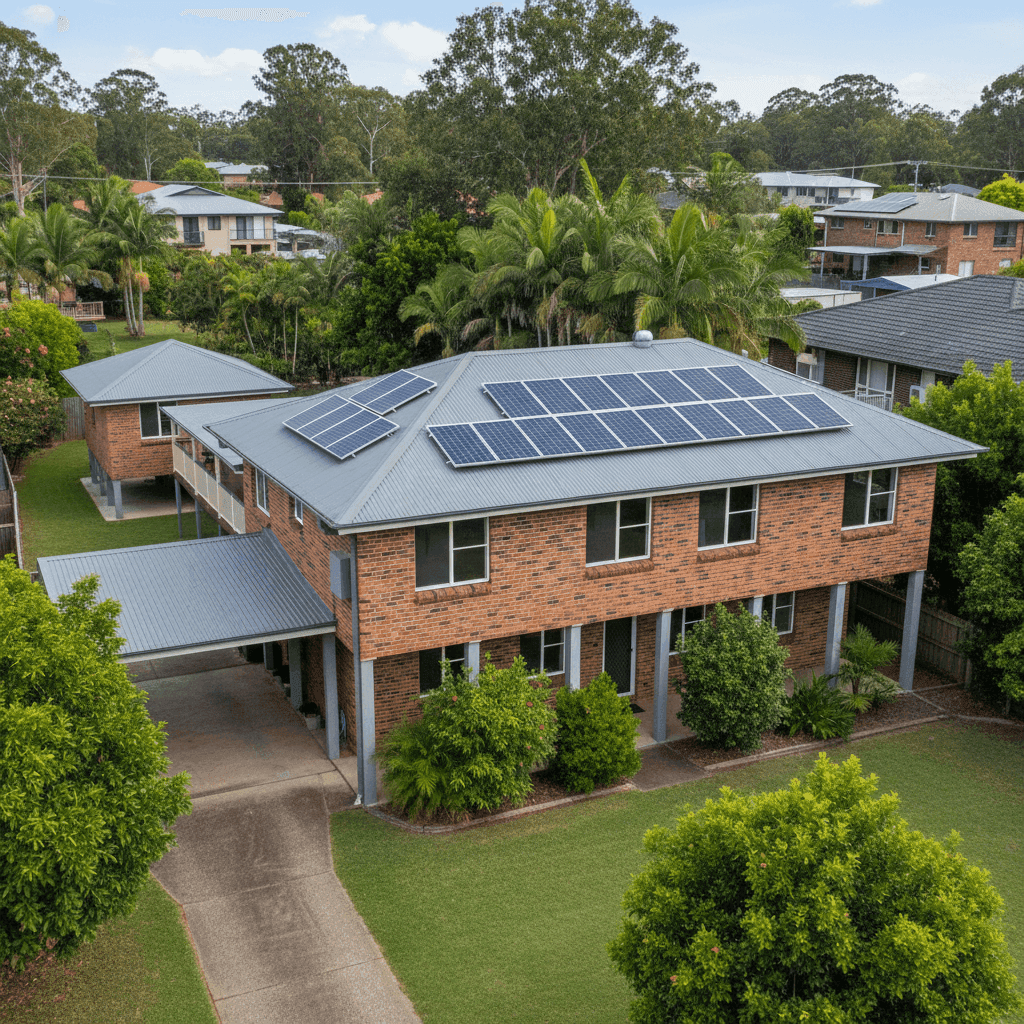
A four-bedroom, two-bathroom free standing home in Logan Village, QLD 4207 recently received a home and contents insurance quote through CoverClub — and the result is worth unpacking. With a building sum insured of $650,000, $80,000 in contents cover, and an annual premium of $2,657, this property came in well below what most Logan Village homeowners are paying. Here's what the numbers mean, what's driving the price, and what you can do to make sure you're getting the best deal on your own policy.
---
Is This Quote Fair?
In short: yes — and then some. This quote has been rated CHEAP (Below Average), meaning it sits meaningfully below the typical range for the area.
The suburb average for Logan Village sits at $3,912 per year, with a median of $3,276. Even at the 25th percentile — the cheapest quarter of quotes — Logan Village homeowners are typically paying around $3,057 annually. This quote at $2,657 undercuts even that threshold, placing it among the most competitive premiums recorded for this postcode.
Compared to the broader Queensland average of $4,547 per year, this quote is nearly 42% cheaper. That's a significant saving of almost $1,900 annually — or roughly $158 per month — compared to what the average QLD homeowner is paying for similar cover.
Even against national benchmarks, where the average premium sits at $2,965 and the median at $2,716, this quote holds up well, coming in below both figures. For a property with a $650,000 building sum insured and $80,000 in contents, that represents genuinely strong value.
---
How Logan Village Compares
To put the numbers in perspective, here's a snapshot of how premiums stack up across different benchmarks:
| Benchmark | Annual Premium |
|---|---|
| This Quote | $2,657 |
| Logan Village 25th Percentile | $3,057 |
| Logan Village Median | $3,276 |
| Logan Village Average | $3,912 |
| Logan Village 75th Percentile | $5,018 |
| QLD State Average | $4,547 |
| National Average | $2,965 |
| LGA (Gold Coast) Average | $5,718 |
One figure that stands out is the Gold Coast LGA average of $5,718 — a stark reminder of how much geography and local risk factors can influence what insurers charge. Logan Village, while located in South East Queensland, benefits from a lower-risk profile compared to coastal Gold Coast suburbs, which are more exposed to storm surge, flooding, and cyclone-adjacent weather events.
It's also worth noting that the suburb sample size for Logan Village is 34 quotes — a reasonably solid dataset that gives confidence in these comparisons. You can explore the full breakdown on the Logan Village stats page.
---
Property Features That Affect Your Premium
Several characteristics of this particular property likely contributed to its competitive premium. Understanding these factors can help you make sense of your own quote.
Brick Veneer Walls & Colorbond Roof
Brick veneer construction is generally well-regarded by insurers for its durability and fire resistance. Combined with a steel Colorbond roof — one of the most resilient roofing materials available in Australia — this home presents a lower-than-average risk of structural damage from weather events. Colorbond in particular performs well in high-wind conditions and doesn't deteriorate the way older tile roofs can.
Elevated on Stumps
The home is elevated by at least one metre on a stump foundation — a classic Queensland building style. While stump foundations can sometimes raise insurer eyebrows due to maintenance concerns, the elevation itself is a meaningful flood-mitigation feature. In a region like South East Queensland where heavy rainfall events are not uncommon, being raised above ground level can reduce the risk of inundation and may be reflected positively in the premium.
No Cyclone Risk Area
Logan Village is not classified as a cyclone risk area, which removes one of the most significant premium loading factors for Queensland properties. Homeowners in Far North Queensland or coastal cyclone zones can pay dramatically more for the same level of cover.
Solar Panels
The property has solar panels installed, which are typically covered under home insurance as a fixed fixture. It's worth confirming with your insurer that your panels are included in the building sum insured and that the $650,000 figure accounts for their replacement value.
Ducted Climate Control & Granny Flat
Ducted air conditioning is a high-value fixed asset that adds to the replacement cost of the home. Similarly, having a granny flat on the property increases the overall rebuild complexity. Both features are relevant to ensuring your building sum insured is accurate — underinsurance is one of the most common and costly mistakes Queensland homeowners make.
Standard Fittings
With standard-quality fittings throughout, this home avoids the premium loading that often comes with high-end or bespoke fixtures. Insurers price rebuild costs partly based on internal fit-out quality, so standard fittings help keep the sum insured — and therefore the premium — in check.
---
Tips for Homeowners in Logan Village
Whether you're reviewing your current policy or shopping for a new one, here are four practical steps worth taking.
1. Double-check your building sum insured With a granny flat, ducted air conditioning, and solar panels on site, there's a lot to account for in your rebuild cost. Use a building cost calculator or speak to a quantity surveyor to make sure $650,000 genuinely reflects full replacement value — not just the market value of the property.
2. Review your contents figure annually $80,000 in contents cover is a reasonable starting point, but it's easy for this figure to become outdated as you accumulate furniture, appliances, and valuables. Do a room-by-room audit each year at renewal time to avoid being caught short after a claim.
3. Understand your flood cover Logan Village sits in a region that has experienced significant flooding events historically. Check whether your policy explicitly includes flood cover — not just storm or water damage — and understand how your elevated foundation may influence any flood-related claims.
4. Compare at renewal, every time Even if you're happy with your insurer, premiums can shift significantly from year to year. The gap between the cheapest and most expensive quotes in Logan Village spans from around $3,057 to over $5,018 at the 75th percentile — that's a difference of nearly $2,000 annually for broadly similar cover. Shopping around at renewal is one of the simplest ways to avoid paying more than you need to.
---
Ready to See What You Could Pay?
Whether you're a Logan Village local or just curious about what home insurance costs in your area, CoverClub makes it easy to compare quotes in minutes. Get a personalised quote today and see how your premium stacks up against suburb, state, and national benchmarks — all in one place.