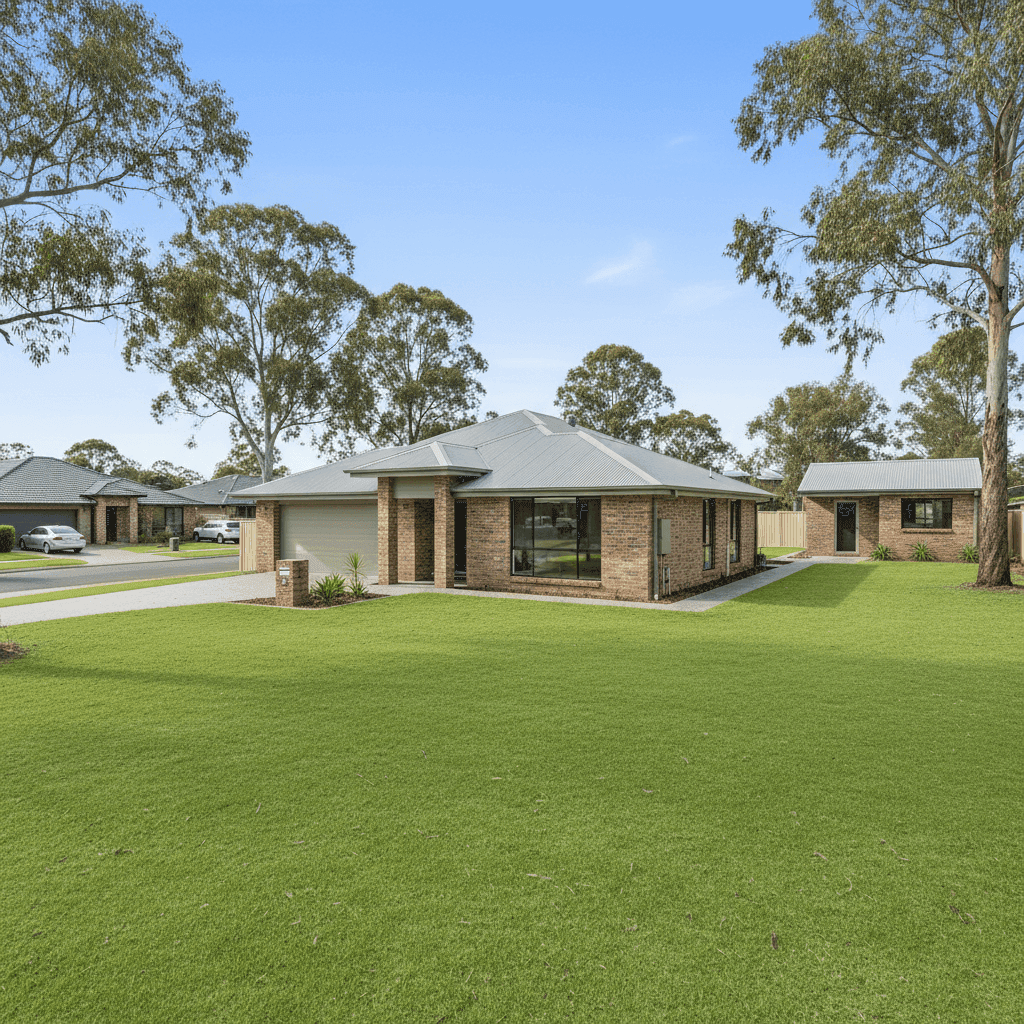
Home insurance costs in South East Queensland can vary dramatically from one suburb to the next — and Logan Village is no exception. This article takes a close look at a real home and contents insurance quote for a two-bedroom, free standing brick veneer home in Logan Village QLD 4207, breaking down what was quoted, how it compares to local and national benchmarks, and what property features are likely driving the price.
---
Is This Quote Fair?
The short answer: yes — and then some. This quote came in at $2,920 per year (or around $280 per month), covering both building and contents for a sum insured of $525,500 on the building and $120,700 on contents. CoverClub's pricing engine has rated this quote as CHEAP — below average for the area.
To put that in perspective:
- The suburb average for Logan Village is $3,912/yr — meaning this quote is roughly $992 cheaper than what most homeowners in the area are paying.
- The suburb median sits at $3,276/yr, so even against the midpoint of local quotes, this policy saves over $350 annually.
- Compared to the Queensland state average of $4,547/yr, this quote is a substantial $1,627 below average — a saving of nearly 36%.
By any measure, this is a competitive result. Homeowners in Logan Village who are currently paying around the suburb average could potentially save close to $1,000 per year simply by shopping around.
---
How Logan Village Compares
Understanding where Logan Village sits in the broader insurance landscape helps explain why premiums here can be significant — and why landing a below-average quote matters.
You can explore the full data on the Logan Village suburb stats page, but here's a quick summary:
| Benchmark | Annual Premium |
|---|---|
| This quote | $2,920 |
| Logan Village suburb average | $3,912 |
| Logan Village suburb median | $3,276 |
| Queensland state average | $4,547 |
| Queensland state median | $3,931 |
| National average | $2,965 |
| National median | $2,716 |
| LGA (Gold Coast) average | $5,494 |
A few things stand out here. First, Queensland premiums are notably higher than the national average — QLD's state average of $4,547 is more than $1,500 above the national figure of $2,965. This is largely driven by the state's exposure to severe weather events, including flooding, storms, and hail.
Second, the Gold Coast LGA average of $5,494 is the highest benchmark in this comparison. Logan Village, while technically part of the Logan City LGA rather than Gold Coast, sits in a transitional zone between the two regions and shares some of the same risk characteristics — particularly around storm and flood exposure.
This quote, at $2,920, actually sits very close to the national average, which is a strong outcome for a Queensland property.
---
Property Features That Affect Your Premium
Several characteristics of this property are worth examining when it comes to insurance pricing.
Brick Veneer Walls & Colorbond Roof Brick veneer construction is generally viewed favourably by insurers — it's durable, fire-resistant, and relatively low-maintenance. Combined with a steel Colorbond roof (a popular and resilient choice in Queensland's climate), this property presents a solid risk profile from a construction standpoint.
Stump Foundation The home sits on stumps, which is common for older Queensland homes and can offer advantages in flood-prone areas by elevating the structure above ground level. However, stumped homes can also be more susceptible to certain types of damage (such as subfloor moisture or structural movement), and some insurers factor this into their pricing.
Construction Year: 1990 At around 35 years old, this home is well past the "new build" stage but not yet considered heritage or significantly aged. Properties from this era are generally straightforward to insure, though the cost to rebuild to modern standards (reflected in the $525,500 sum insured) can be higher than expected due to updated building codes.
Granny Flat The presence of a granny flat is a notable feature. This adds to the replacement value of the property and is an important consideration when setting your sum insured. Homeowners should ensure their policy explicitly covers any additional structures on the property, including granny flats, to avoid being underinsured in the event of a claim.
Standard Fittings & No High-Risk Extras With standard-quality fittings and no pool, solar panels, or ducted climate control, this property avoids several features that can push premiums higher. Pools, in particular, can increase liability risk, while solar panels add to the replacement cost of the roof structure.
---
Tips for Homeowners in Logan Village
1. Review Your Sum Insured Regularly Building costs in Queensland have risen sharply over the past few years. With a sum insured of $525,500 for a 123 sqm home that includes a granny flat, it's worth revisiting this figure annually — especially as labour and material costs continue to fluctuate. Underinsurance is one of the most common and costly mistakes homeowners make.
2. Confirm Your Granny Flat Is Covered Not all standard home insurance policies automatically extend cover to secondary dwellings. Check your Product Disclosure Statement (PDS) carefully to confirm whether your granny flat — including its contents, if applicable — is included under your policy or requires a separate endorsement.
3. Check Your Flood Cover Logan Village and surrounding areas in the Logan River catchment have experienced flooding historically. Make sure your policy includes flood cover (not just storm damage), and understand the difference between the two. Many Australians are surprised to discover their policy excludes flood events.
4. Compare Quotes Before Renewal This quote is already well below the suburb average, but that doesn't mean it can't be beaten — or that it will stay competitive at renewal. Insurers regularly adjust their pricing, and loyalty doesn't always pay. Use a comparison tool like CoverClub to benchmark your renewal quote each year.
---
Ready to Find Your Own Quote?
Whether you're a first-time buyer or a long-time Logan Village local, comparing home insurance quotes is one of the easiest ways to make sure you're not overpaying. CoverClub makes it simple — just enter your address and get a clear picture of what's available in your area. Start comparing quotes today and see how your current premium stacks up.