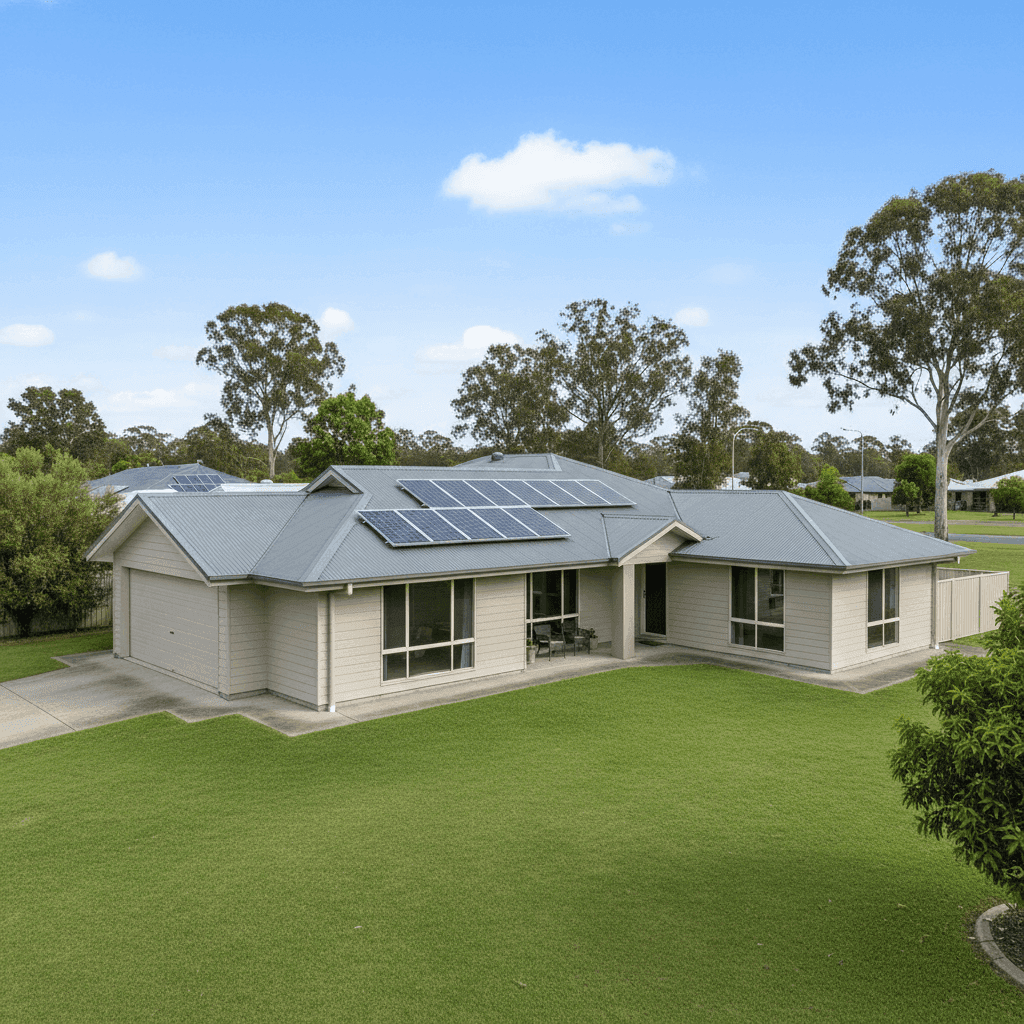
Logan Village is a quiet, semi-rural suburb tucked into the southern edge of South East Queensland, sitting within the Logan City local government area. It's the kind of place where large family homes on generous blocks are the norm — and a five-bedroom free-standing home is a perfectly typical dwelling for the area. If you own a property like this, understanding what you should be paying for building insurance is essential. Let's break down a recent quote we analysed and see exactly how it stacks up.
---
Is This Quote Fair?
The quote in question comes in at $2,006 per year (or $192/month) for building-only cover on a five-bedroom, two-bathroom free-standing home, insured for $603,000 with a $5,000 building excess. Our pricing engine rates this as CHEAP — below average for the area.
That's a meaningful finding. With a suburb average of $3,320/year and a suburb median of $3,066/year across 43 quotes collected for Logan Village (QLD 4207), this quote sits noticeably below what most homeowners in the same postcode are paying. Even compared to the suburb's 25th percentile — meaning the cheapest quarter of quotes — this premium of $2,006 undercuts the $2,476/year mark.
In plain terms: this is a genuinely competitive quote, not just marginally cheaper than average. Homeowners who accept the first renewal price their insurer offers may be leaving hundreds of dollars on the table every year.
---
How Logan Village Compares
To put this quote in proper context, it helps to zoom out and look at the broader pricing landscape.
| Benchmark | Premium |
|---|---|
| This quote | $2,006/yr |
| Logan Village suburb average | $3,320/yr |
| Logan Village suburb median | $3,066/yr |
| QLD state average | $9,129/yr |
| QLD state median | $3,903/yr |
| Gold Coast LGA average | $8,161/yr |
| National average | $5,347/yr |
| National median | $2,764/yr |
A few things stand out here. First, Queensland's average home insurance premium of $9,129/year is extraordinarily high — a reflection of the state's significant exposure to cyclones, flooding, and severe storms, particularly in coastal and northern regions. Logan Village, however, sits in a non-cyclone risk zone, which helps keep premiums more manageable.
Second, the national average of $5,347/year is heavily skewed upward by high-risk postcodes in Queensland, Northern Territory, and Western Australia. The national median of $2,764/year is a more representative figure for typical Australian homeowners — and this quote still comes in below that.
The Gold Coast LGA average of $8,161/year is worth noting too. Logan Village sits adjacent to the Gold Coast region, yet premiums here are considerably lower, reflecting differences in flood mapping, storm surge risk, and local claims history.
---
Property Features That Affect Your Premium
Every insurer prices a home based on its specific characteristics. Here's how the features of this particular property likely influence the quote:
Vinyl cladding external walls Vinyl cladding is a relatively modern, low-maintenance wall material that holds up reasonably well in Queensland's humid climate. It's generally considered a standard risk by insurers — not as resilient as brick veneer, but not as costly to repair or replace as some heritage materials either.
Steel/Colorbond roof A Colorbond steel roof is one of the most insurer-friendly roofing materials in Australia. It's durable, fire-resistant, and performs well in high-wind events. This is likely a positive factor in keeping this premium competitive.
Slab foundation Concrete slab foundations are the standard in Queensland and are viewed favourably by insurers. They're resistant to termite damage and less susceptible to movement compared to older stumped or timber-framed subfloors.
Timber/laminate flooring Flooring type can affect claims costs, particularly in water damage events. Timber and laminate floors can be costly to replace if damaged, though this is more of a contents consideration than a building one — and this policy is building-only cover.
Solar panels Solar panels add value to a home and increase the sum insured, but they're now so common across Queensland that most insurers factor them into standard building cover. It's worth confirming with your insurer that your solar system is explicitly included in your policy wording.
Ducted climate control Ducted air conditioning is a significant fixed asset and is typically covered under building insurance. At 277 sqm, this is a sizeable home, and the ducted system would be a meaningful component of the $603,000 sum insured.
Construction year: 1992 A home built in 1992 is over 30 years old — old enough to have some wear but young enough to have been built under modern building codes. Insurers may pay closer attention to the condition of roofing, plumbing, and electrical systems in homes of this age.
---
Tips for Homeowners in Logan Village
1. Review your sum insured regularly Construction costs have risen sharply across Queensland in recent years. A sum insured of $603,000 for a 277 sqm home works out to roughly $2,177/sqm — which is within a reasonable range for a standard-quality build, but worth validating with a quantity surveyor or using an online building cost estimator to ensure you're not underinsured.
2. Check your flood cover Parts of the Logan City area have experienced significant flooding historically. Even if your specific property isn't in a designated flood zone, it's worth reviewing your policy's flood definitions carefully. Some policies distinguish between riverine flooding, storm surge, and stormwater inundation — and not all cover all three.
3. Don't overlook your excess This quote carries a $5,000 building excess, which is on the higher end. A higher excess typically reduces your annual premium, but it means you'll need to cover more out of pocket before your insurer steps in. Make sure this aligns with your financial comfort level — particularly for smaller claims like storm damage to gutters or fencing.
4. Compare at renewal, not just when you first buy Insurance markets shift. The fact that this quote is rated "cheap" today doesn't mean every renewal will be equally competitive. Spending 15 minutes comparing quotes annually can consistently save hundreds of dollars — especially as insurers reprice risk in response to local claims data.
---
Compare Your Own Quote at CoverClub
Whether you're a Logan Village homeowner reviewing your current policy or shopping for cover on a new purchase, CoverClub makes it easy to see how your premium stacks up. Get a quote today and instantly benchmark your price against real data from your suburb, your state, and across Australia. You might be surprised by how much room there is to save.