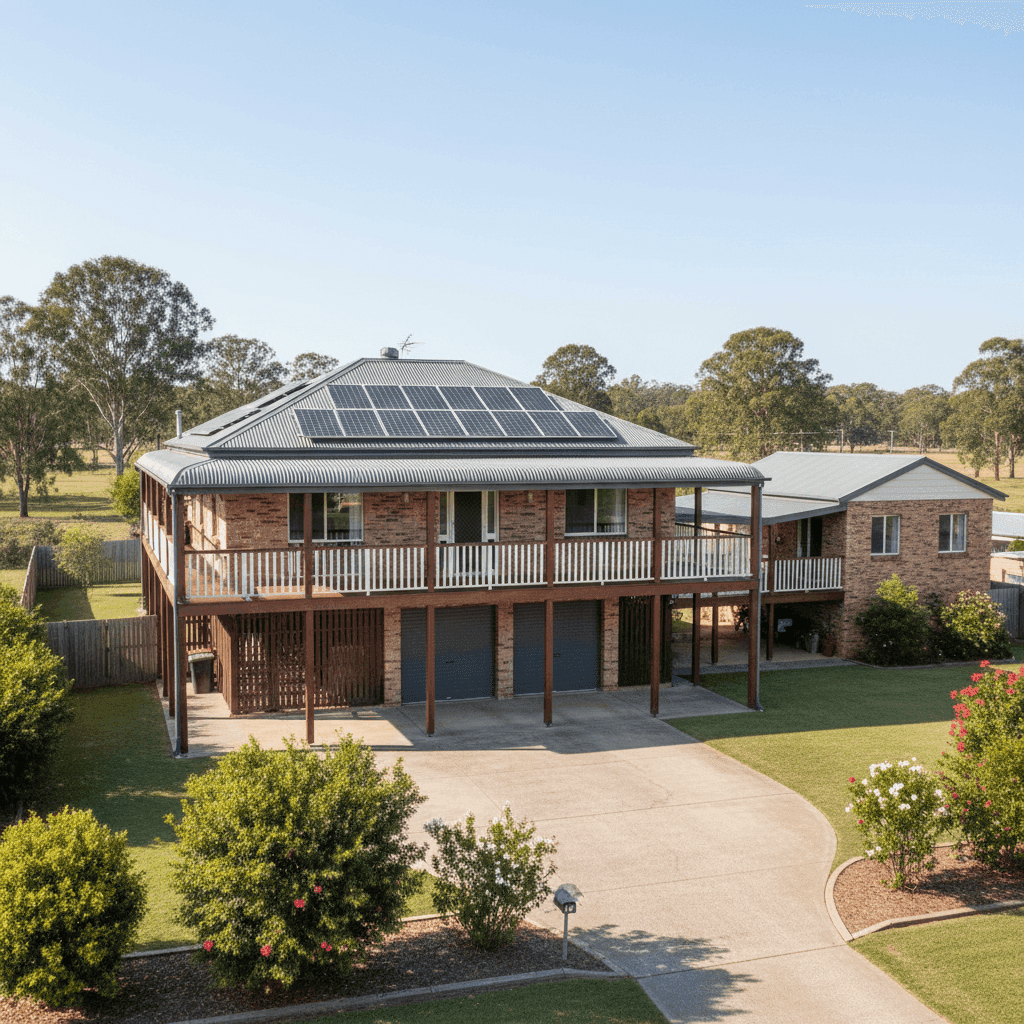
Logan Village is a quiet, semi-rural suburb nestled in the southern corridor of South East Queensland, sitting within the Logan City local government area and not far from the Gold Coast hinterland. It's the kind of place where larger blocks, established homes, and a relaxed lifestyle attract families looking for space without straying too far from urban amenities. For owners of a free standing home in this area, understanding what drives your home insurance premium — and whether you're getting a fair deal — is well worth the effort.
This article breaks down a recent home and contents insurance quote for a four-bedroom, two-bathroom brick veneer home in Logan Village (postcode 4207), and puts the numbers into context using suburb, state, and national benchmarks.
---
Is This Quote Fair?
The annual premium on this quote comes in at $2,477 per year (or $242/month), covering both building (sum insured: $571,000) and contents ($50,000), each with a $1,000 excess.
Our price rating for this quote is FAIR — Around Average, which is actually a solid result for a property of this size and specification. Here's why:
- The quote sits almost exactly on the suburb's 25th percentile of $2,476/yr — meaning roughly 75% of comparable quotes in Logan Village cost more.
- The suburb average is $3,320/yr and the suburb median is $3,066/yr, so this premium is meaningfully below both benchmarks.
- At the state level, the picture becomes even more striking. The Queensland average premium is a hefty $9,129/yr, driven largely by cyclone-prone northern regions. The QLD median sits at $3,903/yr — still well above this quote.
- Nationally, the average home insurance premium is $5,347/yr, with a national median of $2,764/yr. This quote comes in below the national median.
In short, while the rating is "Fair / Around Average," the numbers tell a more encouraging story — this premium is competitive both locally and in a broader national context.
---
How Logan Village Compares
To understand this quote properly, it helps to see the full picture side by side.
| Benchmark | Premium |
|---|---|
| This Quote | $2,477/yr |
| Suburb 25th Percentile | $2,476/yr |
| Suburb Median | $3,066/yr |
| Suburb Average | $3,320/yr |
| Suburb 75th Percentile | $3,497/yr |
| QLD State Median | $3,903/yr |
| QLD State Average | $9,129/yr |
| National Median | $2,764/yr |
| National Average | $5,347/yr |
| LGA (Gold Coast) Average | $8,161/yr |
(Based on 43 quotes sampled in the Logan Village area.)
The LGA average of $8,161/yr reflects the Gold Coast's broader risk profile, which includes coastal flood and storm surge exposure in many suburbs. Logan Village, being inland and elevated, benefits from a more favourable risk assessment. You can explore more localised data on the Logan Village suburb stats page and compare it against broader QLD trends.
---
Property Features That Affect Your Premium
Several characteristics of this property work in the homeowner's favour — and some add complexity that insurers price carefully.
Elevated Foundation on Stumps
This home sits elevated by at least one metre on stumps — a classic Queensland construction style. Elevation is generally viewed positively by insurers in flood-prone areas, as it reduces the likelihood of inundation reaching the living areas. Given Logan Village's proximity to waterways in the broader Logan region, this is a meaningful risk mitigant.
Brick Veneer Walls & Colorbond Roof
Brick veneer is a well-regarded construction type from an insurance perspective — it's durable, fire-resistant, and widely understood by underwriters. Paired with a steel Colorbond roof, this home presents a solid risk profile. Colorbond roofing is resilient in storm conditions and has a long service life, which insurers tend to reward.
Construction Year: 1995
At around 30 years old, this home is mature but not aged. Homes from the mid-1990s were built to reasonable construction standards and are generally straightforward to insure. That said, it's worth ensuring your building sum insured ($571,000) reflects current replacement costs, as construction costs have risen significantly in recent years.
Solar Panels
The presence of solar panels adds a modest layer of complexity to the insurable risk — panels can be damaged in storms and may require specialist repair. Most standard home insurance policies cover rooftop solar as part of the building, but it's worth confirming this with your insurer, particularly around coverage for inverters and storm damage.
Granny Flat
A granny flat on the property is an important disclosure item. Some insurers cover a secondary dwelling under the main home policy; others require a separate endorsement or policy. Homeowners should verify exactly what is — and isn't — covered for the granny flat structure and any contents within it.
Ducted Climate Control
Ducted air conditioning is a significant fixed asset and typically covered under building insurance. As with solar, confirming it's explicitly included in your policy schedule is worthwhile.
No Pool, No Cyclone Risk Zone
The absence of a pool removes a common liability and maintenance risk that can nudge premiums upward. Being outside a designated cyclone risk area is another meaningful advantage — cyclone cover significantly increases premiums across much of Queensland.
---
Tips for Homeowners in Logan Village
1. Review Your Sum Insured Annually
With building costs continuing to rise across Queensland, a sum insured set a few years ago may no longer reflect what it would actually cost to rebuild your home today. Use an independent building cost calculator or speak with a quantity surveyor to validate your $571,000 figure — being underinsured at claim time can be a costly mistake.
2. Confirm Granny Flat Coverage
Don't assume your granny flat is automatically covered under your main home policy. Contact your insurer directly and ask for written confirmation of what's included — structure, contents, and any liability associated with the secondary dwelling.
3. Check Your Solar Panel Policy Terms
Ask your insurer whether your solar panels (including the inverter and mounting hardware) are covered for storm, hail, and accidental damage. Some policies have sub-limits or exclusions that may not be immediately obvious in the product disclosure statement.
4. Consider Raising Your Excess to Lower Your Premium
With a $1,000 excess on both building and contents, there may be room to increase this if you're comfortable self-insuring smaller claims. Moving to a $2,000 or $2,500 excess can sometimes reduce your annual premium by a meaningful amount — particularly useful if you have a good claims history.
---
Compare Your Options with CoverClub
Whether you're renewing your policy or shopping around for the first time, it pays to compare. CoverClub makes it easy to see how your current premium stacks up and explore alternatives — all in one place. Get a home insurance quote today and find out if you could be paying less for the same level of cover.