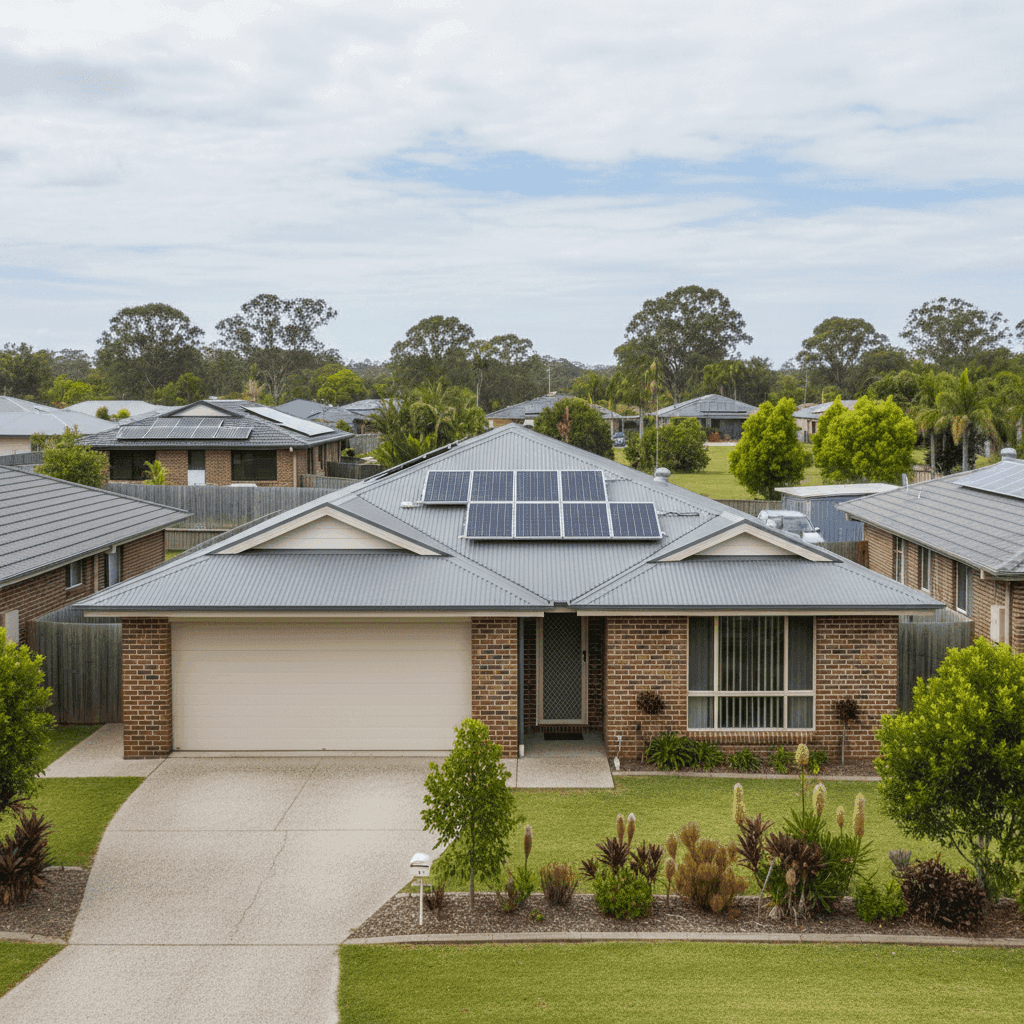
Loganlea is a quiet residential suburb in Logan City, sitting roughly 30 kilometres south of Brisbane's CBD. It's home to a mix of older brick homes, many of which were built during the post-war and 1970s construction boom — properties that carry their own unique insurance considerations. This article takes a close look at a building-only insurance quote for a 3-bedroom free standing home in Loganlea (QLD 4131), breaking down whether the price stacks up and what local homeowners can do to get better value.
---
Is This Quote Fair?
The quote in question comes in at $10,927 per year (or $1,040/month) for building-only cover with a $1,000 excess and a sum insured of $472,000. Our rating for this quote is Expensive — above average.
To put that in perspective, the suburb average for Loganlea sits at just $2,591 per year, with a median of $2,461. That means this particular quote is more than four times the typical premium paid by other homeowners in the same postcode. Even at the 75th percentile — meaning 75% of Loganlea quotes are cheaper — the figure is only $3,075/yr. This quote blows well past that mark.
At the state level, the Queensland average is $4,547/yr, and the median is $3,931/yr. So even compared to the broader QLD market — which is known for elevated premiums due to weather-related risks — this quote is significantly above par. Nationally, the average premium across Australia is $2,965/yr, with a median of $2,716/yr.
In short: this quote is expensive by any measure — local, state, or national. That doesn't necessarily mean it's wrong for the specific risk profile, but it does signal that shopping around is strongly warranted.
---
How Loganlea Compares
Here's a snapshot of where this quote sits relative to key benchmarks:
| Benchmark | Premium |
|---|---|
| This quote | $10,927/yr |
| Loganlea suburb average | $2,591/yr |
| Loganlea suburb median | $2,461/yr |
| Loganlea 75th percentile | $3,075/yr |
| LGA (Logan City) average | $3,411/yr |
| QLD state average | $4,547/yr |
| National average | $2,965/yr |
It's worth noting that the Logan LGA average of $3,411/yr is itself higher than both the suburb average and the national average — reflecting that the broader Logan region carries some elevated risk factors, including flood-prone areas and storm exposure. Even so, this quote exceeds the LGA average by more than three times.
With a sample size of 21 quotes in the suburb, there's a reasonable data set to draw from. The spread between the 25th percentile ($1,939/yr) and 75th percentile ($3,075/yr) suggests most Loganlea homeowners are finding cover in a fairly tight band — making this quote a genuine outlier.
---
Property Features That Affect Your Premium
Several characteristics of this property are relevant to how insurers price the risk:
Double Brick Construction Double brick walls are generally viewed favourably by insurers — they're durable, fire-resistant, and structurally robust. This is typically a positive factor that can help moderate premiums compared to timber-framed homes.
Steel / Colorbond Roof Colorbond roofing is a popular choice in Queensland and is considered a low-maintenance, weather-resistant option. Insurers generally regard it as a lower risk than older tile or fibro roofing, particularly in storm-prone areas.
Slab Foundation A concrete slab foundation is standard for many Queensland homes of this era and is generally considered stable. It avoids some of the underfloor moisture and pest risks associated with raised timber stumps.
Construction Year: 1975 At roughly 50 years old, this home is approaching the age range where insurers may apply loading to account for potential wear on plumbing, electrical wiring, and structural elements. Older homes can attract higher premiums even when they're well-maintained, simply due to the age-related risk assumptions built into underwriting models.
Sum Insured: $472,000 The building sum insured is a significant driver of premium cost. At $472,000 for a 130 sqm home, this is a relatively high rebuild cost per square metre. It's worth reviewing whether this figure accurately reflects current construction costs in the area — both over-insuring and under-insuring carry risks, but an inflated sum insured will directly push up your premium.
Solar Panels The presence of solar panels adds a small amount of insurable value to the property. Most building policies cover rooftop solar as part of the structure, but it's worth confirming this with your insurer and ensuring the panels are factored into your sum insured appropriately.
No Pool, No Ducted Climate Control The absence of a pool and ducted air conditioning simplifies the risk profile slightly, removing two common sources of claims and premium loading.
---
Tips for Homeowners in Loganlea
1. Review your sum insured carefully The most impactful lever on your premium is the sum insured. Use a building cost calculator (many insurers provide one) to check whether $472,000 is a realistic rebuild figure for a 130 sqm home in this area. If it's higher than necessary, adjusting it down to an accurate figure could meaningfully reduce your annual cost.
2. Compare multiple quotes before renewing This quote is well above the local and state averages, which is a strong signal to shop around. Premiums can vary enormously between insurers for the same property — sometimes by thousands of dollars. Platforms like CoverClub make it straightforward to compare options side by side.
3. Ask about discounts for your home's features Double brick construction and a Colorbond roof are genuine risk-reduction features. Some insurers offer discounts for these, but you may need to ask explicitly or ensure the details are accurately captured in your quote. An incorrectly categorised wall type or roof material could result in unnecessary loading.
4. Check your flood and storm risk designation Parts of the Logan LGA have known flood risk, and insurers may apply flood loading depending on the specific property location. It's worth checking whether flood cover is included in your policy and whether the loading applied reflects your actual flood risk zone. The Queensland Government's flood mapping tools can help you understand your property's exposure.
---
Ready to Find a Better Rate?
If you're a homeowner in Loganlea and your current quote looks anything like this one, it's well worth taking a few minutes to compare. CoverClub helps Australian homeowners cut through the noise and find competitive home insurance quotes tailored to their property. Get a quote today and see how much you could save — you might be surprised by the difference.
For more local data, explore Loganlea suburb insurance statistics or browse Queensland-wide home insurance benchmarks to understand how your premium compares.