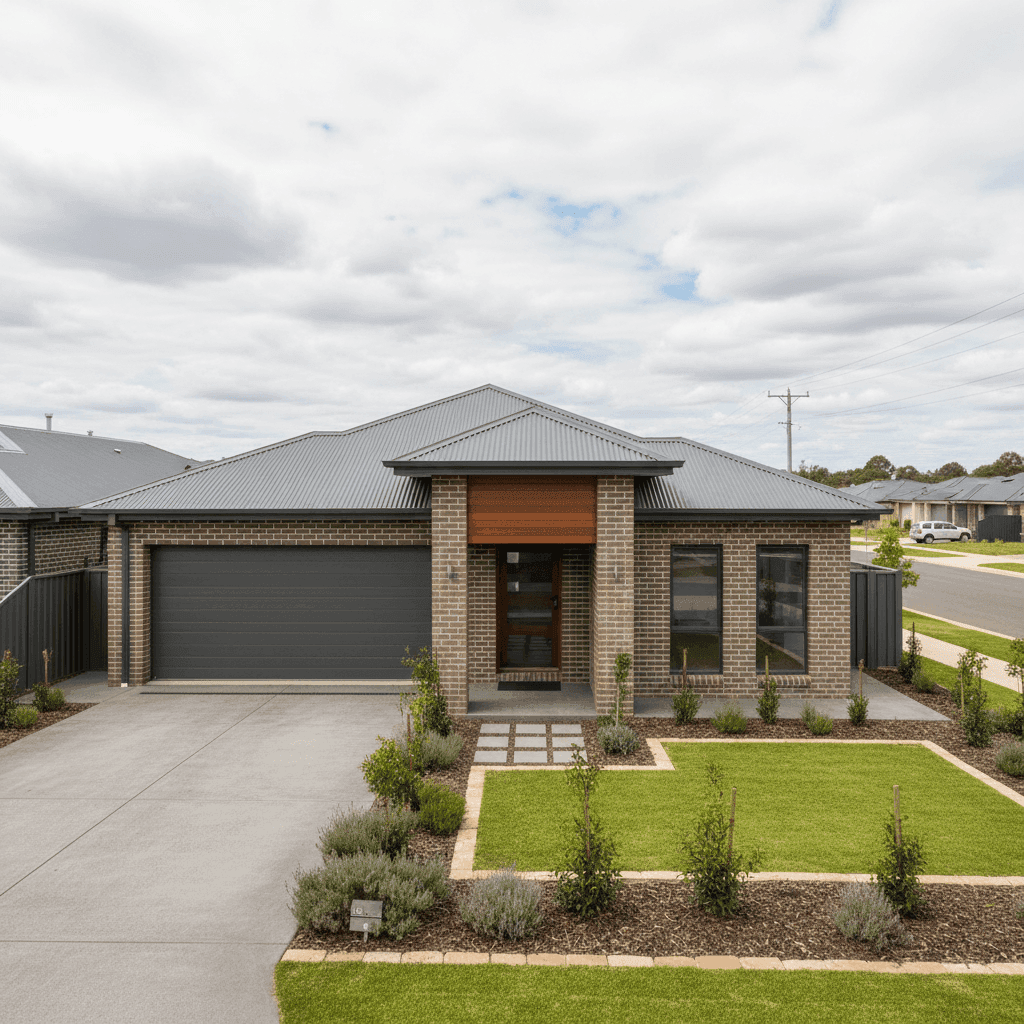
If you own a free standing home in Longwarry, VIC 3816, you're probably wondering whether your home insurance premium is reasonable — or whether you're leaving money on the table. Longwarry is a growing residential suburb in the Cardinia local government area, southeast of Melbourne, and like many outer-suburban communities, insurance costs here can vary quite a bit depending on your property's characteristics and the level of cover you choose. This article breaks down a real quote for a three-bedroom, two-bathroom home in the area, putting the numbers into context so you can make a more informed decision.
---
Is This Quote Fair?
The quote in question is $2,368 per year (or $227/month) for combined home and contents insurance, covering a building sum insured of $650,000 and contents valued at $200,000. Both the building and contents excesses are set at $1,000.
Our price rating for this quote is FAIR — Around Average. That's not a bad result. It means this premium sits comfortably within the typical range for the suburb, without being suspiciously cheap (which can signal underinsurance) or unnecessarily expensive. For a relatively new home built in 2022 with a solid brick veneer and Colorbond roof, this kind of pricing reflects what insurers generally consider a well-maintained, lower-risk property.
A "fair" rating doesn't mean there's no room to improve — it simply means this quote is competitive and reasonable given the property profile and the level of cover selected.
---
How Longwarry Compares
To understand whether this quote represents good value, it helps to look at the broader market. Here's how the $2,368 annual premium stacks up:
| Benchmark | Premium |
|---|---|
| This quote | $2,368/yr |
| Longwarry suburb average | $2,535/yr |
| Longwarry suburb median | $2,214/yr |
| Longwarry 25th percentile | $1,734/yr |
| Longwarry 75th percentile | $2,996/yr |
| Cardinia LGA average | $3,089/yr |
| Victoria state average | $3,000/yr |
| Victoria state median | $2,718/yr |
| National average | $5,347/yr |
| National median | $2,764/yr |
(Based on a sample of 24 quotes for similar properties in the Longwarry area.)
This quote comes in below the suburb average of $2,535 and below the Cardinia LGA average of $3,089 — both positive signs. It's also well under the Victorian state average of $3,000/yr, which is encouraging for a homeowner in this part of the state.
Compared to national figures, the picture looks even better. The national average sits at a hefty $5,347/yr, driven up by high-risk areas in Queensland and Western Australia prone to cyclones, flooding, and bushfires. Longwarry's comparatively modest premiums reflect its relatively benign risk profile as a non-cyclone zone in regional Victoria.
You can explore more detailed pricing data for this postcode at the Longwarry suburb stats page.
---
Property Features That Affect Your Premium
Insurers don't price all homes the same way — a range of property-specific factors feed into the final premium. Here's how this particular home's features are likely influencing the quote:
Construction year (2022): A newly built home is one of the strongest premium-reducing factors. Modern homes are built to current Australian Standards, meaning better structural integrity, updated electrical and plumbing systems, and compliance with contemporary building codes. Insurers reward this with lower risk assessments.
Brick veneer walls: Brick veneer is one of the most commonly insured wall types in Australia and is generally viewed favourably by underwriters. It's durable, fire-resistant, and performs well in most weather conditions — all of which keeps premiums in check.
Steel/Colorbond roof: Colorbond roofing is highly regarded in the insurance industry. It's lightweight, resistant to corrosion, and performs well under high winds and heavy rain. Compared to older tile roofs, which can crack or shift, a Colorbond roof represents a lower claims risk.
Concrete slab foundation: Slab foundations are standard for modern Australian homes and are considered structurally stable. They don't carry the same risks as older stumped or pier-and-beam foundations, which can be more vulnerable to subsidence or moisture damage.
Ducted climate control: While this adds value to the home and is reflected in the building sum insured, it's a fixed system that's covered under the building policy. Insurers factor in the replacement cost of these systems when pricing the building component.
No pool, no solar panels: Both of these features can increase premiums slightly — pools due to liability considerations, and solar panels due to the cost of replacement and potential roof-related claims. Their absence here helps keep the premium lean.
Timber/laminate flooring: Flooring type can influence contents and building claims. Timber and laminate floors are mid-range in replacement cost and don't significantly push premiums up or down compared to, say, polished concrete or high-end stone tiling.
---
Tips for Homeowners in Longwarry
1. Review your sum insured regularly With a building sum insured of $650,000 on a 139 sqm home built in 2022, it's worth checking this figure annually. Construction costs have risen significantly across Victoria in recent years, and being underinsured — even by 10–15% — can leave you seriously out of pocket after a major claim. Use a building cost calculator or speak to a quantity surveyor if you're unsure.
2. Consider your excess strategically Both excesses here are set at $1,000. Opting for a higher excess (say, $2,000 or $2,500) can reduce your annual premium, but only makes sense if you're confident you could cover that amount in an emergency. Conversely, a lower excess suits those who'd prefer predictable out-of-pocket costs at claim time.
3. Bundle building and contents for convenience — but still compare This quote covers both home and contents under a single policy, which simplifies administration and can sometimes offer a bundled discount. That said, it's still worth comparing the combined price against separate policies from different providers to ensure you're getting the best deal on each component.
4. Don't overlook local risks While Longwarry isn't classified as a cyclone risk area, parts of the Cardinia region can experience storm activity, flash flooding, and bushfire risk during summer months. Make sure your policy includes storm and flood cover, and check whether any flood exclusions apply to your specific property — particularly if you're near low-lying land or waterways.
---
Compare Your Options at CoverClub
Whether you're renewing your current policy or shopping around for the first time, it pays to see what else is on the market. CoverClub makes it easy to compare home and contents insurance quotes tailored to your property's specific features and location. Get a quote today and find out whether you could be paying less — or getting more cover for the same price.