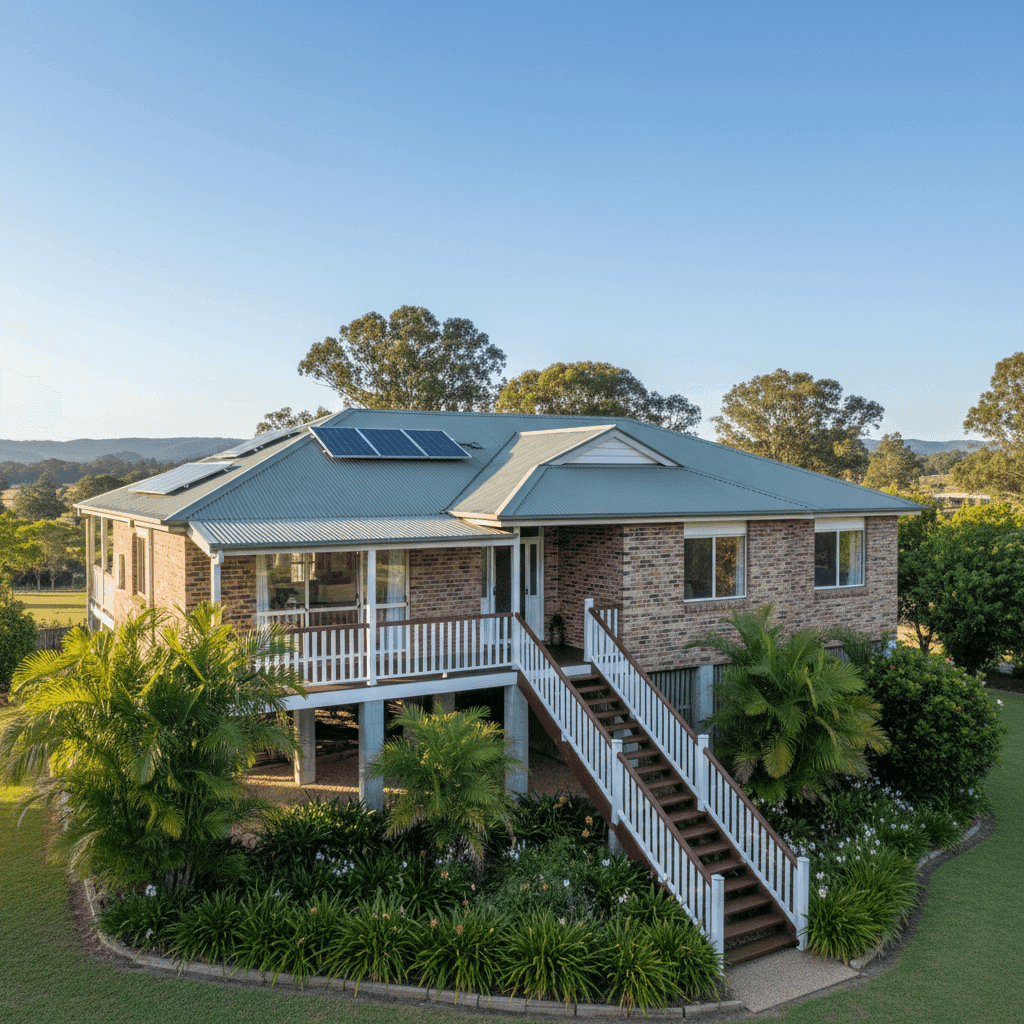
If you own a free standing home in Lower Dyraaba, NSW 2470, you're probably well aware that insurance costs in regional northern New South Wales can be unpredictable. Sitting in the Richmond Valley area — a region that has seen its share of severe weather events in recent years — getting the right home and contents cover at a fair price is more important than ever. This article breaks down a real home insurance quote for a four-bedroom, two-bathroom property in Lower Dyraaba, and puts it in context against local, state, and national benchmarks so you can make an informed decision.
---
Is This Quote Fair?
The quote in question sits at $6,598 per year (or $610 per month) for combined home and contents insurance, covering a building sum insured of $398,000 and contents valued at $50,000. The building excess is $5,000 and the contents excess is $2,000.
Our price rating for this quote is CHEAP — below average — and the data backs that up convincingly.
When you stack this premium against NSW state averages, the picture becomes clear: the average home insurance premium across New South Wales sits at $9,528 per year, meaning this quote comes in roughly $2,930 cheaper than what the typical NSW homeowner is paying. Even against the NSW median of $3,770, the quote is higher — but that's largely a reflection of the elevated risk profile of the Lismore LGA and the comprehensive nature of the cover being provided.
Against national benchmarks, where the average premium is $5,347 per year and the median is $2,764, this quote is above the midpoint — but again, that's entirely consistent with the risk environment in northern NSW. For the level of cover on offer, this is a genuinely competitive result.
---
How Lower Dyraaba Compares
There is no suburb-level pricing data available specifically for Lower Dyraaba at this stage — you can check for updates on the Lower Dyraaba stats page as more data becomes available. However, the LGA-level data tells a striking story.
The Lismore LGA average premium is $18,453 per year — one of the highest in the country, and nearly three times the NSW state average. This reflects the catastrophic flood events that have impacted the broader Richmond Valley and Lismore region, which have fundamentally reshaped how insurers price risk in this part of the world.
| Benchmark | Annual Premium |
|---|---|
| This Quote | $6,598 |
| Lismore LGA Average | $18,453 |
| NSW State Average | $9,528 |
| NSW State Median | $3,770 |
| National Average | $5,347 |
| National Median | $2,764 |
Against the Lismore LGA average, this quote represents a saving of over $11,800 per year — a remarkable outcome. The property's specific characteristics (discussed below) appear to be working strongly in the homeowner's favour, helping to secure a premium well below what many neighbours in the broader LGA are paying.
---
Property Features That Affect Your Premium
Several features of this property play a meaningful role in how insurers have priced the risk — and in this case, most of them are working in the homeowner's favour.
Elevated Foundation
Perhaps the single most impactful feature here is that the property is elevated by at least one metre. In a region where flooding has caused widespread devastation, elevation is a major risk mitigant. Insurers view raised homes significantly more favourably than ground-level dwellings when assessing flood and water damage risk, and this is almost certainly contributing to the below-average premium.
Brick Veneer Walls & Colorbond Roof
The brick veneer external walls offer solid resistance to wind and pest damage, while the steel/Colorbond roof is a popular and well-regarded choice for durability in Australian conditions. Colorbond roofing is resistant to corrosion, fire, and high winds — all relevant considerations in northern NSW. Together, these materials present a relatively low-risk construction profile.
Slab Foundation
A concrete slab foundation is generally viewed positively by insurers as it provides structural stability and reduces the risk of subsidence or pest-related structural damage compared to older timber sub-floor construction.
Solar Panels
The property has solar panels, which are now a standard consideration in home insurance. Most policies will include solar panels as part of the building sum insured, but it's worth confirming with your insurer that the panels and associated inverter equipment are explicitly covered — particularly for storm damage or hail.
Ducted Climate Control
Ducted climate control systems represent a meaningful asset and can be a source of costly claims if damaged. Ensuring your building sum insured adequately accounts for the replacement cost of this system is important.
Timber/Laminate Flooring
While aesthetically appealing, timber and laminate flooring can be vulnerable to water damage. In a flood-prone region, this is worth keeping in mind when reviewing your contents and building cover limits.
No Pool, No Cyclone Risk Zone
The absence of a swimming pool removes a liability and maintenance risk factor, and being outside a designated cyclone risk area keeps the premium from attracting cyclone-specific loadings.
---
Tips for Homeowners in Lower Dyraaba
1. Don't underinsure your building. With a building sum insured of $398,000, it's essential this figure reflects the true cost of rebuilding — not the market value of the property. Construction costs in regional NSW have risen significantly. Use a building cost calculator or speak to a local builder to validate your sum insured annually.
2. Review your flood cover carefully. Given the Lismore LGA's flood history, confirm explicitly whether your policy includes flood cover (as distinct from storm or rainwater damage). Many standard policies treat these differently, and a gap in cover in this region could be financially devastating.
3. Leverage your elevation. If you're shopping around for quotes, make sure you're accurately representing that your home is elevated by at least one metre. This detail can make a substantial difference to your quoted premium and is one of the key reasons this quote came in so competitively.
4. Reassess your contents value. A contents sum insured of $50,000 may be sufficient, but it's easy to underestimate the replacement cost of furniture, appliances, clothing, and electronics. Consider doing a room-by-room audit to ensure you're not left short after a claim.
---
Compare Your Options with CoverClub
Whether you're renewing your existing policy or shopping for the first time, it pays to compare. The data shows that premiums in the Lismore LGA vary enormously — and as this quote demonstrates, the right property features and the right insurer can make a difference of tens of thousands of dollars over time. Get a home insurance quote through CoverClub today and see how your property stacks up. It takes just a few minutes and could save you significantly.