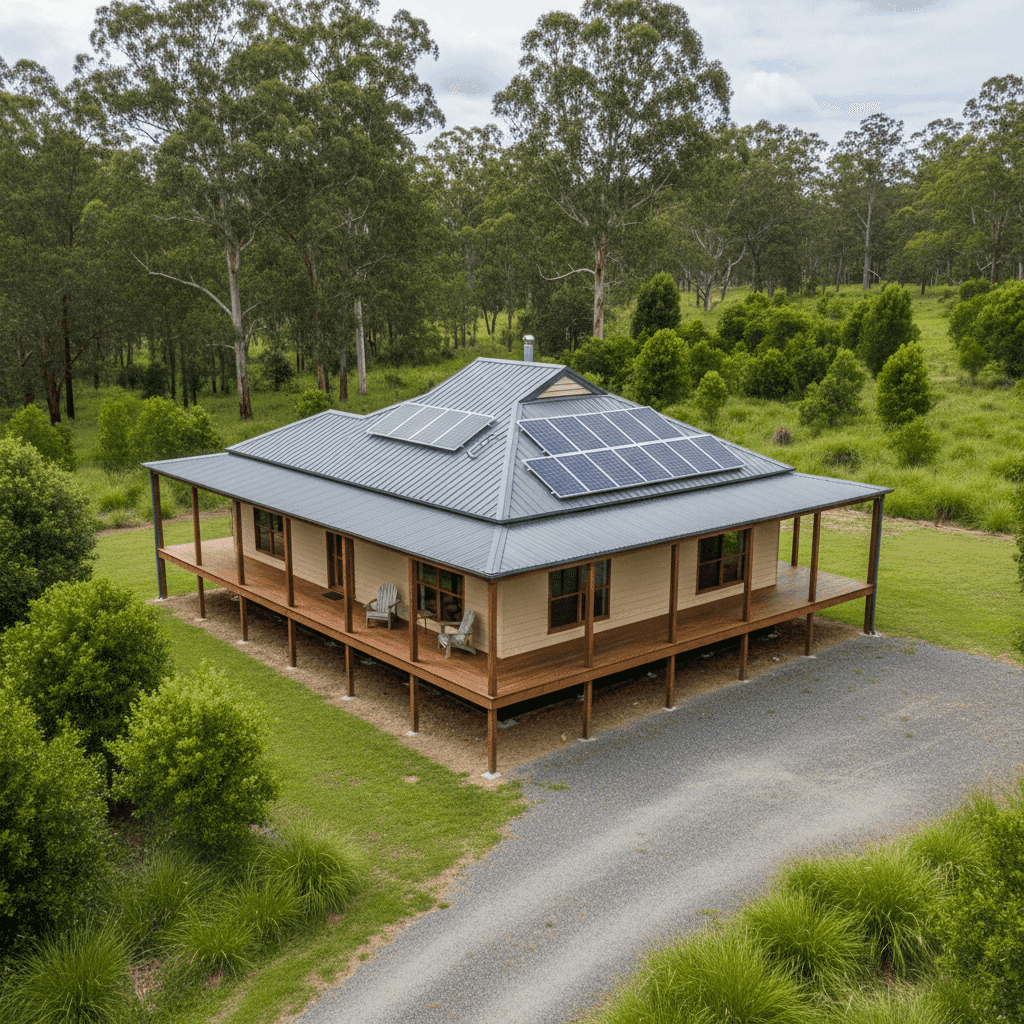
If you own a free standing home in Lower Dyraaba, NSW 2470, you might be wondering whether your building insurance premium is competitive — or whether you're quietly overpaying year after year. This article breaks down a real building-only insurance quote for a three-bedroom, one-bathroom weatherboard home in the area, and puts the numbers in context against local, state, and national benchmarks.
---
Is This Quote Fair?
The quote in question comes in at $1,846 per year (or roughly $186 per month) for building-only cover on a home insured for $300,000, with a $5,000 building excess. Our price rating for this quote is CHEAP — below average — which is genuinely good news for the homeowner.
To put that in perspective: the NSW state average premium sits at a hefty $9,528 per year, and the state median is $3,770. Nationally, the average premium across Australia is $5,347, with a median of $2,764. This quote beats both the state and national medians by a significant margin, suggesting the homeowner is getting solid value for their cover level.
It's worth noting that the $5,000 building excess is on the higher end. A higher excess is one way insurers offer lower upfront premiums — so while the annual cost looks attractive, you'd need to weigh whether you're comfortable covering the first $5,000 out of pocket in the event of a claim.
---
How Lower Dyraaba Compares
Lower Dyraaba sits within the Lismore Local Government Area (LGA), and this is where the data becomes particularly striking. The Lismore LGA carries an average premium of $18,453 per year — nearly ten times the quote analysed here, and almost double the NSW state average. This reflects the elevated flood and storm risk that has historically plagued the broader Lismore region, most notably during the catastrophic 2022 flood events.
Here's a quick snapshot of how the numbers stack up:
| Benchmark | Annual Premium |
|---|---|
| This Quote | $1,846 |
| NSW State Average | $9,528 |
| NSW State Median | $3,770 |
| National Average | $5,347 |
| National Median | $2,764 |
| Lismore LGA Average | $18,453 |
The fact that this particular property is being quoted well below even the national median — despite sitting within a high-risk LGA — is notable. Lower Dyraaba is a small rural locality, and the specific property's characteristics (more on those below) likely play a meaningful role in keeping the premium down. You can explore more localised data on the Lower Dyraaba suburb stats page.
---
Property Features That Affect Your Premium
Several characteristics of this property influence how insurers price the risk:
Weatherboard Timber Walls
Weatherboard wood construction is one of the more significant risk factors in home insurance pricing. Timber-framed and clad homes are considered more susceptible to fire than brick or rendered masonry, and can also be more vulnerable to termite damage and moisture ingress over time. Insurers typically apply a loading to weatherboard homes, which can push premiums higher — making this quote's competitive pricing all the more impressive.
Steel / Colorbond Roof
On the plus side, a Colorbond steel roof is viewed favourably by most insurers. It's durable, fire-resistant, and performs well in high-wind and storm conditions compared to older materials like terracotta tiles or corrugated iron. This is likely contributing positively to the premium outcome.
Stump Foundation
The home sits on stumps, which is common for older properties in regional NSW and Queensland. Stump foundations can be a mixed signal for insurers — they allow good underfloor ventilation and can reduce flood damage in some scenarios, but they may also attract scrutiny around structural stability, particularly in older homes.
Age of the Property (Built 1960)
At over 60 years old, this home falls into the category where insurers pay close attention to the condition of plumbing, electrical wiring, and structural elements. Older homes can carry higher rebuild costs and a greater likelihood of maintenance-related claims. It's important to ensure the $300,000 sum insured accurately reflects current rebuild costs, including demolition and debris removal — not just the market value of the property.
Solar Panels
The presence of solar panels adds a modest layer of complexity for insurers. Panels need to be covered for storm, hail, and fire damage, and their installation can affect roof warranty and repair costs. Most standard building policies will include solar panels as part of the building sum insured, but it's worth confirming this with your insurer explicitly.
No Pool, No Ducted Climate Control
The absence of a pool removes a common liability and maintenance risk, while no ducted climate control means fewer mechanical systems that could fail and cause water or structural damage. Both factors contribute to a cleaner risk profile.
---
Tips for Homeowners in Lower Dyraaba
1. Review Your Sum Insured Annually
Construction costs have risen sharply across regional NSW in recent years. A $300,000 sum insured may have been adequate when the policy was first taken out, but it's worth using an online building calculator or speaking with a builder to confirm it still reflects the true cost to rebuild your home from scratch — including site clearance and professional fees.
2. Understand What Your Excess Means in Practice
A $5,000 building excess is a meaningful financial commitment. Before renewing, consider whether you could comfortably absorb that cost in the event of a storm, fire, or accidental damage claim. If not, it may be worth requesting a quote with a lower excess — even if it means a slightly higher annual premium.
3. Maintain Your Weatherboard Cladding
Insurers can reduce or deny claims if damage is attributed to poor maintenance. Regularly inspect and repaint your weatherboard cladding, check for signs of rot or termite activity, and address any issues promptly. Keeping records of maintenance work can also support your position if a claim is ever disputed.
4. Confirm Solar Panels Are Covered
Contact your insurer to confirm that your solar panel system is explicitly included in your building sum insured. Ask whether damage to panels from hail, storm, or fire is covered, and whether any exclusions apply to the inverter or mounting hardware. Given the replacement cost of a typical solar system, this is a detail worth getting in writing.
---
Compare Your Options with CoverClub
Whether you're renewing your current policy or shopping around for the first time, it pays to compare. The insurance market in regional NSW — and particularly within the Lismore LGA — can vary enormously between providers. Get a building insurance quote through CoverClub to see how your premium stacks up and ensure you're not leaving money on the table.