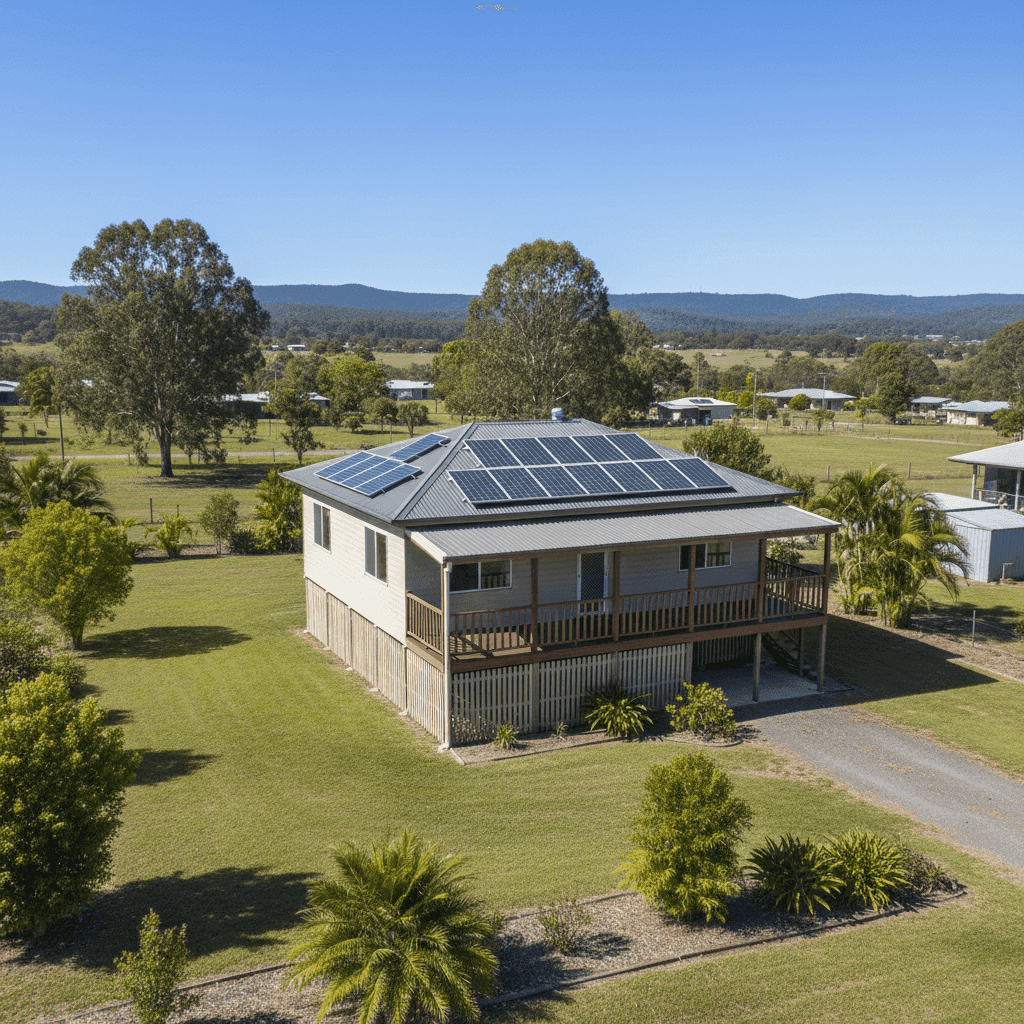
If you own a free standing home in Lower Mount Walker, QLD 4340, you already know the appeal — a quiet semi-rural lifestyle in the Scenic Rim, not far from Ipswich and the broader South East Queensland corridor. But when it comes to protecting your property, understanding whether you're paying a fair price for home insurance can be just as important as finding the right cover. This article breaks down a real building insurance quote for a 2-bedroom home in the area, compares it against local, state, and national benchmarks, and highlights the property features most likely to influence what you pay.
---
Is This Quote Fair?
The quote in question is for building-only cover on a 2-bedroom, 1-bathroom free standing home, insured for $350,000, with an annual premium of $2,162 (or roughly $200/month) and a building excess of $2,000.
Our price rating for this quote is CHEAP — below average — and the numbers back that up clearly.
At $2,162 per year, this premium sits well below every relevant benchmark:
| Benchmark | Premium |
|---|---|
| This quote | $2,162/yr |
| National average | $2,965/yr |
| National median | $2,716/yr |
| QLD average | $4,547/yr |
| QLD median | $3,931/yr |
| Scenic Rim LGA average | $4,020/yr |
Compared to the Queensland state average of $4,547/yr, this homeowner is paying 52% less than the typical Queenslander. Even against the national average of $2,965/yr, the saving is meaningful — around $800 per year. For context on how Lower Mount Walker sits within the broader Queensland pricing landscape, you can explore QLD home insurance statistics or the national overview.
In short: this is a genuinely competitive quote, and for a homeowner in this part of the Scenic Rim, it represents solid value.
---
How Lower Mount Walker Compares
Queensland is one of the most expensive states in the country for home insurance, largely driven by extreme weather exposure — cyclones in the north, flooding in river catchments, and severe storms across the southeast. The state average of $4,547/yr is significantly higher than the national average of $2,965/yr, reflecting that elevated risk environment.
The Scenic Rim LGA average of $4,020/yr is somewhat lower than the broader QLD state figure, but still nearly double the premium on this particular quote. That gap is worth paying attention to — it suggests this specific property has characteristics that insurers view favourably, even within a region that can attract higher-than-average premiums.
You can explore localised data for this postcode at the Lower Mount Walker suburb stats page, and compare it against the national picture to get a fuller sense of where this quote lands.
---
Property Features That Affect Your Premium
Several characteristics of this home are likely contributing to the below-average premium. Here's what stands out:
Elevated Foundation (Stumps)
The home is elevated by at least one metre on stumps — a classic Queensland construction style. While elevated homes can be more expensive to rebuild, the key benefit here is flood resilience. Homes that sit above ground level are less likely to sustain significant inundation damage during heavy rain events, which insurers typically reward with lower flood-related loadings.
Steel/Colorbond Roof
Colorbond roofing is highly regarded by insurers for its durability and fire resistance. It's less prone to storm damage than older tile roofs and holds up well against hail. This is a meaningful positive factor in a region that can experience severe summer storms.
Hardiplank/Hardiflex Walls
Fibre cement cladding like Hardiplank is considered a low-to-medium risk wall material. It's non-combustible, reasonably impact-resistant, and doesn't rot or warp like timber weatherboards. Insurers generally treat it more favourably than older materials such as asbestos sheeting or weathered timber.
Timber/Laminate Flooring
Timber and laminate floors can be a cost consideration in claims — they're not as cheap to replace as carpet — but they're standard in elevated Queensland homes and unlikely to significantly inflate the premium on their own.
Solar Panels
The presence of solar panels adds a modest amount to the insured value of the structure, but modern insurers are increasingly accustomed to quoting homes with rooftop solar. It's worth confirming with your insurer that solar panels and associated inverter equipment are explicitly covered under your building policy.
Ducted Climate Control
Ducted air conditioning is a fixed building asset and should be covered under a building policy. Its inclusion in the sum insured is appropriate and generally doesn't cause a significant premium loading on its own.
No Pool, No Cyclone Risk Zone
The absence of a swimming pool removes a common source of liability and repair claims. And while Lower Mount Walker sits in Queensland, it falls outside designated cyclone risk zones — a meaningful factor that keeps the premium lower than it might be for comparable properties further north.
---
Tips for Homeowners in Lower Mount Walker
1. Review your sum insured regularly Building costs in regional Queensland have risen sharply in recent years. A sum insured of $350,000 for a 214 sqm home is worth revisiting annually — make sure it reflects current rebuild costs, not just the original purchase price. Underinsurance is one of the most common and costly mistakes homeowners make.
2. Confirm solar panels are explicitly covered Not all building policies automatically extend to rooftop solar systems. Ask your insurer to confirm that both the panels and the inverter are included in your cover — and check whether there are any exclusions around storm or hail damage to the array.
3. Document your home's elevated status If your property floods or sustains storm damage, having clear documentation that your home is elevated on stumps can support a faster, smoother claims process. Keep photos and any council records that confirm the foundation type and floor height.
4. Consider a higher excess to reduce premiums further This quote already carries a $2,000 building excess, which is on the higher end of the standard range. If your financial position allows you to absorb a larger out-of-pocket cost in the event of a claim, some insurers will offer additional premium reductions for excess levels above $2,000 — though this trade-off should be weighed carefully.
---
Compare Your Own Quote
Whether you're a first-time buyer in the Scenic Rim or a long-term Lower Mount Walker local, it always pays to compare. Premiums vary significantly between insurers — even for identical properties — and a below-average quote today might not remain competitive at renewal. Get a home insurance quote at CoverClub to see how your current cover stacks up, and make sure you're not leaving money on the table.