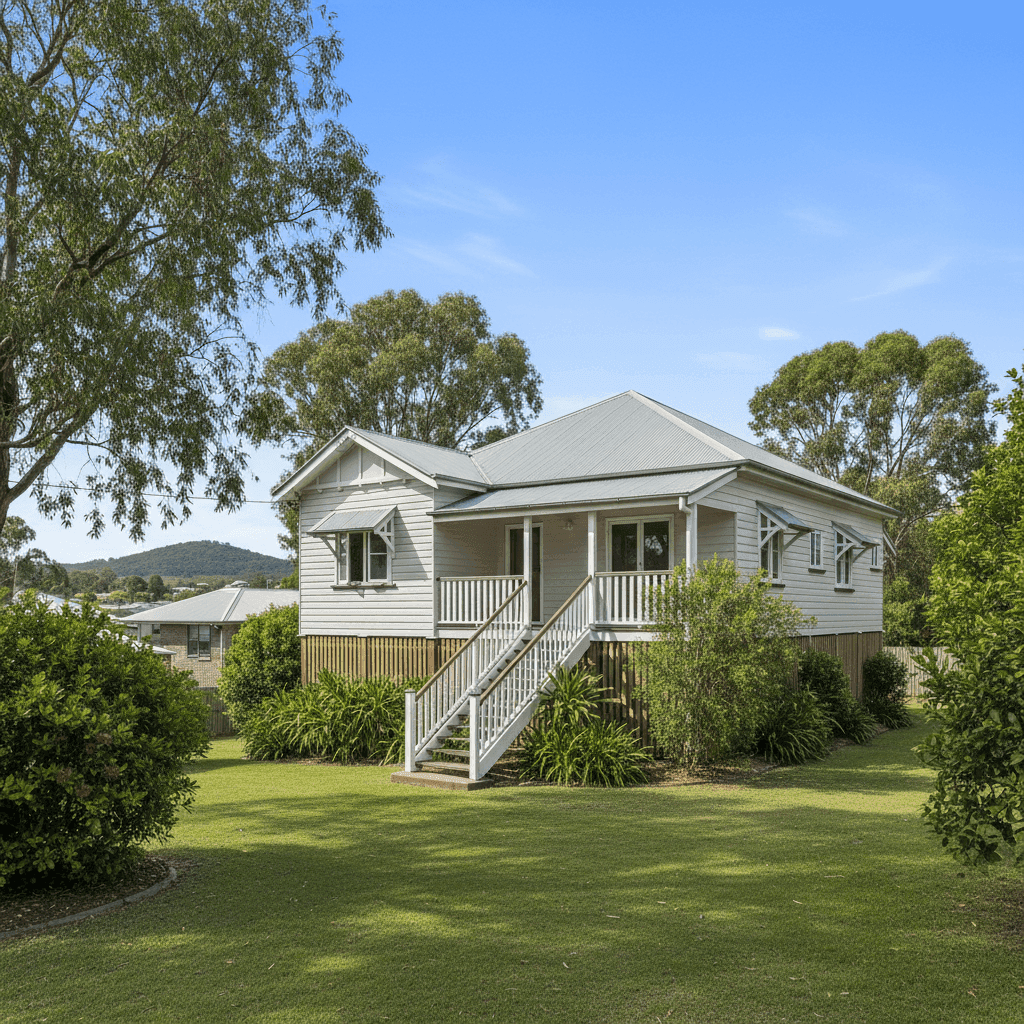
If you own a free standing home in Lowood, QLD 4311, you're likely no stranger to the challenges of finding affordable home insurance in South East Queensland. Situated in the Lockyer Valley, Lowood sits in a region that has experienced significant flood and storm events over the years — and insurers price their policies accordingly. In this article, we break down a real home and contents insurance quote for a 3-bedroom weatherboard home in the area, compare it against local, state and national benchmarks, and share practical tips to help you get better value on your cover.
---
Is This Quote Fair?
The quote in question comes in at $5,612 per year (or $549/month) for combined home and contents insurance, covering a building sum insured of $501,000 and contents valued at $100,000, with a building excess of $2,000 and a contents excess of $1,000.
Our price rating for this quote is EXPENSIVE — Above Average.
To put that in context, based on 87 quotes collected for Lowood (4311), the suburb average premium sits at $2,729/year, with a median of $2,313/year. This quote is more than double the suburb median — a significant gap that warrants a closer look.
That said, it's worth noting that the suburb figures include a wide spread of properties and cover types, and several factors specific to this property — particularly its construction materials and elevated stumped foundation — can push premiums upward. At the 75th percentile for Lowood, premiums reach $3,670/year, meaning this quote still sits well above even the pricier end of the local market.
Compared to the Queensland state average of $4,547/year, this quote is roughly 23% above the state average and nearly double the national average of $2,965/year. While Queensland premiums are generally elevated due to the state's exposure to extreme weather, this particular quote is on the higher end even by Queensland standards.
---
How Lowood Compares
Here's a snapshot of how premiums stack up across different benchmarks:
| Benchmark | Average Premium | Median Premium |
|---|---|---|
| Lowood (4311) | $2,729/yr | $2,313/yr |
| Lockyer Valley LGA | $4,076/yr | — |
| Queensland | $4,547/yr | $3,931/yr |
| National | $2,965/yr | $2,716/yr |
A few things stand out here. First, Lowood's suburb averages are actually lower than both the LGA and state averages, which may reflect a mix of property types and cover levels in the local sample. The Lockyer Valley LGA average of $4,076/year is notably higher than the suburb figure, suggesting that some postcodes within the region attract significantly steeper premiums — likely those with greater flood exposure.
Queensland as a whole remains one of the most expensive states for home insurance in Australia, driven by cyclone risk in the north, flooding in inland and coastal areas, and severe storm events across the south-east. Even though Lowood is not classified as a cyclone risk area, its location in the Lockyer Valley — a region that experienced devastating floods in 2011 and again in 2022 — means flood risk is a real consideration for insurers.
For a deeper dive into how premiums vary across Queensland, visit our QLD insurance statistics page, or compare against national benchmarks here.
---
Property Features That Affect Your Premium
Several characteristics of this particular property are likely contributing to its above-average premium. Understanding these factors can help you have more informed conversations with insurers.
Weatherboard Timber Walls
Weatherboard construction is common in older Queensland homes and has a certain charm, but from an insurer's perspective, timber external walls carry a higher risk of fire damage and general deterioration compared to brick or rendered masonry. Premiums for weatherboard homes are typically higher as a result.
Construction Year: 1985
Homes built in the mid-1980s may not meet current building standards, particularly around cyclone and flood resilience. Older properties can also have ageing electrical systems, plumbing, and roofing materials that increase the likelihood of a claim. Insurers factor the age of a property into their risk assessment.
Elevated on Stumps
Being elevated by at least one metre on stumps is a double-edged sword. On the positive side, elevation can reduce the risk of inundation during flood events — a meaningful advantage in the Lockyer Valley. However, stumped foundations can also be more susceptible to subsidence, pest damage (particularly termites), and structural movement over time, which some insurers price into their premiums.
Steel/Colorbond Roof
This is generally a positive factor. Colorbond roofing is durable, fire-resistant, and performs well in high-wind conditions. It's one of the more insurer-friendly roofing materials available in Australia.
Timber and Laminate Flooring
Timber flooring in an elevated home can be vulnerable to moisture and flooding. While the elevation helps, insurers may still factor in the higher replacement cost of timber floors compared to concrete or tile.
Sum Insured: $501,000
The building sum insured is a significant driver of the overall premium. At $501,000, this is a reasonable figure for a 160 sqm home in regional Queensland, particularly given the cost of rebuilding with timber materials and elevated construction. Ensuring your sum insured accurately reflects true rebuild costs — not market value — is critical to avoiding both underinsurance and unnecessary over-coverage.
---
Tips for Homeowners in Lowood
1. Shop Around and Compare Multiple Quotes
The most effective way to reduce your premium is to compare quotes from multiple insurers. Rates for the same property can vary dramatically between providers. Use CoverClub's free quote comparison tool to see a range of options side by side without the legwork.
2. Review Your Sum Insured Carefully
Make sure your building sum insured reflects the actual cost to rebuild your home — not what you paid for it or what it's worth on the market. Overinsuring can inflate your premium unnecessarily, while underinsuring leaves you exposed. Consider using a building cost calculator or consulting a quantity surveyor for an accurate figure.
3. Increase Your Excess Strategically
Opting for a higher excess — say, $2,500 or $3,000 on your building cover — can meaningfully reduce your annual premium. This strategy works best if you have the savings to cover the excess in the event of a claim and you're not making frequent small claims.
4. Ask About Flood Cover Separately
In the Lockyer Valley, flood cover is a critical component of any home insurance policy. Some insurers include it automatically; others offer it as an optional add-on or exclude it entirely. Make sure you understand exactly what your policy covers and doesn't cover, particularly around riverine flooding versus stormwater inundation — the distinction matters enormously in this region.
---
Ready to Find a Better Deal?
Whether you're renewing your policy or shopping for the first time, comparing quotes is the single best thing you can do to make sure you're not overpaying. Head to CoverClub to get a tailored home and contents insurance quote for your Lowood property — it's free, fast, and could save you hundreds of dollars a year. You can also explore local premium data for Lowood (4311) to see exactly how your quote stacks up against your neighbours.