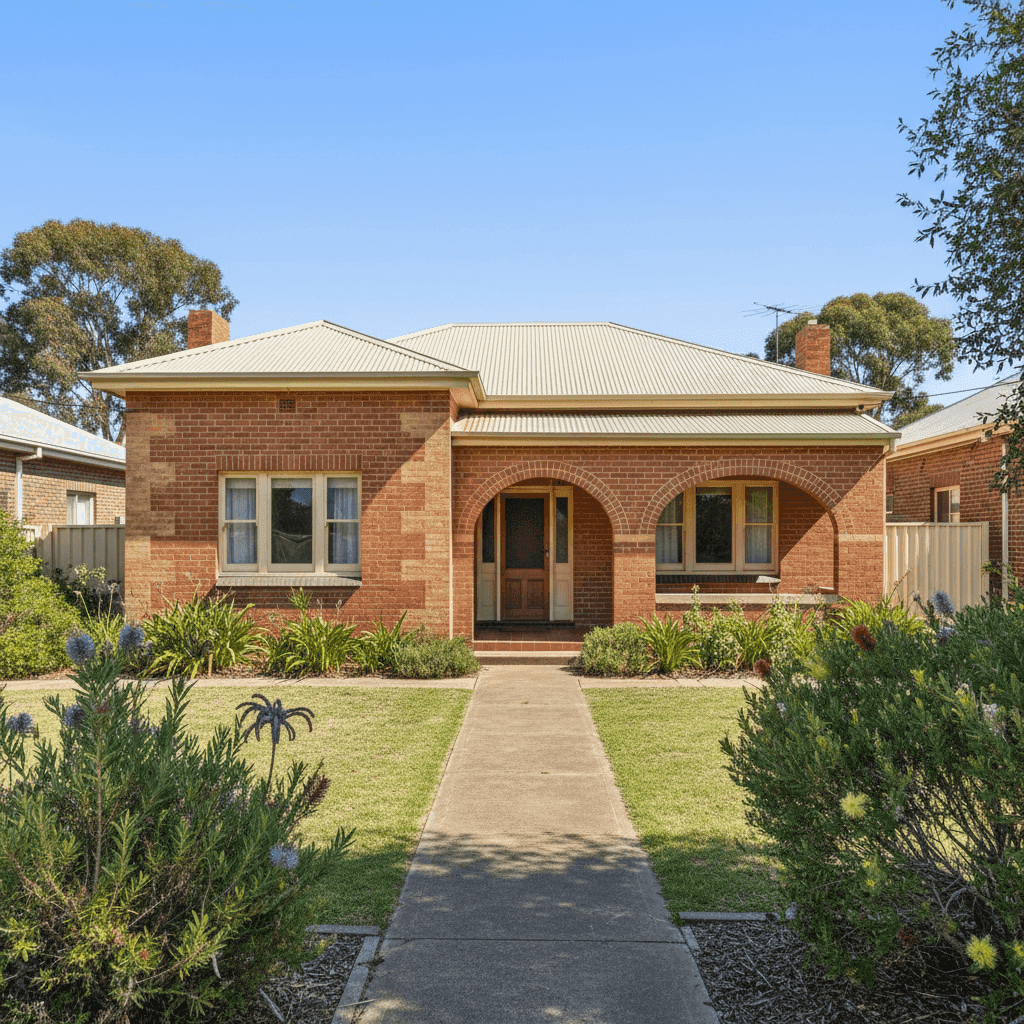
If you own a free standing home in Loxton, SA 5333, you're probably curious about whether you're paying a fair price for building insurance — or leaving money on the table. This article breaks down a real building-only insurance quote for a four-bedroom home in Loxton, benchmarks it against local, state, and national data, and offers practical tips to help you make smarter insurance decisions.
---
Is This Quote Fair?
The short answer: yes — this is an exceptionally competitive quote.
The annual premium for this property comes in at $893 per year (or roughly $83 per month), which earns a "Cheap" price rating — meaning it sits well below the suburb average. To put that in perspective, the average premium for comparable homes in Loxton is $1,840 per year, and the suburb median sits at $1,597 per year. This quote is less than half the local average.
Even at the 25th percentile — meaning only one in four Loxton quotes are cheaper — the going rate is $1,397 per year. This quote undercuts even that figure significantly, placing it firmly at the budget-friendly end of the market.
For a building sum insured of $700,000 with a $2,000 building excess, this represents strong value. The higher excess is one factor that can bring premiums down, and it's worth keeping in mind when assessing the overall cost of cover.
---
How Loxton Compares
To fully appreciate this quote, it helps to zoom out and look at the broader pricing landscape.
| Benchmark | Average Premium |
|---|---|
| Loxton (SA 5333) | $1,840 / yr |
| South Australia | $1,933 / yr |
| National | $2,965 / yr |
| LGA (Berri Barmera) | $2,130 / yr |
| This Quote | $893 / yr |
A few things stand out here. First, Loxton is already a relatively affordable market compared to the South Australian state average of $1,933 and the national average of $2,965 — a gap that likely reflects the region's lower risk profile compared to coastal or cyclone-prone areas. The LGA of Berri Barmera averages $2,130 per year, suggesting some variation even within the broader region.
Second, this particular quote sits dramatically below every benchmark — roughly 51% below the suburb average and 70% below the national average. That's a meaningful saving, and it's the kind of difference that compounds over years of homeownership.
It's worth noting the suburb data is based on a sample of 38 quotes, which provides a reasonable local reference point, though premiums can vary depending on the insurer, the specific property features, and the level of cover selected.
---
Property Features That Affect Your Premium
Several characteristics of this property likely contribute to its competitive premium. Here's how the key features play out from an insurance risk perspective:
Double Brick Walls
Double brick construction is generally viewed favourably by insurers. It's highly durable, fire-resistant, and less susceptible to storm and wind damage compared to timber or clad weatherboard homes. For a home built in 1939, double brick also signals solid, enduring construction that has stood the test of time — something underwriters tend to reward.
Steel / Colorbond Roof
A Colorbond steel roof is a popular choice in regional South Australia for good reason. It's lightweight, durable, and performs well in extreme heat — a relevant consideration in the Riverland region, where summers can be harsh. Colorbond roofs are also low-maintenance and typically attract lower premiums than older tile or fibrous cement alternatives.
Slab Foundation
A concrete slab foundation is a stable, low-risk base type from an insurance standpoint. It's less prone to movement or subsidence compared to stumped or pier foundations, and it reduces the risk of pest intrusion — both factors that can influence underwriting decisions.
Timber / Laminate Flooring
Timber and laminate floors can be a mild risk factor in some contexts (particularly flood-prone areas), but in Loxton's relatively dry inland climate, this is unlikely to significantly impact premiums.
Above Average Fittings
The property's above-average fittings quality is reflected in the $700,000 sum insured — a higher rebuild cost than a basic equivalent. Better fittings mean higher replacement costs, which typically pushes premiums up slightly. Despite this, the overall premium remains very competitive.
No Pool, No Solar, No Cyclone Risk
The absence of a pool, solar panels, and cyclone risk all simplify the risk profile. Pools add liability considerations, solar panels increase rebuild complexity, and cyclone zones command significant premium loadings. None of these apply here, which helps keep costs down.
---
Tips for Homeowners in Loxton
Whether you're reviewing an existing policy or shopping for new cover, here are four practical steps worth taking:
- Review your sum insured annually. Construction costs have risen sharply across Australia in recent years. A $700,000 sum insured may be appropriate today, but it's worth recalculating your estimated rebuild cost each year — especially if you've completed renovations or if local labour and materials costs have shifted.
- Understand your excess trade-off. This policy carries a $2,000 building excess, which is on the higher side. A higher excess lowers your premium but means more out-of-pocket costs if you need to claim. Make sure your excess is set at a level you could comfortably cover in an emergency.
- Consider contents cover. This quote covers the building only. If you haven't separately insured your contents, it's worth getting a combined building and contents quote to compare. Furniture, appliances, clothing, and valuables can add up to a significant replacement cost.
- Compare quotes regularly. Even if your current premium is competitive, insurers reprice policies regularly and the market shifts. Running a comparison every one to two years — especially at renewal time — ensures you're not paying more than necessary as your circumstances or the market changes.
---
Compare Your Home Insurance Options
Curious how your own home insurance stacks up? CoverClub makes it easy to benchmark your premium against real quotes from across your suburb, state, and nationally. Whether you're in Loxton or anywhere else in Australia, you can get a quote and compare in minutes — no obligation, no jargon. Start comparing today and make sure you're getting the cover you need at a price that makes sense.