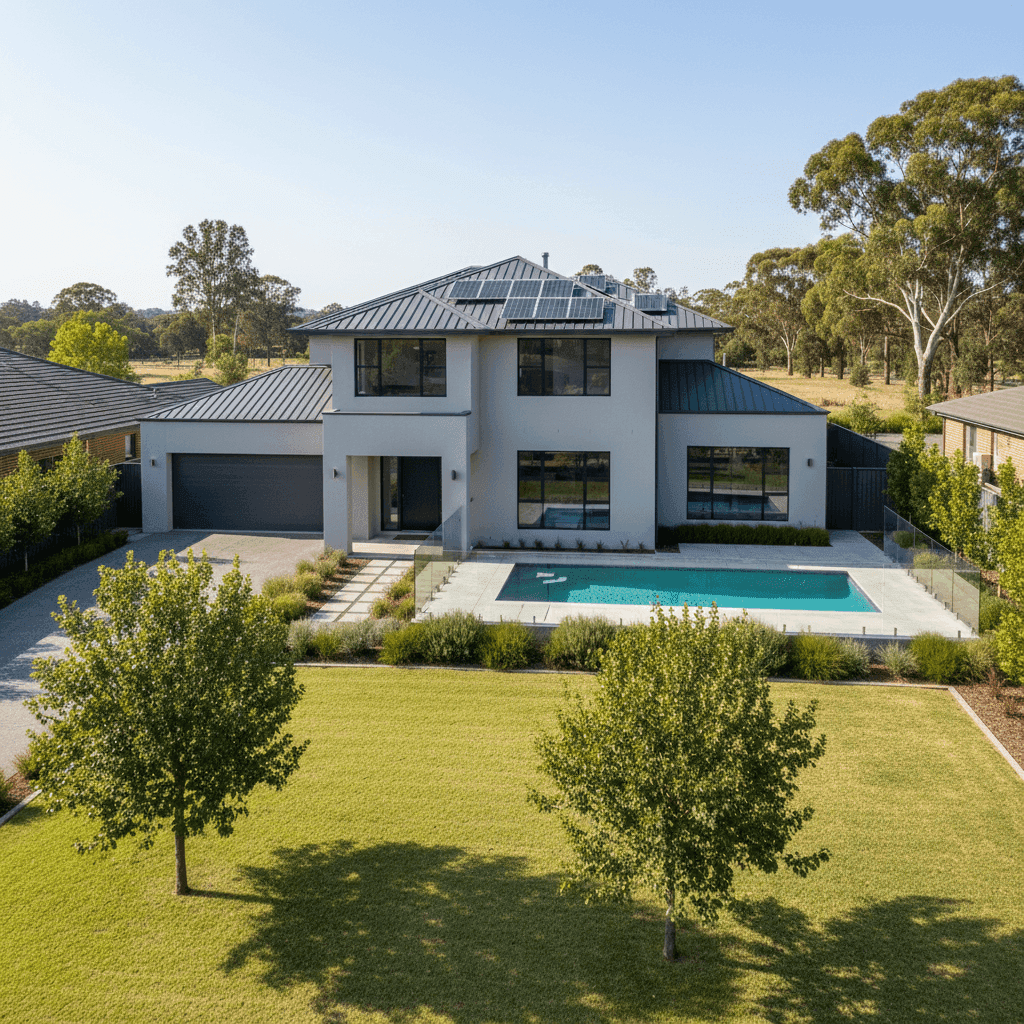
If you own a free standing home in Lysterfield, VIC 3156, you've likely noticed that home insurance can be a significant line item in your annual budget — especially for a larger, well-appointed property. This article breaks down a real home and contents insurance quote for a five-bedroom home in the suburb, benchmarks it against local, state, and national data, and offers practical guidance for homeowners looking to make the most of their cover.
---
Is This Quote Fair?
The quote in question comes in at $3,101 per year (or around $290 per month) for combined home and contents insurance, with a building sum insured of $1,437,000 and contents valued at $100,000. Both the building and contents excess are set at $1,000.
Our price rating for this quote is FAIR — Around Average, and the data backs that up. Compared to the suburb average of $3,571/yr for Lysterfield, this quote sits comfortably below the mean, suggesting the policyholder is not overpaying relative to their neighbours. However, it does come in above the suburb median of $2,811/yr, which means roughly half of comparable quotes in the area are cheaper.
The "fair" rating reflects a quote that is competitive without being exceptional — there may be room to improve, but there's no immediate cause for alarm. The $1,437,000 building sum insured is substantial, which naturally pushes the premium upward compared to properties with lower rebuild costs.
---
How Lysterfield Compares
Understanding where your premium sits in a broader context is key to evaluating value. Here's how this quote stacks up:
| Benchmark | Premium |
|---|---|
| This quote | $3,101/yr |
| Lysterfield suburb average | $3,571/yr |
| Lysterfield suburb median | $2,811/yr |
| Lysterfield 25th percentile | $1,854/yr |
| Lysterfield 75th percentile | $4,102/yr |
| VIC state average | $3,000/yr |
| VIC state median | $2,718/yr |
| National average | $5,347/yr |
| National median | $2,764/yr |
| LGA (Casey) average | $2,142/yr |
A few things stand out here. First, this quote is below the Lysterfield suburb average and very close to the Victorian state average of $3,000/yr — a reassuring sign. Second, the national average of $5,347/yr is dramatically higher, largely driven by premiums in cyclone-prone and flood-affected regions of Queensland, Western Australia, and the Northern Territory. Lysterfield's position in Melbourne's south-eastern suburbs keeps it well clear of those elevated risk categories.
It's also worth noting that the LGA (Casey) average sits at just $2,142/yr — significantly lower than this quote. This gap is likely explained by the size and value of this particular property; a 363 sqm home with a $1.4M+ building sum insured is considerably larger than the Casey average, and the premium reflects that.
With 49 quotes in the suburb sample, there's a reasonable dataset to draw from, and the wide spread between the 25th percentile ($1,854) and 75th percentile ($4,102) shows just how much individual property characteristics can move the needle.
---
Property Features That Affect Your Premium
Several features of this property have a meaningful influence on what insurers charge. Here's a breakdown of the key factors at play:
Size and Rebuild Cost
At 363 sqm with a $1,437,000 building sum insured, this is a large, high-value home. Rebuild costs are the single biggest driver of building insurance premiums — the more it would cost to reconstruct your home from scratch, the higher your premium will be.
Hebel External Walls
Hebel (autoclaved aerated concrete panels) is increasingly popular in new Australian builds for its thermal efficiency and fire resistance. From an insurance perspective, Hebel is generally viewed favourably — it performs well in bushfire conditions and is non-combustible, which can positively influence risk assessments.
Steel / Colorbond Roof
A Colorbond steel roof is one of the most insurer-friendly roofing materials available. It's durable, fire-resistant, and performs well in high-wind events. Compared to older terracotta or timber-framed roofing, a Colorbond roof is unlikely to attract any loading on your premium.
Slab Foundation
A concrete slab foundation is the standard for modern Australian construction and presents minimal risk to insurers. It reduces the likelihood of subsidence-related claims and is well-suited to the soil conditions found across much of Victoria.
Pool and Solar Panels
The presence of a swimming pool adds liability exposure — insurers factor in the risk of accidents on your property. Solar panels, while an asset, also add to the overall replacement value of the home and may require specific cover to ensure they're adequately protected under your policy.
Ducted Climate Control
Ducted systems are expensive to repair or replace and are typically included in the building sum insured. Ensuring your sum insured accounts for the full cost of reinstating this system is important when setting your coverage level.
New Build (2023) with Above-Average Fittings
A home built in 2023 benefits from modern construction standards, which generally means better structural integrity and compliance with current building codes. Above-average fittings — think stone benchtops, quality appliances, and premium fixtures — increase the contents and building value, and should be reflected accurately in both your building sum insured and contents cover.
---
Tips for Homeowners in Lysterfield
1. Review Your Building Sum Insured Annually
Construction costs in Victoria have risen sharply in recent years. A sum insured that was accurate at settlement may no longer reflect the true cost to rebuild. Use a building cost calculator or speak with a quantity surveyor to verify your figure — underinsurance is one of the most common and costly mistakes homeowners make.
2. Check What Your Policy Says About Solar Panels and Pools
Not all policies treat solar panels and pools the same way. Some insurers include them automatically in the building cover; others require you to list them separately or may apply exclusions. Read the Product Disclosure Statement (PDS) carefully and confirm with your insurer that these features are fully covered.
3. Compare Quotes Before Renewal
Loyalty doesn't always pay in insurance. With a "fair" rating rather than an outright "great" one, there may be better value available in the market. Get a new quote at CoverClub before your renewal date to see if a competing insurer can offer equivalent cover at a lower price.
4. Consider Your Excess Level
This policy carries a $1,000 excess on both building and contents. Opting for a higher excess — say, $2,000 — can reduce your annual premium meaningfully. If you have a solid emergency fund and are unlikely to make small claims, a higher excess is often a smart trade-off.
---
Find a Better Deal with CoverClub
Whether you're renewing your policy or buying cover for the first time, comparing quotes is the single most effective way to ensure you're not overpaying. CoverClub makes it easy to benchmark your premium against real data from your suburb and across Australia. Start your free quote comparison today and see how much you could save on your Lysterfield home insurance.