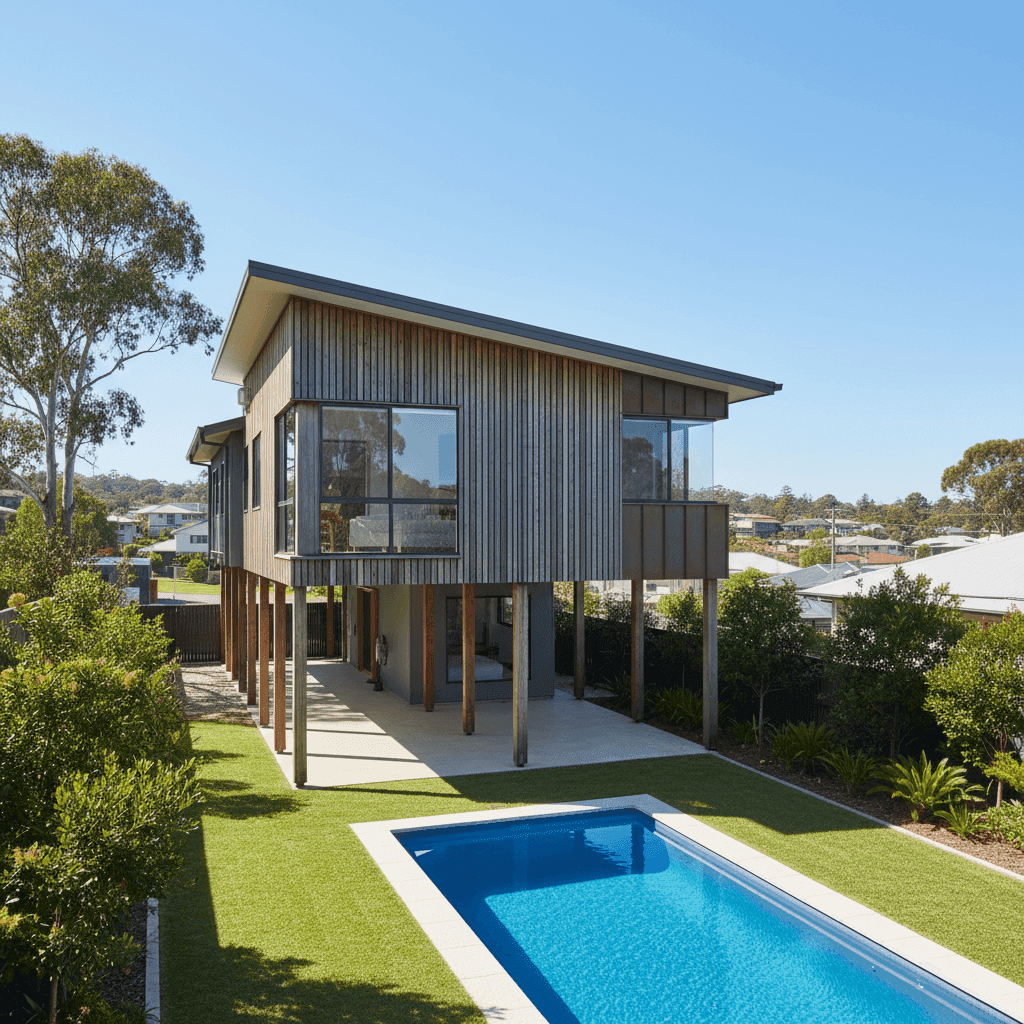
If you own a free standing home in Macksville, NSW 2447, you already know this Mid North Coast town offers a relaxed lifestyle along the Nambucca River — but that doesn't mean your home insurance should be anything but closely scrutinised. This article breaks down a real home and contents insurance quote for a five-bedroom property in the area, compares it against local, state, and national benchmarks, and offers practical tips to help you get better value on your cover.
---
Is This Quote Fair?
The quote in question comes in at $9,626 per year (or $923 per month) for combined home and contents cover, with a building sum insured of $1,499,000 and contents valued at $252,000. Both the building and contents excess are set at $1,000.
Our price rating for this quote is Expensive (Above Average) — and the data backs that up.
To put it in perspective, the suburb average for Macksville sits at just $2,917 per year, with a median of $2,984. This quote is more than three times the local average. Even at the 75th percentile — meaning 75% of Macksville quotes are cheaper — premiums only reach $3,449 per year.
That said, context matters enormously here. This is a large, five-bedroom, three-bathroom home with a high building sum insured of nearly $1.5 million. The contents cover alone adds $252,000 to the equation. When you factor in the property's size, age, construction type, and features like a swimming pool and ducted climate control, a higher-than-average premium becomes more understandable — though it's still worth shopping around to ensure you're not overpaying.
---
How Macksville Compares
Here's how this quote stacks up across different comparison points:
| Benchmark | Annual Premium |
|---|---|
| This Quote | $9,626 |
| Macksville Suburb Average | $2,917 |
| Macksville Suburb Median | $2,984 |
| Macksville 75th Percentile | $3,449 |
| Nambucca Valley LGA Average | $5,223 |
| NSW State Average | $9,528 |
| NSW State Median | $3,770 |
| National Average | $5,347 |
| National Median | $2,764 |
Interestingly, this quote is almost exactly in line with the [NSW state average of $9,528](https://coverclub.com.au/stats/NSW), which is heavily influenced by high-value properties and complex risk profiles across the state. It also sits well above the [national average of $5,347](https://coverclub.com.au/stats/national), though again, the national figure spans a huge range of property types and values.
The Nambucca Valley LGA average of $5,223 provides perhaps the most relevant regional comparison — and this quote is still nearly double that figure. The 50-quote sample from Macksville itself skews toward more modestly valued properties, which explains the lower suburb-level averages.
The bottom line: for a property of this size and value, the quote is not wildly out of step with what NSW insurers typically charge — but there's still meaningful room to compare and potentially save.
---
Property Features That Affect Your Premium
Several characteristics of this property are likely pushing the premium higher than a typical Macksville home. Understanding these factors can help you have more informed conversations with insurers.
Age and Construction (Built 1979) Homes built in the late 1970s often attract higher premiums due to older electrical wiring, plumbing, and structural elements that may not meet current building codes. Insurers factor in the increased likelihood of maintenance-related claims on older properties.
Pole (Stump) Foundation A pole or stump foundation is common in older Queensland and NSW coastal homes, particularly in flood-prone or sloped areas. While these foundations can offer excellent flood resilience, some insurers view them as a higher risk due to structural complexity and the potential for subfloor damage.
Colorbond Steel Roof On the positive side, a steel Colorbond roof is generally well-regarded by insurers. It's durable, fire-resistant, and performs well in storms — factors that can help moderate your premium compared to, say, terracotta tiles.
Swimming Pool A pool adds both value and liability to a property. Insurers typically account for the cost of pool-related damage (e.g., from storms or subsidence) as well as public liability considerations, which can nudge premiums upward.
Ducted Climate Control Ducted air conditioning systems are a significant asset but also a costly one to repair or replace. Including this in your contents or building cover contributes to a higher sum insured and, consequently, a higher premium.
Above-Average Fittings Quality With fittings rated as above average, the rebuild and fit-out cost of this home is higher than a standard property. Insurers price accordingly, since a claim would cost more to resolve.
High Sum Insured Perhaps the single biggest driver of this premium is the $1,499,000 building sum insured. This is substantially higher than what most Macksville homes are insured for, and it reflects the cost of fully rebuilding a large, well-appointed home in today's construction market.
---
Tips for Homeowners in Macksville
1. Review Your Sum Insured Carefully A sum insured of $1,499,000 is significant. Make sure this figure reflects the actual cost to rebuild your home — not its market value. Overinsuring can mean unnecessarily high premiums, while underinsuring leaves you exposed. Consider getting a professional building valuation to strike the right balance.
2. Compare Multiple Quotes — Every Year Loyalty rarely pays in the insurance industry. Insurers adjust their pricing models regularly, and the best deal last year may not be the best deal this year. Use a comparison platform like CoverClub to benchmark your renewal quote against the market before you commit.
3. Consider Your Excess Strategy Both excesses on this policy are set at $1,000. Opting for a higher excess — say, $2,000 or $2,500 — can meaningfully reduce your annual premium. Just make sure you're comfortable covering that amount out of pocket if you need to make a claim.
4. Ask About Discounts for Home Security and Safety Features Many insurers offer discounts for properties with monitored alarm systems, deadbolts, smoke detectors, and other safety features. If your home has these — and a well-maintained property of this calibre likely does — make sure your insurer knows about them. It could shave a noticeable amount off your annual premium.
---
Ready to Compare?
Whether you think your current quote is reasonable or you're convinced you're paying too much, the only way to know for certain is to compare. At CoverClub, we make it easy to see how your premium stacks up and to explore alternatives — all in one place. Get a quote today and find out if you could be paying less for the same level of protection.
For more data on insurance pricing in your area, visit the Macksville suburb stats page or explore NSW-wide insurance trends.