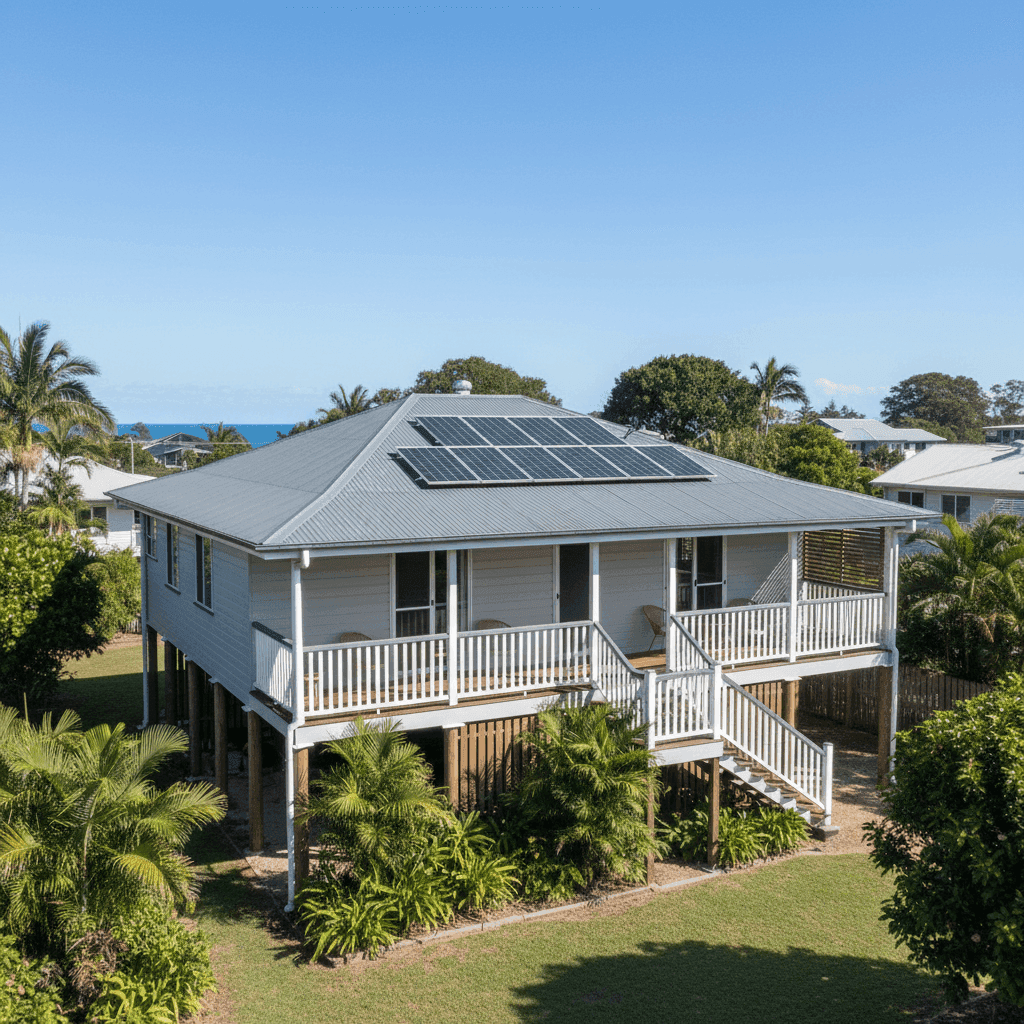
Macleay Island is one of the Southern Moreton Bay Islands — a relaxed, community-focused pocket of Queensland that attracts both retirees and sea-changers looking for an affordable slice of island life. But living off the mainland comes with its own set of considerations when it comes to home insurance. If you own a free standing home on Macleay Island, understanding what you're paying — and why — can help you make smarter decisions about your cover.
In this article, we analyse a recent home and contents insurance quote for a 3-bedroom, 1-bathroom free standing home in Macleay Island (postcode 4184) and put it in context against local, state, and national benchmarks.
---
Is This Quote Fair?
The quote in question comes in at $4,030 per year (or $386/month) for combined home and contents cover, with a building sum insured of $620,000 and contents valued at $120,000. Both the building and contents excess sit at $2,000.
Our price rating for this quote is Fair — Around Average, which means it's broadly in line with what other homeowners in the area are paying, without being a standout bargain or an obvious overcharge.
To put that in perspective: the suburb average for Macleay Island sits at $3,267/year, with a median of $3,076/year. This quote is above both of those figures, but it's worth noting that the 75th percentile for the suburb reaches $4,124/year — meaning roughly a quarter of quotes in the area are even higher. At $4,030, this quote sits just below that upper quartile threshold, suggesting it's on the higher end of the local range but not an outlier.
It's also important to consider what's being covered. A $620,000 building sum insured is a substantial figure, and combined with $120,000 in contents, the total insured value is $740,000. Higher sums insured naturally attract higher premiums, so a direct comparison with the suburb average (which may reflect lower insured values) isn't always apples-to-apples.
---
How Macleay Island Compares
Zooming out to a broader view, Macleay Island's insurance costs look quite reasonable compared to the rest of Queensland.
The QLD state average premium is a striking $9,129/year, though the median is a more moderate $3,903/year — indicating that a relatively small number of very high-risk properties (think cyclone-prone far north Queensland) are pulling the average upward significantly. Against the state median, this Macleay Island quote of $4,030 is only slightly above par.
At the national level, the average premium is $5,347/year, with a national median of $2,764/year. Again, the gap between average and median reflects how extreme-risk properties skew the data. Compared to the national average, this quote is actually below the mark — a positive sign for Macleay Island homeowners.
Within the Redland LGA, the average premium sits at $3,178/year, which is modestly lower than this quote. That's consistent with the suburb-level data and reinforces the "fair" rating.
You can explore more localised data on the Macleay Island suburb stats page, which is updated regularly with real quote data.
> Note: The suburb comparison is based on a sample of 17 quotes, which is a relatively small dataset. As more quotes are collected, these benchmarks will become more precise.
---
Property Features That Affect Your Premium
Several characteristics of this property play a meaningful role in shaping the premium. Here's how they stack up:
Elevated on Stumps
The home is elevated by at least 1 metre on stumps — a classic Queensland construction style. Elevation can work in a homeowner's favour in flood-prone areas, as it reduces the risk of inundation damage. For island properties where stormwater management can be variable, this is a genuinely useful feature from an insurer's perspective.
Hardiplank/Hardiflex Walls
The external walls are constructed from Hardiplank (also known as Hardiflex), a fibre cement cladding that's widely used across Queensland. It's considered a solid, fire-resistant material and is generally viewed favourably by insurers compared to timber weatherboard. It's also relatively low-maintenance, which reduces the likelihood of deterioration-related claims over time.
Steel/Colorbond Roof
A Colorbond steel roof is one of the more insurer-friendly roofing materials available. It's durable, resistant to corrosion, and performs well in high-wind conditions — all factors that can help keep premiums in check relative to older or more vulnerable roofing types like terracotta tiles or ageing corrugated iron.
Solar Panels
This property has solar panels installed. While solar panels are a great investment for energy savings, they do add to the replacement cost of a home in the event of a total loss or significant damage. Insurers factor this into their calculations, and it's important to ensure the building sum insured accounts for the cost of reinstalling a solar system.
Construction Year: 1992
At around 30 years old, the home is middle-aged in property terms. It's not new enough to benefit from the latest building standards, but it's not so old as to raise significant concerns about structural integrity. Regular maintenance is key to keeping claims — and premiums — manageable.
Island Location
Macleay Island's location in Moreton Bay is worth noting. While it's not classified as a cyclone risk area, island properties can face unique challenges: limited access for emergency services and tradespeople, higher material transport costs, and potential exposure to coastal weather events. These factors can contribute to premiums being slightly higher than comparable mainland properties.
---
Tips for Homeowners in Macleay Island
1. Review your building sum insured regularly Construction costs have risen significantly in recent years, and a sum insured set several years ago may no longer be sufficient to fully rebuild your home. Make sure your $620,000 (or whatever figure applies to your property) reflects current labour and material costs — including any installed solar panels.
2. Document your contents thoroughly With $120,000 in contents cover, it's worth keeping an up-to-date home inventory. Photograph valuables, keep receipts where possible, and store this documentation somewhere secure (such as cloud storage). This makes the claims process far smoother if the worst happens.
3. Ask about your excess options This quote carries a $2,000 excess on both building and contents. Opting for a higher excess can reduce your annual premium, while a lower excess means less out-of-pocket expense at claim time. Think about your financial buffer and choose accordingly.
4. Compare quotes before renewing Insurance loyalty rarely pays off. Insurers frequently offer better rates to new customers than to existing ones. Even if your current cover is fairly priced, it's worth running a comparison at renewal time to make sure you're not leaving savings on the table.
---
Ready to Compare?
Whether you're a first-time buyer or a long-time Macleay Island resident, comparing home insurance quotes is one of the easiest ways to ensure you're getting value for money. At CoverClub, you can get quotes tailored to your property in minutes — and see exactly how your premium stacks up against others in your area.